
Lieferung heute & morgen

Qualitätsgarantie

Willkommens-Angebote freischalten: KOSTENLOSE Lieferung | Bis zu 80 % RABATT | Kostenlose 30-Tage-JoyPlus-Testphase
App herunterladen
An LED ambient lamp should create the right atmosphere, but it should not become a poor purchase because of complicated set-up, short battery life or unsuitable brightness. Smart LED lamps often appear very similar at first glance: RGB colours, app control, voice commands and dimming are common features. However, what really matters is whether these functions suit the intended location and your existing technology.
An RGB LED lamp can display many colours, but that does not automatically make it a fully-fledged room light. Low light output is often enough for cosy mood lighting in the living room or bedroom. For reading, working or lighting a larger area, however, the lumen rating, beam angle and white-light range are important.
So check whether the product provides only coloured light or also offers adjustable white light. An RGBW lamp with warm white and daylight-like settings is more versatile than a colour-only light.
“Smart” does not automatically mean that a lamp will work with every system. For example, a Wi-Fi lamp may support only a 2.4 GHz network. Some models require their own app, while others can also connect to Alexa, Google Assistant, Apple HomeKit or Matter.
Before buying, check the following:
A battery-powered lamp can be used flexibly on a sideboard, in a gaming room or beside the bed. However, actual operating time depends on brightness, colour and motion detection. Any stated battery life is therefore a guide rather than a standardised comparison value.
Also check whether the lamp is rechargeable via USB-C, whether a charging cable is included and whether the battery can be replaced. For battery-operated models, it should be clear which batteries are required and whether they are included.
Light output is measured in lumens (lm). A decorative table lamp with 30 lm produces a subtle glow, whereas an E27 smart LED with 420 or 470 lm can be considerably brighter. Low output is often sufficient for a shelf, bedside table or indirect lighting. A higher light output may be more suitable for an open pendant or table lamp.
Colour temperature is measured in Kelvin (K):
A dimmable LED lamp also lets you adjust the brightness. This is useful when the same light is used in the morning, while working and in the evening.
With a smart bulb featuring an E27 fitting, the base, dimensions and lamp design must all be compatible. Globe models such as G80 or G95 need sufficient space inside the lampshade. A visible filament structure can look decorative in open fittings, but is barely visible inside an enclosed light.
Before buying, also check whether the lamp is intended exclusively for dry indoor spaces. An IP rating for damp areas is not automatically provided for the decorative indoor lights considered here.
An app usually offers colour selection, scenes, schedules and group control. With an Alexa-compatible lamp, check whether voice control works directly or only through the manufacturer’s app. Motion sensors are particularly useful in hallways, beside the bed and along routes used at night. For continuous reading or working, however, a sensor is not essential.
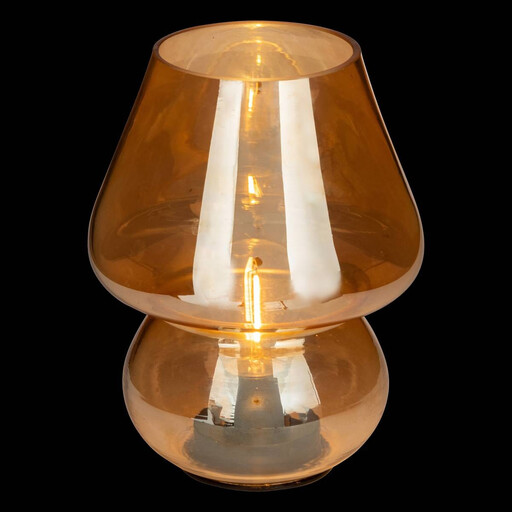
Why this product suits the profile: This compact LED lamp is ideal for sideboards, occasional tables and smaller living spaces, without requiring an app or Wi-Fi set-up.
The product details specify a light output of 30 lm and a battery life of up to 48 hours. This makes it easier to assess the lighting effect realistically.
Iridescent glass effect, 19 cm height and a stated battery life of 48 hours.
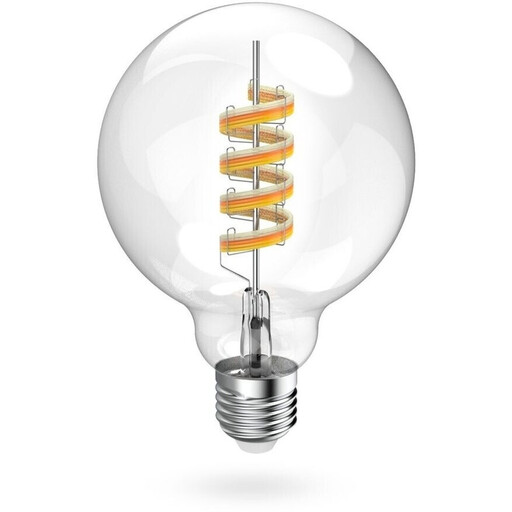
Why this product suits the profile: This model combines a visible filament design with app, voice and Matter control, making it a good fit for open fittings in a connected home.
Matter, E27, dimming and the white-light range from 2,700 to 6,500 K are clearly specified. You should still check your existing system before buying.
4.9 W power consumption, 470 lm, RGBW, G95 globe design and compatibility with Matter, Alexa, Google Assistant and Apple HomeKit.
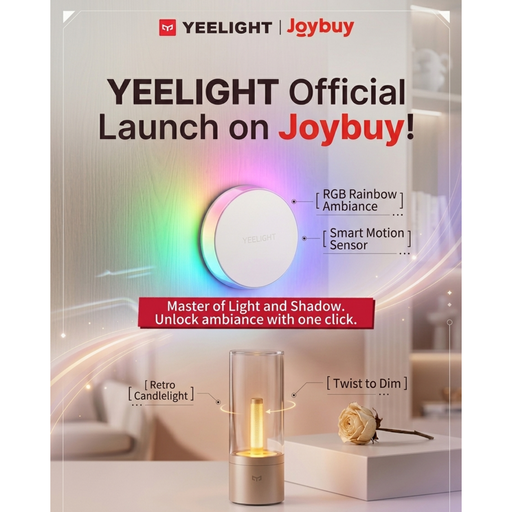
Why this product suits the profile: For use beside the bed, in a gaming room or in passageways, the combination of a motion sensor, magnetic mounting and battery operation is highly practical.
The product description specifies 11 preset effects, a motion sensor, magnetic mounting and USB-C charging. This gives you clear information for planning how to use it.
Battery-powered lamp with USB-C, motion detection, magnetic mounting and multiple lighting effects.
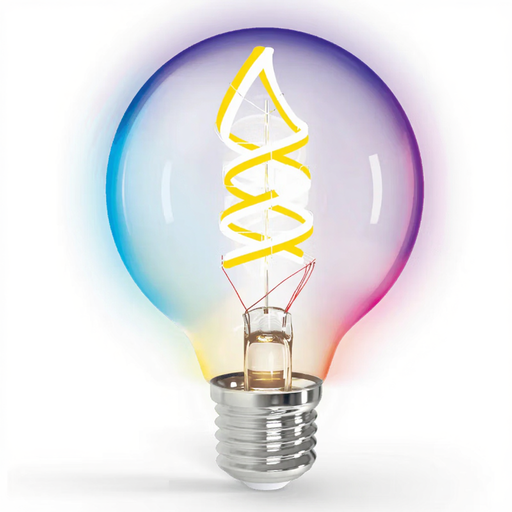
Why this product suits the profile: This Wi-Fi lamp is ideal for users who want to manage multiple lights via an app, schedule or voice command.
The specifications explicitly refer to 2.4 GHz Wi-Fi and rule out 5 GHz. This information helps prevent an unsuccessful set-up with an unsupported network.
420 lm, 4.9 W, 16 million colours, 70 scenes and app and voice control with Alexa and Google Assistant.
We have put together a complete, regularly updated list of products that fully meet these strict selection criteria and the safety regulations applicable in the EU.
First screw an E27 smart LED bulb into a suitable light fitting that is switched off. Then install the specified app and connect the lamp to the supported Wi-Fi network, which is often 2.4 GHz. Depending on the model, you can then link it to Alexa, Google Assistant, Apple HomeKit or Matter. If you experience problems, moving closer to the router and checking the app permissions will usually help.
The service life depends on the LED module, electronics, operating time and heat dissipation. Replaceable E27 bulbs often have a stated nominal service life. With a battery-powered lamp, battery ageing is also relevant. Do not leave lights running continuously in poorly ventilated, enclosed housings if the manufacturer excludes this type of use.
Power consumption is largely determined by wattage and daily operating time. A 4.9 W model used for four hours a day consumes approximately 7.2 kWh per year in theory. Actual consumption may vary due to standby mode, Wi-Fi functions, brightness and colour. For an accurate comparison, you should therefore consider wattage, usage time and standby consumption together.