
Lieferung heute & morgen

Qualitätsgarantie

Willkommens-Angebote freischalten: KOSTENLOSE Lieferung | Bis zu 80 % RABATT | Kostenlose 30-Tage-JoyPlus-Testphase
App herunterladen
The right LED ambient lighting can transform a room or a vehicle. However, the market is filled with products whose marketing promises often don't align with reality. Many buyers are disappointed by uneven illumination, unreliable software, or effects that fail to meet expectations. This guide will help you identify the crucial features and make an informed choice.
Before making a purchase, you should be aware of three common problems that often only become apparent after installation:
To avoid the problems mentioned above, you should focus on three core technical features. These significantly determine the quality and functionality of your new ambient lighting.
Understanding this difference is fundamental to achieving your desired lighting effects.
The type of connection determines the ease of use and the integration capabilities with your smart home lighting system.
For uniform and high-quality illumination, two physical properties of the LED strip are essential.
Based on the criteria above, we have selected a few products for specific use cases.

Why This Fits Their Persona: This kit is specifically designed for car interior lighting. It includes multiple strips of varying lengths and controllers, allowing for a flexible and clean installation inside the vehicle. The app control enables easy customisation on the go.
The use of acrylic as a light guide provides softer, more uniform light distribution than simple fibre optics. This avoids the "hotspot" effect and ensures a premium look.
Complete kit for DIY installation; music synchronisation via an integrated microphone; flexible, trimmable strips.
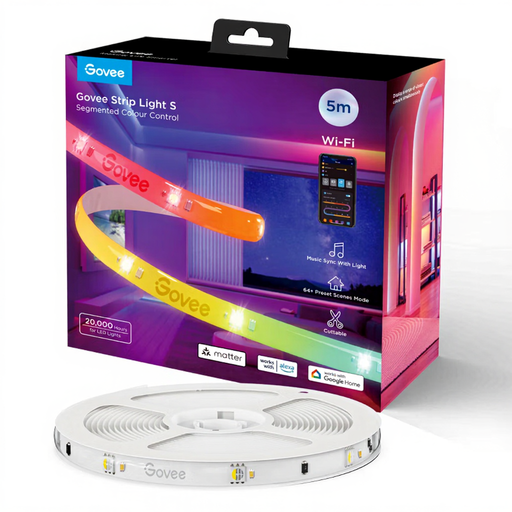
Why This Fits Their Persona: Ideal for tech-savvy users seeking a future-proof and versatile solution. The Matter support ensures seamless integration into all major smart home ecosystems. The RGBIC technology is perfect for dynamic gaming room decor.
Govee is known for its stable and feature-rich app, which avoids the pitfall of unreliable software. The explicit mention of RGBIC prevents confusion with standard RGB strips.
Matter certification for universal compatibility; segmented control for colour gradients; protective coating for durability and better light diffusion.
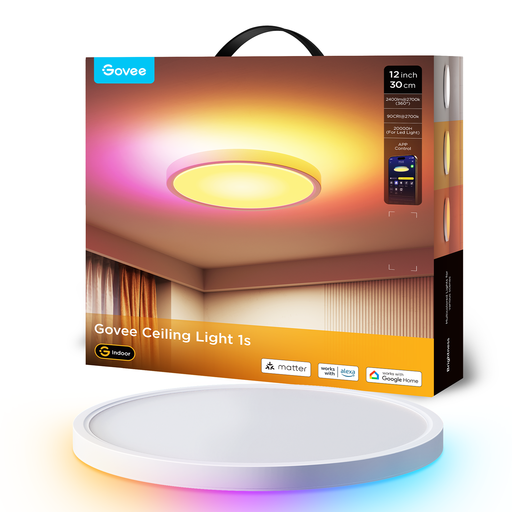
Why This Fits Their Persona: For those who want a permanently installed and elegant solution. This smart ceiling light combines functional main lighting (from warm to cool white) with atmospheric RGBIC backlighting for indirect effects on the ceiling.
As an integrated fixture, its design ensures completely uniform light output, eliminating "hotspots" from the outset. Integration into the Govee ecosystem guarantees reliable app functionality.
Dual-zone lighting (main and backlight); adjustable colour temperature (2200K-6500K); high brightness of up to 2400 lumens for room illumination.
We've compiled a complete, up-to-date list of products that fully meet these strict selection criteria and safety regulations.
Yes, most LED strips can be cut at the designated markings (often indicated by a scissor icon). These cutting points are typically located every few centimetres. It is crucial to cut only at these points, as doing otherwise will damage the circuitry and prevent subsequent segments from lighting up.
Power consumption is very low compared to conventional light sources. A typical 5-metre LED strip consumes between 15 and 30 watts, depending on brightness and colour. Precise details on power consumption in watts (W) can be found in the technical specifications of the respective product. With average use, operating costs are minimal.
A string light consists of individual, separate bulbs connected by a cable. It is often used for decorative purposes, such as for Christmas or parties. An LED strip is a flexible circuit board where LEDs are mounted closely together to create a continuous line of light. It is better suited for architectural, indirect lighting along edges, furniture, or ceilings.