
Lieferung heute & morgen

Qualitätsgarantie

Willkommens-Angebote freischalten: KOSTENLOSE Lieferung | Bis zu 80 % RABATT | Kostenlose 30-Tage-JoyPlus-Testphase
App herunterladen
LED ambient lighting can divide a room into zones, complement a television visually or add colourful accents inside a vehicle. However, there are clear differences between a simple LED light strip, an LED night light and smart LED lighting when it comes to installation, control and power supply. If you only consider the number of colours or particularly low prices, you can easily overlook important details.
Claims such as “16 million colours” describe the available colour range, not automatically the quality of the light. With an RGB LED light, brightness, colour transitions and LED distribution can be more important. A simple RGB strip often displays just one colour along its entire length. An RGBIC LED strip, on the other hand, can display several segments in different colours at the same time – provided this function is supported by the controller and app.
“Smart” can mean Bluetooth or Wi-Fi control. Before buying, check the following:
Alexa-compatible lighting or Google Home lighting is therefore not interchangeable with every app-controlled light. Matter-compatible LED lighting can make integration easier, but you will still need a suitable smart home hub or compatible control centre.
Adhesive strips only stay securely attached to clean, dry and smooth surfaces. Dust, textured wallpaper or heat can affect their grip. For an LED light strip for your television, the screen size also needs to be suitable. A strip that is too long cannot always be cut.
Cars have different requirements: car ambient lighting should match the vehicle’s electrical system voltage. Products with 12 V are not automatically suitable for any power source. When installing lighting more permanently in a vehicle, cables must be routed securely without interfering with pedals, airbags or areas of visibility.
RGB or RGBIC systems are suitable for decorative accents. For providing orientation in a hallway or child’s bedroom, a fixed, subtle light may be more suitable. According to the product specifications, the Aigostar LED Night Light operates at 1 W, 40 lm and 6,500 K, and has an integrated dusk sensor. It switches on when the ambient light level falls and is designed for indoor use with an IP20 rating.
An LED wall light or decorative LED lamp, on the other hand, often serves a visible design purpose. Pay attention to the dimensions, material, light colour and installation method. Warm white at around 3,000 K is typically perceived as more homely than cool white light; this describes the colour temperature and is not a statement about any medical effect.
A remote control works independently of Wi-Fi, while app control can offer more settings. These may include dimming, timers, scenes, colour selection and grouping. With music synchronisation, the system responds to sounds or music through a microphone. The result depends on the volume, placement and ambient noise.
TV lighting with a camera requires an additional calibration step. According to the product description, the Govee Envisual TV Backlight T2 requires 2.4 GHz Wi-Fi; 5 GHz is not supported. The cameras are aligned with the television and then calibrated via the app.
Check the mains voltage, power rating, protection rating and intended location. Indoor products such as IP20 lights are not designed for damp conditions or outdoor use. LED strips should not remain tightly coiled while switched on, as heat can build up. Power supplies and control boxes need sufficient ventilation.
Batteries are not always included with battery-powered lights. This applies, for example, to the LED Mushroom Lamp Malu, which is powered by two AAA batteries. For vehicle products, information about short-circuit protection, operating range and connection type is particularly important.
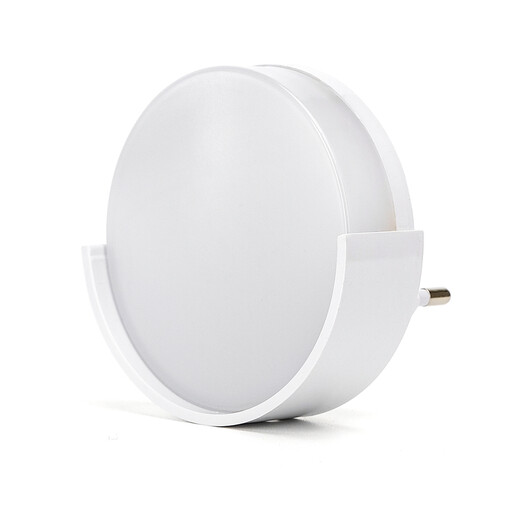
Why this product suits this profile: This compact plug-in light is suitable for hallways, staircases or children’s bedrooms if you do not want an app or batteries.
The dusk sensor switches the light on and off automatically. The specifications of 1 W, 40 lm and IP20 clearly indicate that it is intended for indoor use.
Plug-in operation at 220–240 V, a stated lifespan of 25,000 hours and no batteries required.
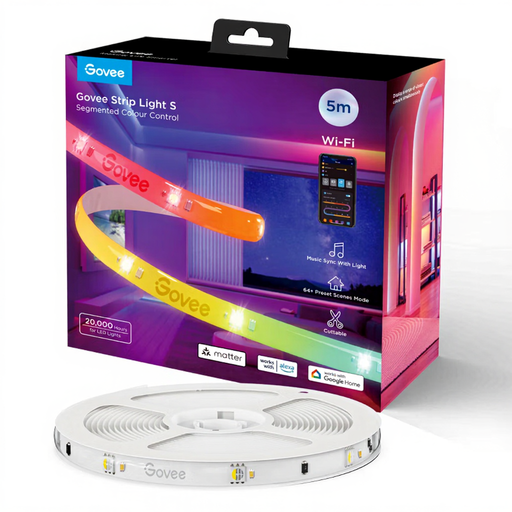
Why this product suits this profile: For gaming rooms, living spaces or home cinemas, this strip offers segmented colour effects and several control options.
The product specifications state a length of 5 m, power consumption of 24 W, RGBIC segment control, Wi-Fi, Bluetooth and Matter. This allows you to check compatibility and installation requirements in advance.
Matter support, app and voice control, and integrated music synchronisation; designed for indoor use.
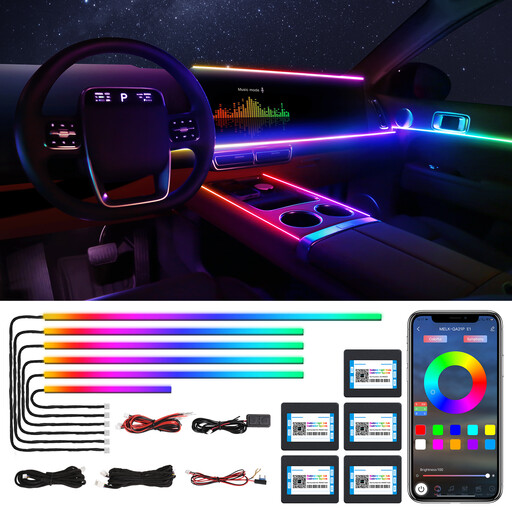
Why this product suits this profile: This 12 V system is aimed at car enthusiasts who want to combine interior car lighting with several strips, footwell areas and door handles.
The description specifies 12 V, short-circuit protection, a Bluetooth app and several separately arranged lights. Before installation, you should still check the vehicle’s voltage and cable routing.
An app with static colours and sound mode, 593 LEDs according to the product name, and adjustable strip lengths.
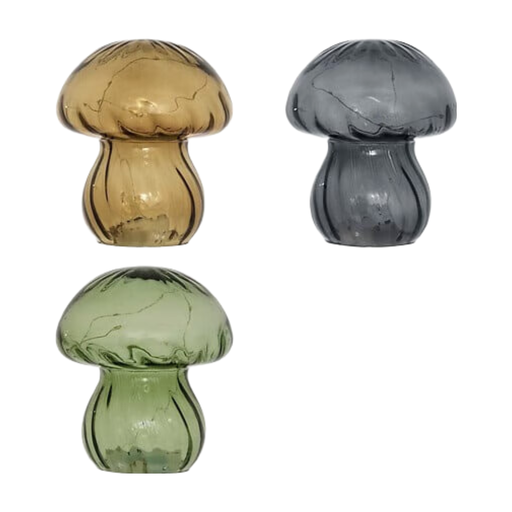
Why this product suits this profile: This battery-powered decorative LED lamp is designed for a side table, bedroom or as a gift, and does not require permanent installation.
The power supply via two AAA batteries is clearly specified. This means there is no need to find a socket, but you will need to purchase the batteries separately.
Glass housing, a diameter of 13,2 cm, a height of 15,5 cm and several possible colour options; for dry indoor areas only.
We have put together a complete, regularly updated list of products that fully meet these strict selection criteria and the safety regulations applicable in the EU.
The surface should be clean, dry and smooth. LED strips are usually fitted along furniture edges, behind the television or underneath shelves. Tight bends around LED chips and connectors should be avoided. We recommend carrying out a quick function test before fixing the strip in place completely.
The lifespan depends on the design, operating time, heat dissipation and power supply. Manufacturer specifications such as 25,000 hours are technical rated values and are not a guarantee of identical service life under all conditions. With LED strips, the control box should remain unobstructed and operation while coiled should be avoided.
Energy consumption is determined by the power rating in watts and the daily operating time. A 5 W light switched on for four hours a day uses approximately 0,02 kWh per day. To calculate the running costs, multiply this figure by your local electricity price. With RGB and RGBIC products, brightness and the selected colour can affect actual energy consumption.