
Lieferung heute & morgen

Qualitätsgarantie

Willkommens-Angebote freischalten: KOSTENLOSE Lieferung | Bis zu 80 % RABATT | Kostenlose 30-Tage-JoyPlus-Testphase
App herunterladen
Inadequate vehicle lighting is a significant obstacle during night drives, in poor weather, or on rough terrain. For drivers of off-road vehicles, SUVs, and trucks, as well as for personnel in agriculture or on construction sites, clear and far-reaching visibility is crucial for safety and efficiency. Upgrading with an LED auxiliary light can offer a practical solution.
This article serves as your guide. It explains the technical features you should consider when making your selection and presents a range of products with different primary applications to help you make an informed decision.
Selecting the right light depends on the specific requirements of your vehicle and its intended use. Three key criteria will help guide your choice.
The raw lumen count (luminous flux) is just one of several factors. What's critical is how the light is projected onto the road or work area.
In off-road use or on construction sites, lights are exposed to extreme conditions. The material quality and protection rating are therefore essential for longevity.
Seamless electrical integration into the vehicle's onboard system must be ensured.
Based on the criteria mentioned, we have compiled a selection of products that cover a range of different needs.
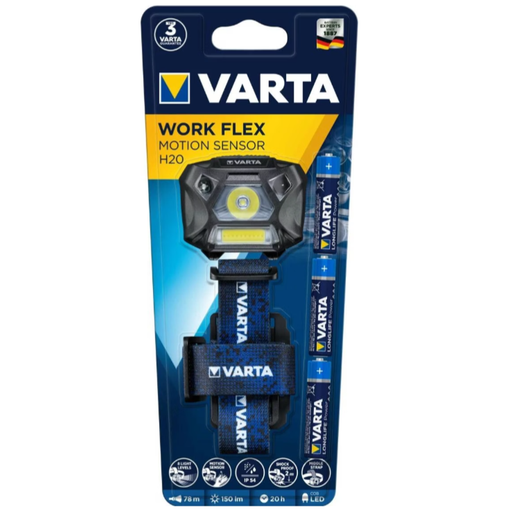
Why this model stands out Although this is not a fixed auxiliary light, this headlamp is a practical addition for any vehicle owner. Its strength lies in its flexibility and hands-free operation, making it useful during breakdowns, maintenance, or when loading and unloading in the dark.
Advantages
Who it's for This model is ideal for drivers and technicians who need a reliable, mobile light source for work on or around the vehicle. It is a supplement, not a replacement, for vehicle-mounted lighting.
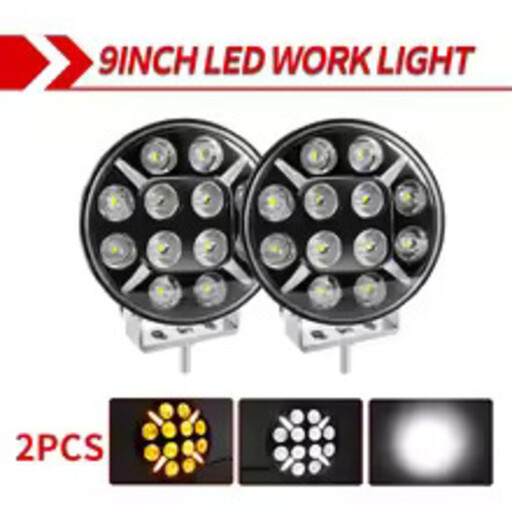
Why this model stands out This round 9-inch spotlight is a classic high-performance light designed for maximum output. According to the manufacturer, it achieves a brightness of 24,000 lumens and a long beam distance, qualifying it for demanding night driving. The integrated Daytime Running Light (DRL) function increases the vehicle's visibility during the day.
Advantages
Who it's for This model is aimed at off-road drivers and operators of trucks and agricultural machinery who require extremely powerful and robust auxiliary lighting for use off public roads.
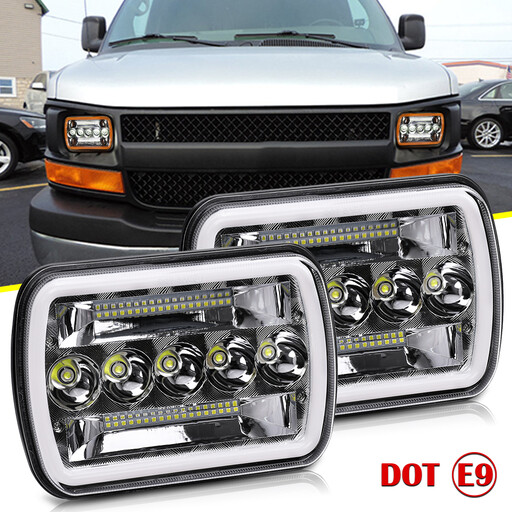
Why this model stands out Instead of being an additional light source, this kit offers a complete replacement for the main headlights on specific vehicle models (e.g., Jeep XJ/YJ and various trucks). It integrates low beam, high beam, daytime running light, and an amber turn signal into a single housing.
Advantages
Who it's for Ideal for owners of compatible vehicles who want to upgrade their entire front lighting system to modern LED technology to improve both performance and aesthetics without mounting external auxiliary lights.
The selection presented covers specific use cases. If you haven't found the right model for your needs yet, you can find a wider variety of lighting solutions.
Discover more products in our Automotive LED Headlights category.
The use of auxiliary lights on public roads is strictly regulated. For legal use, the lights must have an ECE certification (e.g., an "E" in a circle), which confirms their type approval. There are also regulations regarding the number and mounting position. Lights without this certification are generally only permitted for off-road use (e.g., as off-road lights or work lights on private property).
The IP (Ingress Protection) rating classifies a housing's protection against the ingress of foreign objects and water. The first digit, "6," means the device is completely dust-tight. The second digit, "8," confirms protection against continuous submersion in water under conditions specified by the manufacturer. An IP68 waterproof light is therefore suitable for the harshest outdoor use.
The required lumen count depends heavily on the application. For wide illumination of the immediate area (work light), 1,500 to 5,000 lumens may be sufficient. For maximum visibility in off-road conditions (high beam), models with 10,000 lumens or more are often used. However, more important than the raw lumen value is the beam pattern, which determines how efficiently the light is distributed.