
Lieferung heute & morgen

Qualitätsgarantie

Willkommens-Angebote freischalten: KOSTENLOSE Lieferung | Bis zu 80 % RABATT | Kostenlose 30-Tage-JoyPlus-Testphase
App herunterladen
An LED bathroom mirror combines a reflective surface and lighting in one. It can save space and make your daily skincare, shaving or make-up routine easier. However, LED bathroom mirrors vary considerably in how you control the lighting, how they’re installed, their moisture protection and the storage they offer.
If you focus only on the design or a particularly high wattage, you could miss important details. Three common buying pitfalls are worth looking out for:
The IP rating is an important consideration in the bathroom. An IP44 rating means the product is protected against solid objects above a certain size and water splashes from different directions. It does not mean the mirror is waterproof or can be installed directly in a wet area.
So, choose an illuminated bathroom mirror according to where it will be installed. You should also take account of the bathroom’s installation zones and the requirements for the electrical connection. A model that needs to be hardwired should be installed by a qualified electrician. An existing wall connection is not automatically compatible with every product.
A dimmable LED mirror gives you more flexibility than a model with just an on/off switch. Particularly useful features include:
Light colour is measured in kelvins. Lower values appear warmer, while higher values appear cooler. For brightness, the lumen rating is more helpful than wattage, as it describes the light output. However, how bright the light appears also depends on the size of the room, the mirror’s edge and how the light is distributed.
Before you buy, check the mirror’s width, height and depth against the available wall space. The distance from taps, sockets and wall cabinets also matters. An asymmetrical bathroom mirror makes a design statement, but needs to be positioned carefully.
An anti-fog bathroom mirror usually works with a heated panel behind the mirror glass. This can reduce condensation in a limited area. It does not replace ventilation and should only be switched on when needed.
If you need space for toiletries, cosmetics or shaving accessories, you could choose an LED mirror cabinet instead of a flat mirror. Check the internal depth, shelf layout, door opening and maximum shelf load.
The following models cater to different needs: a compact LED wall mirror with adjustable lighting, a mirror cabinet with storage, and a round bamboo wall mirror.
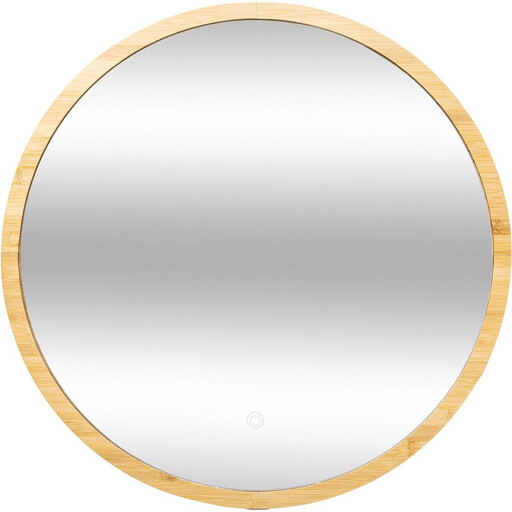
Why this product suits these needs: With a diameter of 57 cm, this round mirror is a good choice if you’re looking for a compact wall-mounted option with a natural-looking frame. It can be used in the bathroom, hallway, bedroom or dressing room.
The product specifications list touch controls, adjustable light intensity and an IP44 transformer. This means key details about the controls and splash protection are clearly stated.
Bamboo and glass construction, 57 cm diameter, wall hooks and a 3 m cable.
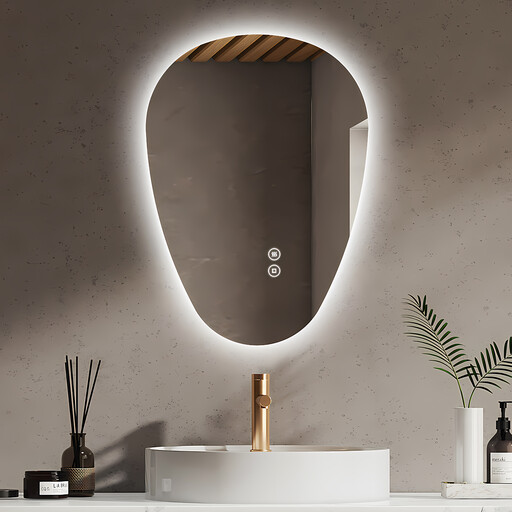
Why this product suits these needs: This model is for buyers looking to combine adjustable lighting, a distinctive shape and a separate anti-fog function in a 60 × 45 cm mirror.
The specifications list three light colours, brightness adjustment from 10 to 100 per cent, IP44 protection and automatic shut-off after three hours of inactivity.
Asymmetrical shape, touch controls, memory function, horizontal or vertical mounting and a separate anti-fog button.
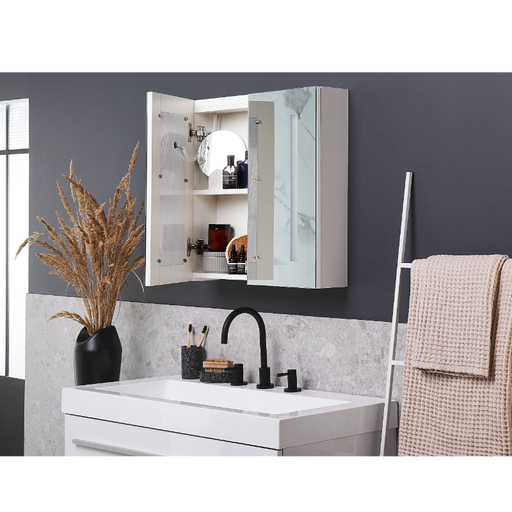
Why this product suits these needs: Measuring 60 × 60 cm and featuring two doors, this mirror cabinet is designed for households looking to combine a mirror, lighting and enclosed storage.
The product description lists IP44 protection, two doors, shelves, a touch sensor and wall mounting. This makes it easier to assess your storage needs and installation requirements in advance.
960 lumens, two mirrored doors, soft-close system, shelves and a stated maximum load of 10 kg per shelf.
We’ve put together a complete, regularly updated list of products that meet these strict selection criteria and fully comply with the safety regulations in force in the EU.
Before ordering, check the wall type and the fixings you’ll need. Plugs designed for concrete are not automatically suitable for plasterboard or stud walls. A mirror cabinet also carries extra weight from the cabinet itself and the products stored inside.
Use a soft cloth and a mild cleaning product to clean the mirror. Abrasive cleaners can damage the glass, frame or coating. Dry any wet areas promptly. If your mirror has an anti-fog function, don’t leave the heating panel switched on when it isn’t needed.
Consumption depends on the LED’s power, how long it’s used each day and whether extra features are switched on. The wattage of the specific model is key. Automatic shut-off or reduced brightness can limit the time it runs at full power. For a realistic estimate, you can check consumption with an electricity meter, provided the product is connected using a suitable plug.
No. The key factors are the IP rating, installation location, connection type and local installation requirements. IP44 indicates splash protection, but does not replace proper planning. The mirror should not be installed where it will be exposed to a direct jet of water for extended periods. If you’re unsure, ask a qualified electrician to assess the installation.
Lifespan depends on the LED module, operating conditions, heat dissipation and usage. Check the manufacturer’s specifications for the specific product. With built-in LEDs, you often can’t replace the light source as you would a standard bulb. That makes warranty terms, spare parts information and access to the electrical components important factors to consider when buying.