
Lieferung heute & morgen

Qualitätsgarantie

Willkommens-Angebote freischalten: KOSTENLOSE Lieferung | Bis zu 80 % RABATT | Kostenlose 30-Tage-JoyPlus-Testphase
App herunterladen
An LED bedside lamp should provide enough light in the bedroom without causing unnecessary glare or taking up too much space. However, requirements vary depending on where you plan to use it: a touch-dimmable bedside lamp is handy by the bed or at a desk, while a motion-sensor night light can switch on automatically in a hallway, bathroom or child’s bedroom.
There are three common pitfalls to watch out for when choosing a lamp:
A warm-white bedside lamp of around 2,700 to 3,000 Kelvin is a popular choice for bedrooms. This light feels less cool in a room than neutral-white or daylight-white alternatives. A brighter light may be useful for reading, working or applying make-up.
Look out for the following information:
An LED bedside lamp with 360-degree light output distributes brightness differently from a directional night light. So it’s not just the figure on the product specification that matters: the shape of the lampshade and its distance from the bed are important, too.
A dimmable table lamp with touch controls can be operated directly from the base. This is useful if the switch on the cable is difficult to reach. According to the product description, models with a memory function save the last brightness setting you chose.
A motion-sensor night light should also have a dusk or ambient light function. Otherwise, it may switch on even when the room is already bright enough. Check:
A cordless LED night light gives you more flexibility over where to place it, but needs charging regularly. A USB-rechargeable night light can be charged using a power adapter, laptop or suitable power bank. A plug-in night light, on the other hand, is always ready to use but requires a spare socket.
Measure the available surface before you buy. Even a few centimetres can make a difference on a small bedside table. Lamps made from glass, metal or acrylic should be placed on a stable, level surface.
All models should be used as follows:
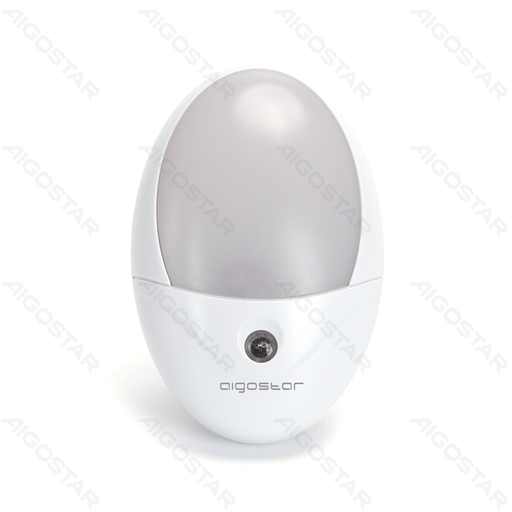
Why it suits this profile: This compact plug-in night light needs no batteries and is designed for hallways, bedrooms, bathrooms and stairways.
The product details specify 20 lumens, 3,000 Kelvin, a PIR sensor with a range of up to 7 metres and a power consumption of 1 watt.
Warm-white light, 120-degree detection, IP20 rating and direct operation from a mains socket.
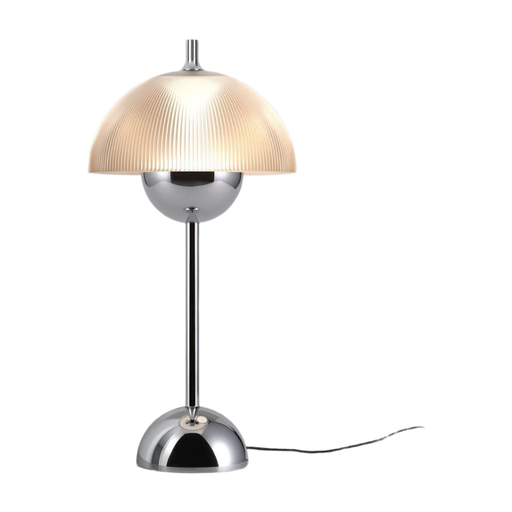
Why it suits this profile: The transparent, ribbed acrylic cover and chrome design make this a good choice if you’re looking for a decorative table lamp with simple controls.
The four dimming levels and memory function make it easy to use, so it’s not just about the looks.
LED light at 3,000 Kelvin, four-level touch dimming, a memory function and mains operation without charging breaks.
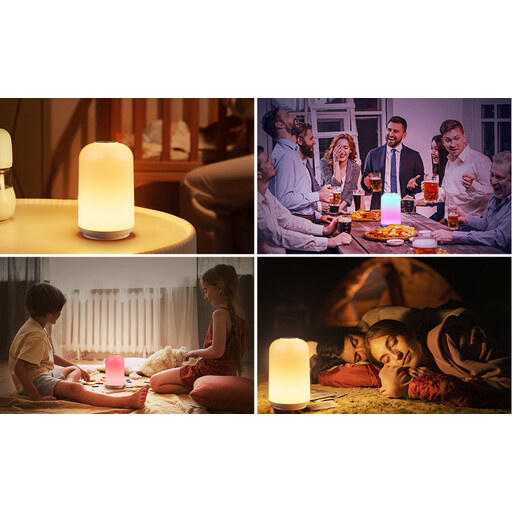
Why it suits this profile: This cordless LED night light is ideal if you want to move it between the bedroom, child’s bedroom, a shelf or the hallway.
The product description gives specific charging requirements of 5 V and 1 A, as well as a built-in ambient light sensor that works up to 40 lux.
Warm-white light at 2,600–2,800 Kelvin, seven RGB colours, stepless dimming and compact dimensions of 13 × 8 × 8 cm.
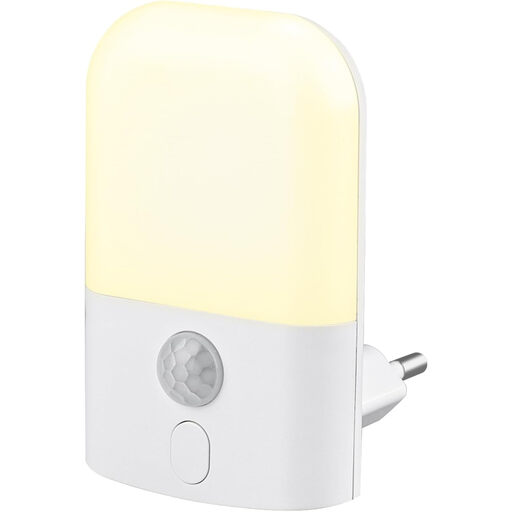
Why it suits this profile: This warm-white plug-in light is designed for children’s bedrooms, hallways, stairs and other indoor spaces. It switches on when it detects movement in the dark.
Motion and dusk sensors work together, and you can choose from five brightness levels, from 20 to 100 per cent.
3-metre detection range, 120-degree angle, 0.5-watt power consumption and automatic shut-off after 60 seconds without movement.
We’ve put together a complete, regularly updated list of products that meet these strict selection criteria and fully comply with the safety regulations in force in the EU.
Warm-white light between around 2,700 and 3,000 Kelvin is a popular choice for bedrooms and children’s bedrooms. Neutraler light colours may be better for focused reading or working. A dimmable table lamp lets you adjust the light to suit different situations.
Consumption depends on the wattage and how many hours a day the lamp is on. A 1-watt model used for ten hours consumes 10 watt-hours. The actual cost depends on your electricity tariff. Battery-powered models also use electricity when they’re being charged.
Lifespan depends on the LED module, electronics, heat dissipation and how the lamp is used. Treat manufacturer specifications as a technical guide; they don’t replace checking the individual product. If a lamp has a replaceable bulb, you can replace just the bulb later. With integrated LEDs, the whole light usually needs to be replaced if it develops a fault.