
Lieferung heute & morgen

Qualitätsgarantie

Willkommens-Angebote freischalten: KOSTENLOSE Lieferung | Bis zu 80 % RABATT | Kostenlose 30-Tage-JoyPlus-Testphase
App herunterladen
Switching from old incandescent bulbs to modern LED bulbs promises lower electricity bills and a longer lifespan. However, the market is flooded with technical jargon and marketing promises that make choosing difficult. A poor choice not only results in unsuitable lighting but also unnecessary expense. Before you make a decision, you should know the three most common pitfalls that lead to disappointment.
To avoid these mistakes, you only need to understand three basic metrics. These will help you objectively evaluate any LED bulb and find the right product for your needs.
Forget wattage as an indicator of brightness. Watts only measure energy consumption. The crucial metric for light output is lumens. The higher the lumen value, the brighter the bulb will shine.
As a practical guide for everyday use:
The colour temperature, measured in Kelvin (K), defines the light's colour and has a major impact on a room's ambience.
An RGB LED or a smart bulb with adjustable colour temperature (CCT) offers maximum flexibility, allowing you to adapt the light colour to the time of day and your mood.
Before you buy, check the base of your old bulb. The most common types in households are:
Other bases like GU10 (for spotlights) or G9 (pin-base lamps) are intended for specific types of fixtures. A quick look at the old bulb or the lamp's socket is all it takes to identify it.
Instead of making a one-size-fits-all recommendation, we have identified bulbs that are tailored to specific needs and user profiles.
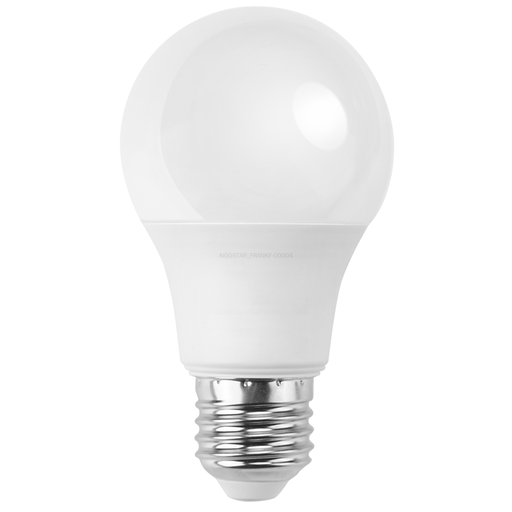
Why it's a great fit: A straightforward and energy-efficient bulb for functional lighting in the kitchen, hallway, or office. It gets the job done without unnecessary frills.
Clear specifications of 510 lumens and 4000K (Neutral White) prevent purchasing errors related to brightness and light colour. As a non-dimmable model, it sidesteps compatibility issues with dimmers from the start.
The wide 190-degree beam angle ensures even illumination. The low 6W power consumption is easy on your wallet.
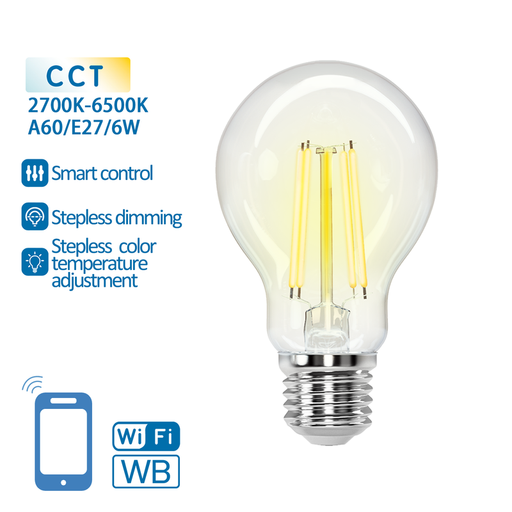
Why it's a great fit: Ideal for users who want to control their lighting via app or voice and adapt it to any situation. A true Wi-Fi bulb for the connected home.
The dimming function is controlled by software, which eliminates flickering caused by incompatible wall switches. The adjustable colour temperature (2700K-6500K) makes choosing the "right" light colour obsolete—it's always adaptable.
Direct Wi-Fi connection without an additional hub. Compatible with Amazon Alexa and Google Assistant for convenient voice control.
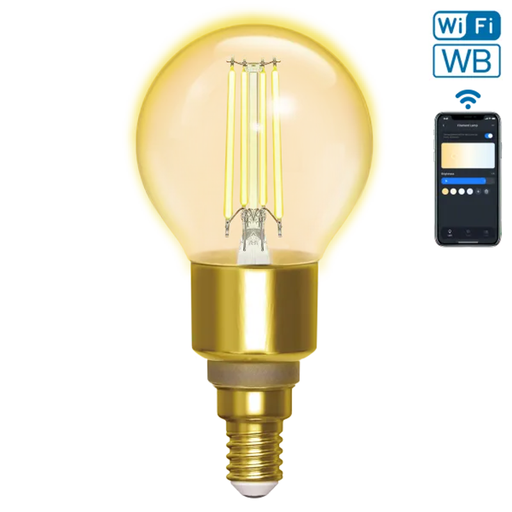
Why it's a great fit: Combines the look of a vintage LED filament bulb with smart technology. Perfect for open fixtures where the bulb itself is a design element.
It offers the aesthetic of a filament bulb but with full control over brightness and colour (RGB+CCT) via an app. The product information explicitly advises against using physical dimmers.
The compact G45 shape with an E14 base is excellent for decorative fixtures and bedside lamps. Dual-mode connectivity (Bluetooth and Wi-Fi) simplifies setup.
We have compiled a complete, up-to-date list of products that fully meet these strict selection criteria and rigorous safety standards.
Flickering is usually caused by an incompatibility between the LED bulb and the wall switch. Conventional dimmers (leading-edge or trailing-edge models) are designed for the high electrical load of incandescent filaments. LEDs, however, require much less power and have an electronic driver that often doesn't harmonise with these older dimmers. The solution is to either replace the wall switch with a model explicitly designated as "LED-compatible" or to use a smart bulb, where brightness is controlled via an app or remote control.
The Colour Rendering Index, or CRI (Ra), indicates on a scale of 0 to 100 how true-to-life colours appear under a lamp's light. A value of 100 corresponds to natural sunlight. For most living spaces, a CRI of Ra ≥ 80 is a good standard, ensuring pleasant and sufficiently accurate colour representation. In areas where high colour accuracy is important, such as in the kitchen, at a vanity table, or in an art studio, a value of Ra ≥ 90 is recommended.
An LED bulb contains electronic components and is therefore considered e-waste. It must not be disposed of in normal household rubbish. The correct method is to drop it off at a municipal recycling centre. Many larger electronics stores and supermarkets that sell electrical appliances are also obligated to take back old light bulbs free of charge.