
Lieferung heute & morgen

Qualitätsgarantie

Willkommens-Angebote freischalten: KOSTENLOSE Lieferung | Bis zu 80 % RABATT | Kostenlose 30-Tage-JoyPlus-Testphase
App herunterladen
Buying the right LED bulb E27 E14 sounds straightforward at first. In practice, however, different fittings, shapes and marketing claims can quickly lead to the wrong purchase. A lamp is often chosen based on its wattage, even though the luminous flux in lumens is what determines its actual brightness. A decorative shape can also prove unsuitable if it does not fit the light fitting or flickers with an existing dimmer.
For households, cafés, restaurants and event organisers, three common pitfalls are particularly important:
The term E27 LED bulb refers to the large Edison screw base with a diameter of 27 millimetres. E14 LED bulbs have a smaller base and are often used in chandeliers, wall lights, bedside lamps and decorative lights.
As well as the fitting, diameter and height are important. A G45 bulb shape, for example, can be more compact than a large globe bulb. Before buying, you should therefore check the maximum permitted dimensions of the light fitting and the available space inside the lampshade. With exposed bulbs, the shape, glass colour and filament arrangement also influence the overall look.
Luminous flux is measured in lumens (lm). A bulb with 250 lm is more suitable for accent or mood lighting, while 470 to 510 lm can provide more general brightness from a single table, wall or pendant light. For larger rooms, using several bulbs is often a sensible option.
Colour temperature is measured in Kelvin (K):
A warm-white LED bulb creates a gentle, understated atmosphere. A more neutral setting can be more practical in work areas. An RGB+CCT LED lamp also offers coloured lighting modes.
With a traditional bulb, look for the “dimmable” marking and check compatibility with the dimmer. A non-dimmable bulb should not be connected to a dimmer, as this may cause flickering, buzzing or failure.
A Wi-Fi LED lamp can generally be controlled via an app. Some models use Bluetooth Mesh and can connect several compatible devices. Before placing your order, it is worth checking:
For IP20 bulbs, use in damp rooms, outdoors or in fully enclosed light fittings is only permitted if the particular light fitting is suitable for this purpose.
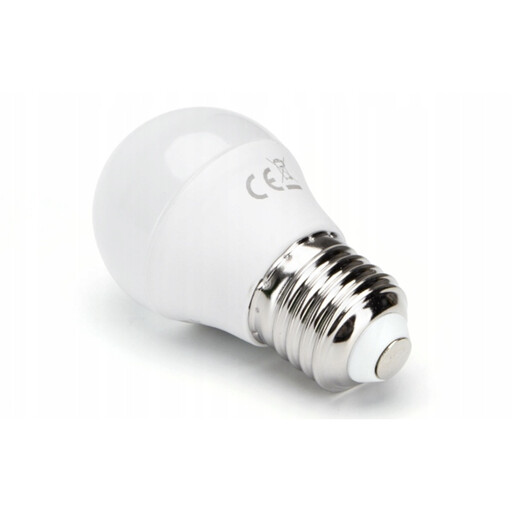
Why this product suits the profile: This classic E27 bulb is designed for standard household sockets and provides 510 lm at 6 W. The G45 shape, measuring 45 × 80 mm, is also suitable for more compact light fittings.
The technical specifications clearly state the fitting, lumens, colour temperature and dimensions. This model is designed for switching on and off and is not specified as suitable for dimmers.
6 W power consumption, 510 lm luminous flux, 3,000 K warm white light and operation at 220–240 V.
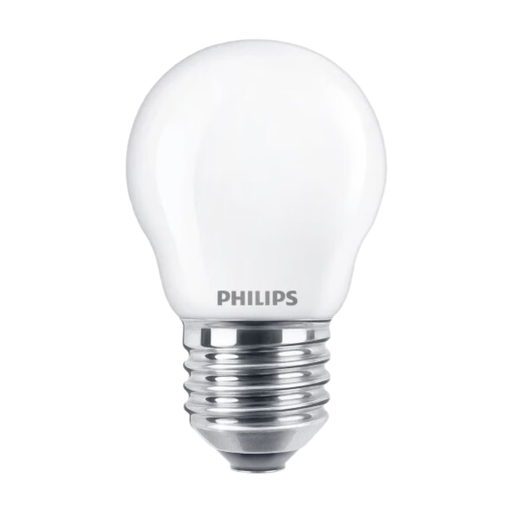
Why this product suits the profile: The matt P45 shape is designed to provide diffuse warm-white light at 2,700 K. The manufacturer states 250 lm, 2.2 W, a lifespan of 15,000 hours and 20,000 switching cycles.
The product information explicitly states that the lamp is not dimmable. This helps prevent an unintended combination with a wall dimmer.
E27 base, matt surface, 2.2 W consumption and the EyeComfort design stated in the product description.
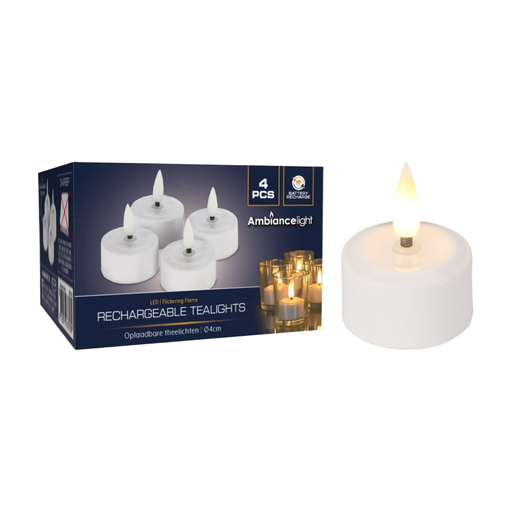
Why this product suits the profile: The rechargeable LED tealights are designed for table decorations, parties, seasonal arrangements and households with children or pets.
The flameless LED candle requires no open flame or liquid wax. Before buying, please note that this is an expansion set without a charger.
Four rechargeable tealights, simple on/off operation and flexible placement on tables, windowsills or in decorative holders.
We have put together a complete, regularly updated list of products that fully meet these strict selection criteria and the safety regulations applicable in the EU.
Power consumption depends on the wattage and the amount of time the bulb is used each day. A 4.5 W lamp uses less energy than a 40 W incandescent bulb when operated for the same length of time. The actual saving depends on the electricity tariff, usage time and number of bulbs. For a fair comparison, you should therefore consider wattage, lumens and energy efficiency class together.
A stated lifespan of, for example, 15,000 or 25,000 hours is a manufacturer’s figure, not a guarantee for every installation. Heat, frequent switching, an enclosed housing and unsuitable dimmers can affect the actual service life. Once they have reached the end of their useful life, bulbs should be taken to designated collection points for waste electrical and electronic equipment, not placed in general waste or glass recycling containers.
E27 has a larger screw base with a diameter of 27 millimetres, while E14 has a smaller 14-millimetre base. The fitting of the existing light is always the deciding factor. The shape of the bulb must also fit inside the lampshade.
For decorative lighting, 200 to 300 lm may be sufficient. For a single light in a living area, around 400 to 800 lm is often suitable, depending on the room size. Several bulbs can help distribute the brightness. The right choice depends on the position of the light, the size of the room and the desired lighting effect.
No. Many smart LED lamps are dimmed via an app, Bluetooth Mesh, Wi-Fi or a voice assistant and are not designed for conventional wall dimmers. Check the product information and, if in doubt, use a simple on/off switch.