
Lieferung heute & morgen

Qualitätsgarantie

Willkommens-Angebote freischalten: KOSTENLOSE Lieferung | Bis zu 80 % RABATT | Kostenlose 30-Tage-JoyPlus-Testphase
App herunterladen
An LED cabinet light with motion sensor can illuminate dark cupboard compartments, drawers or work areas without fixed wiring. In practice, however, everyday usability depends on more than the number of LEDs alone. Unsuitable dimensions, an inappropriate sensor or a weak power supply often lead to disappointing purchases.
This buying guide from the Joybuy Product Recommendation Officer explains which details matter before you buy and which product types suit different home environments.
An LED cabinet light measuring 20 cm is suitable for narrow compartments, smaller shelves or individual drawers. For a wide wardrobe, however, this length may result in uneven illumination. Conversely, a 60-cm light may look oversized in a small wall cupboard.
You should therefore measure the usable internal width and the available mounting area before buying. Also bear in mind that light bars with a housing may be slightly longer or wider than the illuminated area itself.
A PIR sensor LED light typically detects movement by identifying changes in heat radiation. Its range and detection angle depend on the mounting height, distance and alignment. If the sensor is obstructed by a side panel, objects or the light’s housing, automatic activation may be restricted.
A motion sensor cabinet light is therefore particularly practical for doors or drawers that are opened regularly. For a permanently illuminated work surface, a manually operated model may be more suitable.
Higher capacity does not automatically mean a specific operating time. Brightness, the number of LEDs, activation time and sensor frequency all affect energy consumption. When choosing a USB-rechargeable LED light, therefore, pay attention to the stated battery capacity, charging port and charging conditions.
For lights intended for kitchens or bathrooms, you should also check whether the product specifications permit use in damp areas. The models described here are predominantly intended for dry indoor spaces.
For narrow spaces, compact models such as 20-cm LED cabinet lighting are a sensible choice. A 30-cm light bar can cover a larger area while still being suitable for many cupboard compartments. For wide wardrobes or longer shelves, variants measuring 40, 42 or 60 cm may be appropriate.
In addition to length, consider the position of the LEDs and the direction in which the light is emitted. A light with several LED elements will generally distribute light over a larger area than a single light source. Where stated, assess the specific brightness using the quoted lumen value.
Check the stated PIR detection range. The 20-cm and 30-cm models in this selection specify a range of 3 to 5 metres. This is sufficient for cupboards, hallways and shelves, provided the sensor faces freely into the room.
The following points are also relevant for a cordless cabinet light:
Adhesive mounting requires no tools, but should not be used on dusty, damp or heavily textured surfaces.
An LED light bar for kitchens is often used with neutral white light, as this colour provides a balanced view of work surfaces and stored items. Warm white light may be suitable for wardrobes, hallways or subtle shelf lighting. Cool white light supports high-contrast visibility in dark compartments.
According to the product specifications, the 20-cm and 30-cm models offer three ranges: approximately 2,800–3,200 K warm white, 4,500–5,000 K natural white and 6,500–7,000 K cool white. This allows you to adjust the light colour to suit the room and the task.

Why this product suits this profile: The two-pack is suitable for small cupboards, drawers and shelves in different rooms. Its compact design takes up very little space.
The 20-cm length is clearly specified. The product also states a PIR range of 3–5 m and three colour temperature ranges.
800-mAh battery, USB charging, adhesive mounting and two lights per pack.
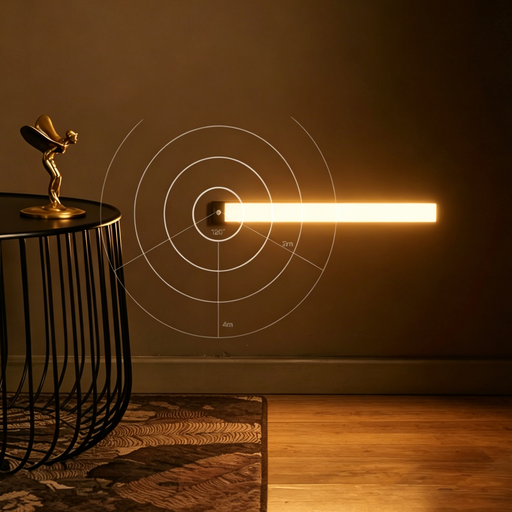
Why this product suits this profile: The longer version is well suited to wide wardrobes, shelves or larger cupboard fronts where a shorter light would illuminate only part of the area.
The product variant is clearly identified by its 60-cm length. This makes it easier to compare the required coverage with the cupboard dimensions before buying.
60-cm design for longer areas; black finish to complement dark furniture surfaces.
Why this product suits this profile: The 30-cm length is designed for medium-sized cupboards, kitchen wall units, hallways and shelves. Two lights make it possible to illuminate several areas.
The specifications state dimensions of 300 × 38 × 10 mm, 41 LEDs and a PIR range of 3–5 m. This makes the space required and sensor coverage easy to assess.
1,100-mAh battery, three colour temperature ranges, USB charging and tool-free adhesive mounting.
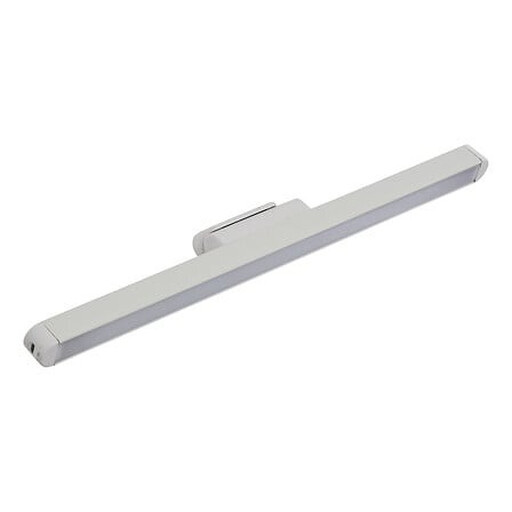
Why this product suits this profile: The 42-cm light is intended for mirrors, cupboards, wardrobes and shelves. Its neutral white light at 4,000 K is suitable for everyday orientation and additional lighting tasks.
The light is described with a specific colour temperature and an approximate luminous flux of 150 lumens. This makes it easier to assess its intended use realistically.
42-cm light bar, integrated 2,000-mAh lithium battery, USB charging and adjustable light direction.
We have put together a complete, regularly updated list of products that fully meet these strict selection criteria and the safety regulations applicable in the EU.
Before installation, clean the surface with a dry or slightly damp cloth and allow it to dry completely. Position the light so that the sensor and LEDs are not obstructed. With adhesive mounting, do not put the light under direct strain or move it immediately after pressing it into place.
For the models mentioned, a soft, dry cloth is sufficient for cleaning. Avoid water, harsh cleaning products and high humidity. Only charge the battery using a compatible USB power source. Stop using the light if it shows visible damage or if the battery has swollen.
Many cordless cabinet lights are installed using adhesive tape; some models can also be attached magnetically or with brackets. The key requirements are a dry, dust-free surface and an unobstructed view for the sensor across the desired movement area.
It is not possible to determine a fixed operating time from battery capacity alone. Activation time, brightness, the number of LEDs and how often movement is detected all affect consumption. Models with USB charging can be recharged when the brightness begins to fade.
LEDs require little energy compared with many older light sources. The sensor also switches the light on only when movement is detected. Actual consumption depends on power rating, activation time and frequency of use. For a fair comparison, you should therefore consider the wattage and battery capacity together.