
Lieferung heute & morgen

Qualitätsgarantie

Willkommens-Angebote freischalten: KOSTENLOSE Lieferung | Bis zu 80 % RABATT | Kostenlose 30-Tage-JoyPlus-Testphase
App herunterladen
Suitable LED cabinet lighting improves visibility in wardrobes, kitchen units, shelving and hallways. However, the stated light output is not the only factor to consider when buying. Unclear specifications often lead to unsuitable purchases: the light is too short, the battery does not last long enough for everyday use, or the motion sensor responds unreliably to the room layout.
A short LED light bar may be sufficient for a small shelf, but it might only illuminate parts of a wide wardrobe. So check the usable light length and the installation position. For example, a 42 cm light bar produces around 150 lumens. This may be suitable as additional lighting beside a mirror or inside a small cupboard. For a long worktop, a larger or continuous solution is more practical.
With a USB rechargeable LED light, you should consider capacity, charging time and operating time together. An 800 mAh battery is more compact than a 2,200 mAh model, but depending on how it is used, it may need charging more frequently. It is also important to consider whether the light will stay on continuously or only operate briefly via a sensor.
RGB or RGBIC features are suitable for decorative applications, such as behind a television, on shelving or in a gaming area. For kitchen lighting, dressing-table mirrors or worktops, colour temperature and even illumination are more important. An RGBIC LED strip can display several colour zones at the same time, but this does not automatically provide the right light for precise tasks.
Compact lights with magnetic or adhesive mounting are suitable for narrow cabinet compartments. A wireless LED light bar reduces installation effort, but requires regular charging. For larger areas, a 5 m LED strip may be a sensible choice. Mains-powered strips provide a constant power supply, but require a socket and tidy cable management.
When using adhesive mounting, make sure the surface is dry and free from dust. Flexible strips should not be sharply bent around corners. For products with a protective coating, the stated area of use is important: an indoor product with IP20 protection is not designed for splashes or permanently damp environments.
Light output is measured in lumens. A higher value initially means more light is emitted, but it says nothing about how that light is distributed. Moderate brightness may be sufficient inside cupboards. Work areas often need more even illumination without harsh shadows.
Colour temperature is measured in Kelvin:
Dimmable LED lighting is practical if the same light is used at different times of day. Check whether the brightness can be adjusted directly on the device, with a remote control or via an app.
An LED cabinet light with a motion sensor switches on automatically when movement is detected. Important factors include the range, afterglow time and position of the sensor. On a 60 cm model, the stated detection range is around 2 metres and the automatic lighting remains on for approximately 30 seconds. PIR sensors in other lights may be specified with a range of 3 to 5 metres.
An LED light strip with remote control provides quick access to colours and programmes. Smart LED lighting with Wi-Fi, Bluetooth or Matter can also be controlled via an app and voice assistant. This requires a power supply, a compatible network and, for Matter, a suitable smart-home hub.
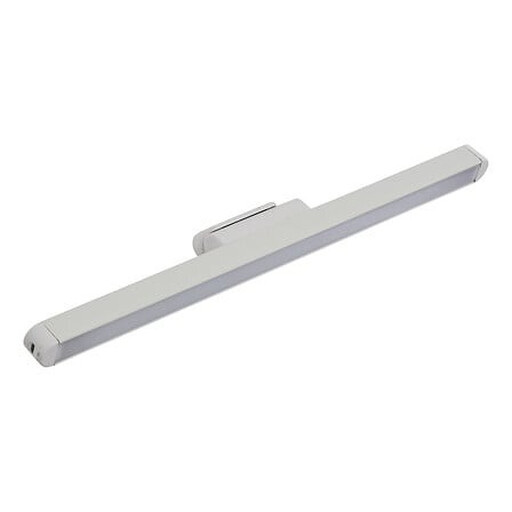
Why this product suits the profile: The 42 cm light is designed for smaller cupboards, mirrors, shelving and surfaces, and needs no permanent wiring thanks to its integrated battery.
The length, colour temperature and light output are clearly specified: 42 cm, 4,000 K and around 150 lumens. This makes it easier to assess whether it is suitable before buying.
Integrated 2,000 mAh lithium battery, USB charging and adjustable light direction.
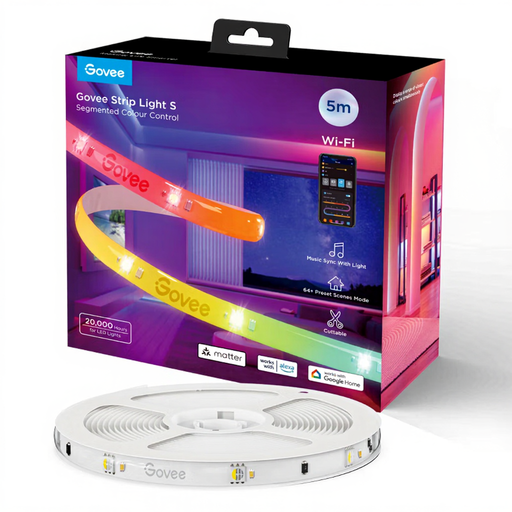
Why this product suits the profile: The 5 m strip is aimed at users who want to combine decorative lighting with app, voice and smart-home control.
The product specifications state 24 W, 24 V, indoor use, plus 2.4 GHz Wi-Fi, Bluetooth and Matter. This makes the power supply and network requirements clear.
Segmented RGBIC colour control, protective coating and support for several smart-home platforms.

Why this product suits the profile: Two slim lights with PIR sensors are suitable for kitchen units, wardrobes, hallways and multiple rooms without drilling.
The lights offer three selectable colour-temperature ranges and a stated PIR range of 3 to 5 metres, rather than an automatic mode that is not explained in detail.
2-pack, 30 cm housing, 1,100 mAh battery and USB charging with adhesive mounting.
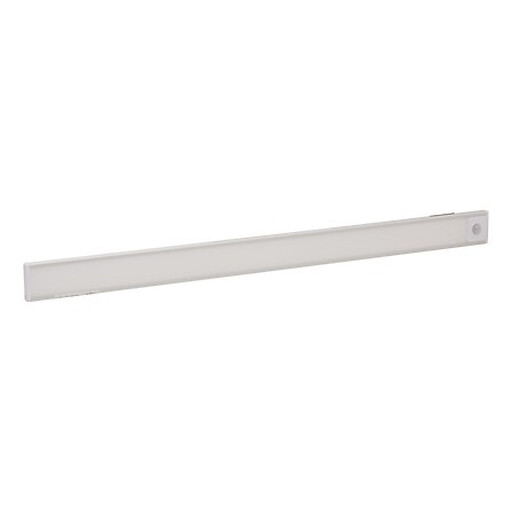
Why this product suits the profile: The longer LED light bar is designed for wardrobes, dressing areas, shelving and worktops that need additional lighting.
The specifications state a 57 cm light body, 6,000 K, a sensor range of around 2 metres and a lighting duration of approximately 30 seconds.
2,200 mAh battery, automatic motion detection, plus magnetic and adhesive mounting without screws.
We have put together a complete, regularly updated list of products that fully meet these strict selection criteria and the safety regulations applicable in the EU.
Clean the installation surface, remove dust and grease, and allow it to dry completely. With adhesive strips, press the light firmly into place for a few seconds. Magnetic models can be removed for charging. Mains-powered strips also require a suitable socket and secure cable management.
Operating time depends on the battery, brightness, sensor operation and how long the light is switched on. For example, a model with a 2,200 mAh battery may be specified as offering around 4.5 hours of operating time and approximately 5 hours of charging time. This is a product specification and may vary with individual use. If the brightness drops significantly or the battery shows signs of damage, stop using the light.
LED lights generally use less energy when operating than many older lighting technologies. However, wattage, daily usage time and the electricity price determine the running costs. A 22 W strip connected to the mains will incur different costs when left on continuously compared with a sensor-operated rechargeable light that only switches on briefly. Check the power consumption and use sensor or timer functions where they are suitable for the installation location.