
Lieferung heute & morgen

Qualitätsgarantie

Willkommens-Angebote freischalten: KOSTENLOSE Lieferung | Bis zu 80 % RABATT | Kostenlose 30-Tage-JoyPlus-Testphase
App herunterladen
Dark corners in cabinets, poorly lit kitchen countertops, or cluttered drawers are everyday annoyances. Targeted cabinet lighting with LED technology promises a simple and energy-efficient solution. However, the market is flooded with products whose real-world performance often fails to live up to their promises. As your Joybuy Product Recommendation Officer, I'll help you identify the crucial features and avoid typical pitfalls, enabling you to make an informed purchasing decision.
This guide focuses on the three most common problems found in budget-friendly LED cabinet lights and shows you what to look for to find a durable and functional solution.
cabinet light with a motion sensor that either doesn't turn on at all or only after repeated waving defeats its purpose. Even more problematic are sensors that stay on permanently, quickly draining the power in battery-operated models.display cabinet light with a sensor can disrupt a cozy living atmosphere. Conversely, a light that is too warm and yellowish is unsuitable for a kitchen under-cabinet LED light where food is prepared, as it distorts colors.To avoid these problems, you should check three core technical aspects before buying. These largely determine the functionality and longevity of your new lighting.
The choice of power source depends directly on the location of use and the desired flexibility.
wireless furniture light offers maximum flexibility. It is ideal for places without a direct power outlet, such as for battery-operated wardrobe lighting or drawer lighting. Pay attention to the battery's capacity (specified in mAh) and whether it is rechargeable via USB-C. This is a more sustainable and practical solution than constantly changing disposable batteries.kitchen under-cabinet LED light, a direct connection to the 230V power grid is the most reliable option. These models provide consistent, high brightness without performance degradation and eliminate the need for battery changes.The sensor is the heart of an automatic cabinet light. The technology should match the use case.
drawer lighting, this sensor activates the light through the vibration of opening and closing the drawer.The lighting effect is determined by two key metrics that are often overlooked.
dimmable LED strip with adjustable color temperature offers the greatest flexibility to adapt the light to any situation.Based on the criteria above, we have compiled a selection of products for specific user profiles.
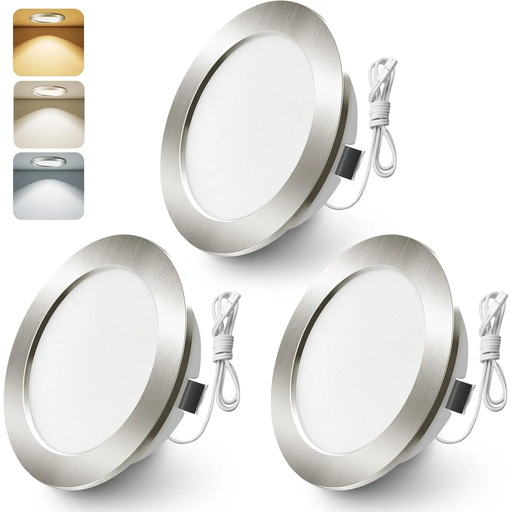
Why This Fits Their Persona: This light is designed for kitchen use, where hygiene and reliable function are crucial. The touchless control is ideal when working with wet or dirty hands.
The wired mains connection ensures consistent power without battery issues. The IR proximity sensor is optimized for gesture control and is more reliable than simple motion detectors in a busy kitchen. Mounting with clips is more stable than adhesive strips.
Touchless control via hand gesture; brightness (10-100%) and color temperature (3000K/4000K/6500K) are adjustable.
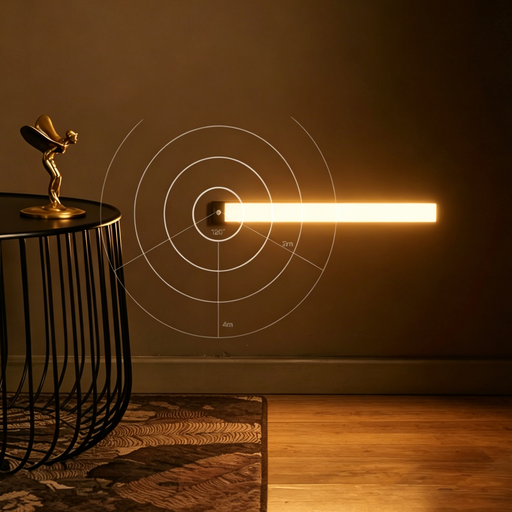
Why This Fits Their Persona: Ideal for renters or anyone looking for a hassle-free solution for wardrobes, pantries, or hallways. The installation requires no drilling, and the light can be easily detached and placed elsewhere if needed.
The magnetic mount is a robust alternative to pure adhesive strips. The light itself attaches magnetically to a pre-adhered metal plate, which makes it easy to remove for USB-C charging and prevents it from falling.
Ultra-thin design (under 1 cm); rechargeable battery; simple magnetic installation; reliable PIR motion sensor.
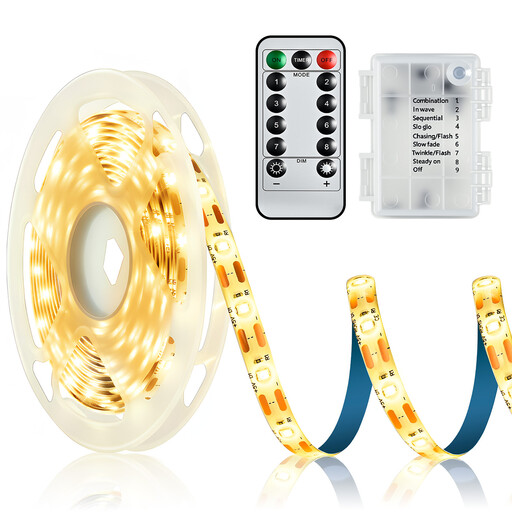
Why This Fits Their Persona: This LED strip is for anyone who wants to create accents with light. Whether as backlighting for a TV, decorating shelves, or setting a party mood, the various modes and remote control offer plenty of creative freedom.
This product avoids the pitfall of unsuitable light quality by offering 8 different dynamic modes. Instead of a fixed color temperature, the atmosphere can be adjusted via remote control. The strip is also cuttable, allowing for precise customization to fit furniture.
Battery-operated for flexible placement; 8 light modes and dimming function via remote control; cuttable and flexible.
We have compiled a complete, up-to-date list of products that fully meet these strict selection criteria and German safety regulations.
The battery life depends heavily on the frequency of use and the battery capacity (mAh). With average use (approx. 5-8 activations per day), most rechargeable models last for several weeks to months. Lights in continuous-on mode or with very sensitive sensors in busy areas will need to be charged more frequently. Check the manufacturer's specifications for battery life in sensor mode.
Yes, most LED strips can be cut. Look for the marked cutting points (often indicated by a scissor symbol). Cutting at these points will not damage the remaining LEDs. However, the cut-off section cannot typically be reused without special accessories (connectors and a separate power source).
For a kitchen under-cabinet LED light, a touchless IR proximity sensor (hand-wave sensor) is often the most practical choice. It prevents accidental activation from just walking by, which can happen with a PIR motion sensor, and is more hygienic than a touch switch because it operates without direct contact.