
Lieferung heute & morgen

Qualitätsgarantie

Willkommens-Angebote freischalten: KOSTENLOSE Lieferung | Bis zu 80 % RABATT | Kostenlose 30-Tage-JoyPlus-Testphase
App herunterladen
Upgrading to modern LED car lighting is a logical step for many vehicle owners looking to improve visibility and modernise their car's appearance. However, the market is crowded and full of pitfalls that can quickly lead to bad purchases, technical issues, or even legal repercussions. As your Joybuy Product Recommendation Officer, I'm here to help you understand the key criteria and make an informed decision.
Before you invest, it's important to be aware of the typical problems that arise with low-quality or incompatible products. A careful selection will save you time, money, and unexpected complications.
To avoid the mistakes mentioned above, you should carefully check three technical aspects before buying. These define the quality, legality, and functionality of your new car accessory lighting.
An ECE approval is legally required for all lighting equipment used on public roads (headlights, tail lights, indicators, daytime running lights). You can recognise this by the E-symbol in a circle or rectangle, followed by a code number, which is marked on the light itself or its packaging. This mark confirms that the product meets European standards for light distribution, brightness, and glare. An exception is special auxiliary lighting, such as an off-road LED bar, which is designed exclusively for use off public roads.
Compatibility goes beyond just the bulb base (e.g., H4, H7).
These three values determine the actual performance of your lighting:
Based on these criteria, we have selected some products for specific user groups.
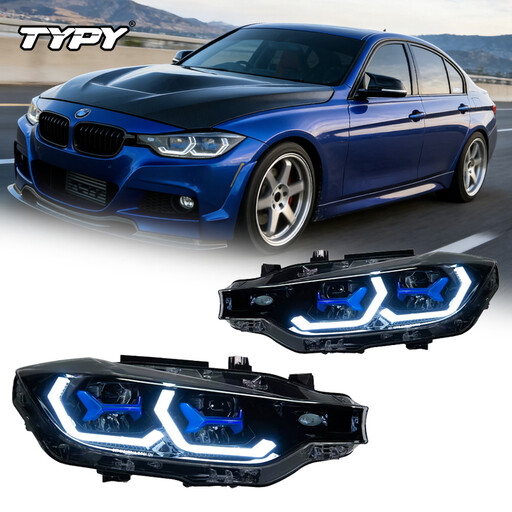
Why this product is a match: These headlights are designed specifically for the BMW 3 Series (F30/F35) and integrate the iconic Angel Eyes LED design as daytime running lights. They offer a complete plug-and-play solution for modernising the vehicle's front end.
The model-specific design minimises the risk of compatibility issues and CAN bus error messages, as the electronics are tailored to the vehicle.
Integrated design with low beam, high beam, daytime running light, and turn signal in one unit. According to the manufacturer, the housing is designed for durability and heat dissipation.
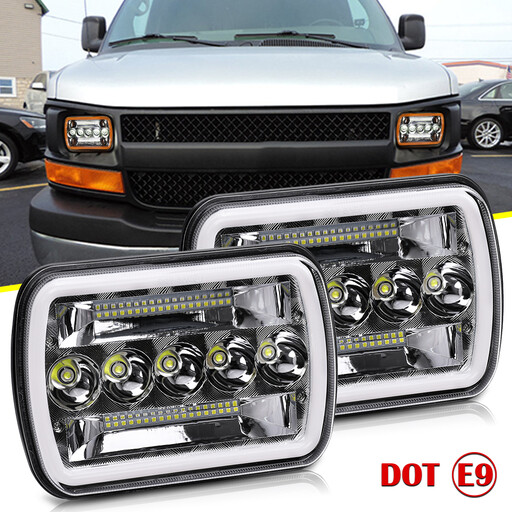
Why this product is a match: This headlight is designed for heavy-duty use in off-road vehicles like Jeeps (XJ, YJ) and trucks. Its robust construction and high light output are engineered for driving off paved roads.
The aluminium housing serves as an effective heat sink, and the IP68 rating protects against water and dust. This directly addresses the issues of overheating and lack of durability.
Multifunctional with high beam, low beam, daytime running light, and an amber turn signal. The specified lifespan of over 50,000 hours is an indicator of its robustness.
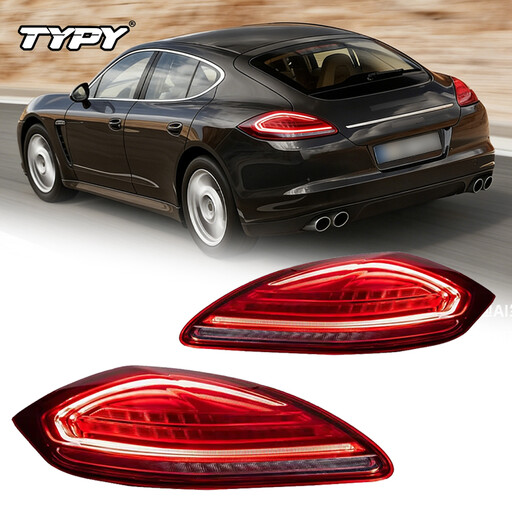
Why this product is a match: These tail lights provide a visual upgrade for owners of an older Panamera model. They replace the original lighting with a modern LED unit, often including features like a dynamic turn signal.
The precise fit for the specific 970.1 model reduces the risk of installation and compatibility problems. The connections are typically designed to match the vehicle's original plugs.
Allows for a significant visual modernisation of the vehicle's rear, bringing its appearance closer to that of newer models. The LED technology also offers a faster response time.
We have curated a comprehensive selection of products that meet our objective selection criteria. Find the right solution for your vehicle.
Yes, any lighting equipment used within the scope of road traffic regulations requires type approval. This is verified by the E-Mark on the component. This applies to main headlights, tail lights, indicators, and also to retrofitting daytime running lights. Auxiliary lights for off-road use are exempt, but they must not be switched on when on public roads.
CAN Bus (Controller Area Network) is a system in modern vehicles that manages communication between various control units. The lighting control module checks the electrical resistance of the bulbs. Since LEDs consume less power (and thus have a higher resistance) than halogen bulbs, the system often reports a fault. "CAN Bus compatible" LED lights have an integrated load resistor (or check resistor) that simulates the value of a halogen bulb, thereby preventing error messages.
The lifespan of LEDs is highly dependent on quality and thermal management. According to manufacturers, high-quality LEDs can achieve a lifespan of 30,000 to 50,000 operating hours. In comparison, a standard H7 halogen bulb has a lifespan of about 500 to 1,000 hours. An effective heat sink is crucial to ensuring this long lifespan in practice.