
Lieferung heute & morgen

Qualitätsgarantie

Willkommens-Angebote freischalten: KOSTENLOSE Lieferung | Bis zu 80 % RABATT | Kostenlose 30-Tage-JoyPlus-Testphase
App herunterladen
Choosing a new LED ceiling light can be more complex than it first appears. The market offers a wealth of designs and features, but not every light lives up to its promises. Incorrect brightness claims or an unsuitable light colour can ruin a room's atmosphere. This guide will help you identify the crucial features and avoid common pitfalls, so you can make an informed decision for your home.
Before we dive into the technical details, it's important to understand the most common post-purchase problems. A little foresight can save you from disappointment and extra costs.
To find the right LED ceiling light, you should focus on three objective criteria. These will help you correctly assess a light's performance and suitability for your needs.
Luminous flux indicates how much light a lamp actually emits. The following values can serve as a guide for the ambient lighting of different living areas:
Colour temperature is a key factor in determining a room's mood. The choice depends on the specific room and its use:
Models that are dimmable with a remote control often also offer the ability to adjust the colour temperature. Such a smart ceiling light provides maximum flexibility for different moods and times of day.
Beyond the technical specifications, design plays a crucial role. A flat ceiling light is excellent for rooms with low ceilings, as it has a minimal visual profile. For high ceilings or as a targeted focal point over a dining table, a dining table pendant light or a black pendant light is often a more fitting choice. Styles like an industrial pendant light or a gold ceiling light can create specific accents and enhance your interior design scheme.
Here are a few models tailored to specific needs and profiles that meet the criteria mentioned above.
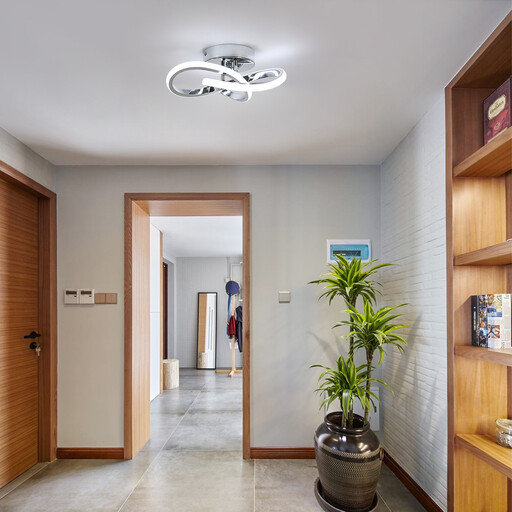
Why it's a great fit: Ideal for hallways, workspaces, or basements where bright, clear lighting and excellent value for money are the priority. Its compact design is space-saving and functional.
The colour temperature of 6500K is clearly declared. You get bright, daylight-like illumination designed for functional areas, so there are no unpleasant surprises in the living room.
High energy efficiency (2500 lumens from just 22W) and a high Colour Rendering Index (CRI ≥ 83) for accurate colour representation.

Why it's a great fit: Perfect for users who value seamless integration into their smart home (Alexa, Google Assistant) and appreciate minimalist design. The RGB backlight allows for creative lighting scenes.
With an IP54 rating, this light is explicitly designed for damp environments like bathrooms and kitchens, preventing moisture damage. The adjustable colour temperature avoids the trap of an unsuitable atmosphere.
An ultra-slim profile (approx. 2.5 cm) for a modern, floating look and hub-free Wi-Fi connectivity for easy smart control via app or voice.
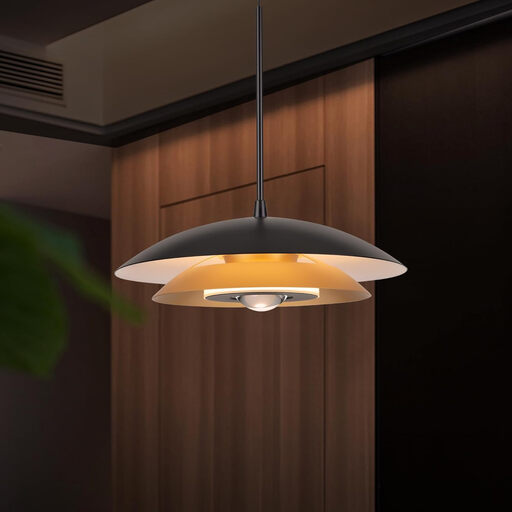
Why it's a great fit: Ideal as a pendant light over a dining table or kitchen island, where design is paramount and warm, directional lighting is desired.
The double-shade design with a gold interior is specifically engineered for glare-free, warm ambient light (3000K). It's a deliberate choice for atmosphere, not for primary illumination.
Refined industrial design with a black-and-gold contrast and dimmability (with a compatible switch) for flexible intensity adjustment.
We have curated a complete, up-to-date list of products that fully meet these strict selection criteria and safety standards.
For ambient lighting in a living room, a value of around 100 to 150 lumens per square metre is recommended. This level creates a pleasant and inviting atmosphere that isn't overly harsh. For focused task lighting, such as for reading or working, additional light sources like floor or table lamps should be planned.
This feature allows you to adjust the light's brightness, either continuously or in predefined steps, using an included remote control. Many of these models also allow you to adjust the colour temperature, shifting between warm white and cool white. This offers maximum flexibility to adapt the lighting to any situation—from focused work to a relaxing evening.
No, installation in a bathroom requires special care. Due to high humidity and the potential for water splashes, a light fixture must have an appropriate IP rating. For areas not in direct contact with water (e.g., general ceiling lighting), a minimum rating of IP44 (protection against splashing water from all directions) is required. Near a shower or bathtub, even higher IP ratings (IP65 or IP67) are mandatory. Always check the manufacturer's specifications regarding suitability for damp environments.