
Lieferung heute & morgen

Qualitätsgarantie

Willkommens-Angebote freischalten: KOSTENLOSE Lieferung | Bis zu 80 % RABATT | Kostenlose 30-Tage-JoyPlus-Testphase
App herunterladen
Choosing the right LED ceiling light can transform a room—or become a source of daily frustration. Marketing promises often lead to decisions that later prove impractical or costly. Before you select a new light for your living room, hallway, or bedroom, you should know the three most common pitfalls that lead to disappointment.
To avoid these mistakes, focus on three objective criteria. These will help you make an informed decision tailored to your needs.
The wattage only indicates energy consumption, not brightness. What's crucial is the luminous flux, measured in lumens (lm). An efficient LED ceiling light produces high lumens with low wattage. As a rule of thumb for good ambient lighting:
For a 15 m? hallway, a good benchmark would be around 1,500 lm.
The colour temperature, measured in Kelvin (K), determines the light colour and thus the mood of the room.
Models that are dimmable and offer an adjustable colour temperature provide maximum flexibility.
The form factor is more than just a matter of taste. A flat ceiling light is excellent for rooms with low ceilings, as is often the case in a hallway. A square LED ceiling light emphasizes clean, modern lines, while round models have a softer appearance. Pay attention to the dimensions to ensure the fixture is proportional to the room's size.
Here are some recommendations tailored to specific use cases that take the above criteria into account.
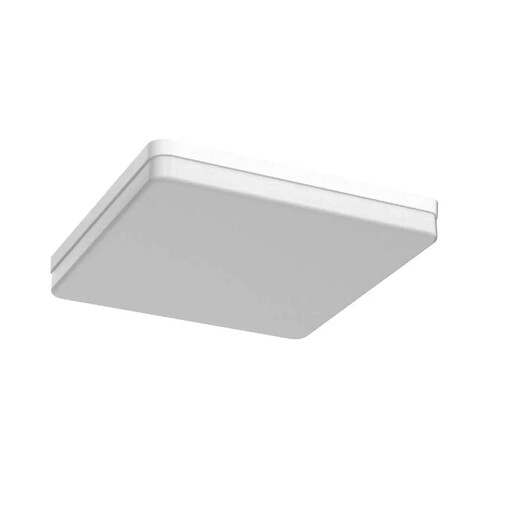
Why This Fits Their Persona: Ideal for users seeking functional, bright, and straightforward lighting for high-traffic areas like hallways, kitchens, or bathrooms. The flat, square design is unobtrusive and modern.
At 4500K, it provides a crisp neutral white light that is perfect for functional areas without falling into the sterile cool-white trap. The acrylic shade ensures glare-free, even light distribution.
High light output (3300 lm) for bright illumination. The ultra-slim design (approx. 3.5 cm) is ideal for low ceilings. Its Colour Rendering Index (CRI) of >80 ensures natural colours.
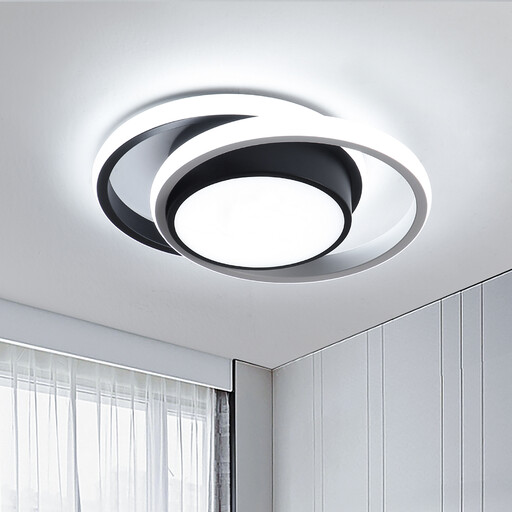
Why This Fits Their Persona: Perfect for anyone who wants full control over the lighting ambiance in their living room light or bedroom. The modern, black design adds a stylish accent.
This light is dimmable, and its colour temperature can be steplessly adjusted via remote control from warm white (3000K) to cool white (6000K). This completely avoids the trap of a mismatched, fixed light colour.
Maximum flexibility with a remote control for adjusting brightness and colour. With 4500 lm, it's also suitable for larger rooms up to 25 m?.
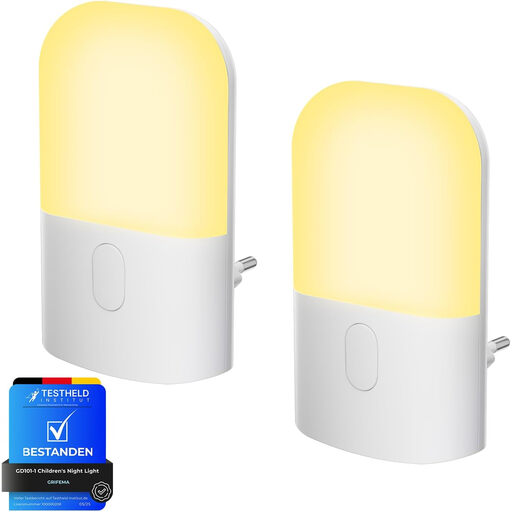
Why This Fits Their Persona: A solution for parents and safety-conscious individuals who want to provide guidance at night without turning on the main lights. Ideal for children's rooms, hallways, and staircases.
This LED night light is a specialised solution. It avoids the compromise of running a large ceiling light on its lowest setting at night, which is often still too bright and can be inefficient.
Automatic dusk-to-dawn sensor, adjustable brightness, and extremely low power consumption (0.5W). The warm white light (2700K) is particularly easy on the eyes and doesn't disrupt sleep.
We have compiled a complete, up-to-date list of products that fully meet these strict selection criteria and safety standards.
Many models are designed for easy installation. However, it should be noted that in many regions, electrical installations must be performed by a qualified electrician. Before performing any work on the electrical system, always turn off the power at the circuit breaker.
A simple rule of thumb can help guide you: For living areas like a living room or bedroom, plan for about 100 to 150 lumens per square metre. For workspaces like a kitchen or home office, where more brightness is needed, you should aim for 250 to 300 lumens per square metre.
The difference lies in the colour temperature, measured in Kelvin (K). Warm white (under 3,300 K) has a yellowish hue that creates a cosy and relaxed atmosphere—ideal for living spaces. Cool white (over 5,300 K) has a bluish tone that is reminiscent of daylight and promotes concentration. It is therefore better suited for work environments, garages, or basements.