
Lieferung heute & morgen

Qualitätsgarantie

Willkommens-Angebote freischalten: KOSTENLOSE Lieferung | Bis zu 80 % RABATT | Kostenlose 30-Tage-JoyPlus-Testphase
App herunterladen
Choosing a new LED ceiling light can quickly become overwhelming. The market is flooded with countless designs, technical specifications, and marketing promises. This often leads to a purchase that doesn't meet expectations: the light is glaring, colours in the room look dull, or the fixture advertised as "modern" turns out to be a dust trap with a complicated installation.
As your Joybuy Product Recommendation Officer, I'm here to help you navigate these pitfalls. We'll focus on the facts that truly matter and expose three common buying traps, so you can make an informed decision for your home.
To avoid a bad purchase, you should focus on three core aspects. These objective criteria will help you find the right lighting for any room.
The atmosphere of a room is significantly influenced by the light colour, measured in Kelvin (K).
Equally important is the Colour Rendering Index (CRI). It indicates how true-to-life colours appear under artificial light. A value of CRI > 80 is the standard for living spaces. A lower value makes colours look distorted and pale.
Consider how you want to control your light. Making an LED ceiling light dimmable can be achieved in several ways:
The material affects not only the look but also the durability. A black ceiling light made of powder-coated metal is robust and easy to clean. Models with real wood elements create a warm atmosphere, while acrylic diffusers ensure even, glare-free light distribution.
The design form is also relevant. A flat LED ceiling light is excellent for rooms with low ceilings, as it is visually unobtrusive.
For a bathroom ceiling light, the IP rating is crucial. It indicates how well the fixture is protected against the ingress of foreign objects and water. For areas that may be exposed to splashing water (e.g., near the shower), a minimum of IP44 is required.
Here are some models tailored to specific needs that cleverly avoid the pitfalls mentioned.
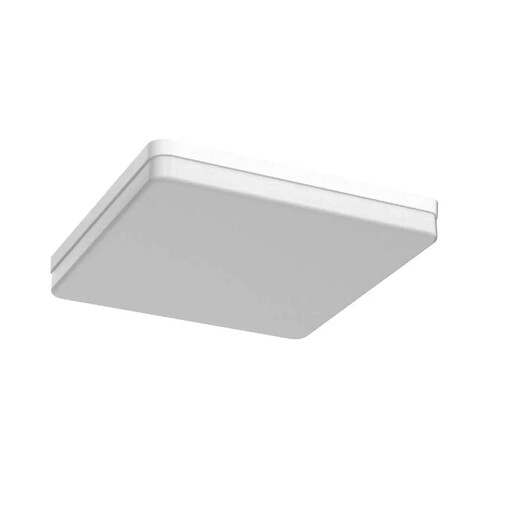
Why This Fits Their Persona: Ideal for those who need reliable, bright, and straightforward lighting for a hallway, kitchen, or home office without paying for unnecessary features.
Avoids the feature overload trap. It focuses on one job: delivering bright, neutral white light (4500 K). The flat design is practical and unobtrusive.
High light output (3300 LM at 36W) for bright ambient lighting. The high Colour Rendering Index (CRI > 80) ensures natural colours.
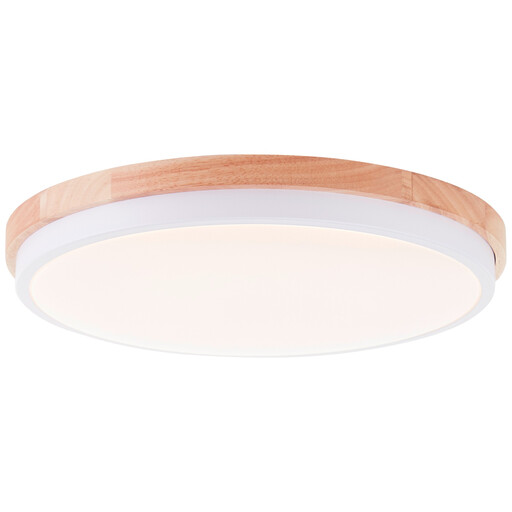
Why This Fits Their Persona: Perfect for users who appreciate a homely atmosphere with natural materials and want flexibility in their lighting mood without needing a complex smart home setup.
Sidesteps the design deception by using real wood. The dimming function is conveniently managed via the wall switch, avoiding dependency on apps or remote controls.
Integrated 3-step dimmer with a memory function. The warm white light (3000 K) and real wood design create an especially cosy ambiance.
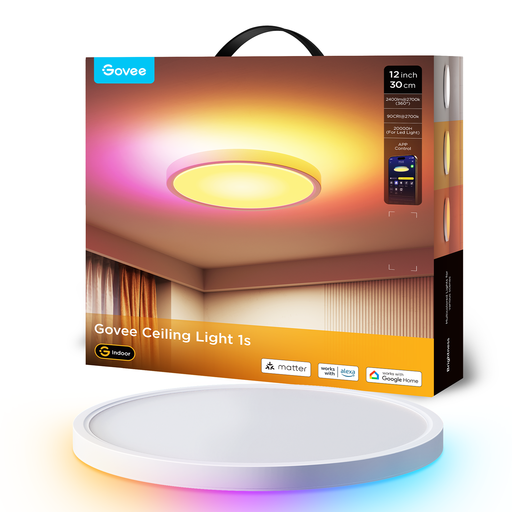
Why This Fits Their Persona: For anyone who wants to fully personalise their lighting and integrate it into their smart home system. Ideal for gaming rooms, living rooms, or for creating creative lighting accents.
Govee is an established brand in the smart lighting space, which suggests more reliable app maintenance and compatibility. The light offers full control over brightness and colour temperature, thus avoiding the lumen trap.
RGBIC backlighting for multi-colour effects. Wide colour temperature range (2200K–6500K) and compatibility with Alexa and Google Assistant.
We have compiled a complete, up-to-date list of products that fully meet these strict selection criteria and relevant safety standards.
As a rule of thumb for general lighting in living areas like the living room or bedroom, about 100 to 150 lumens per square metre are recommended. For a 20 m? living room, that would be 2,000 to 3,000 lumens. In work areas like the kitchen or office, 250 to 300 lumens per square metre are more appropriate. A dimmable light offers the greatest flexibility here.
Installing a ceiling light involves working with household electrics (230 Volts). For safety and to ensure your insurance coverage remains valid in case of damage, regulations in many regions require such work to be carried out only by a qualified electrician.
The IP (Ingress Protection) rating consists of two digits. The first digit (0-6) describes protection against foreign objects (like dust), and the second (0-9) describes protection against water. For a bathroom ceiling light, the following ratings are relevant: