
Lieferung heute & morgen

Qualitätsgarantie

Willkommens-Angebote freischalten: KOSTENLOSE Lieferung | Bis zu 80 % RABATT | Kostenlose 30-Tage-JoyPlus-Testphase
App herunterladen
Choosing a new LED ceiling light can quickly become overwhelming. The market is flooded with technical specs and design promises, but not every light lives up to them. Often, small but crucial flaws can turn a seemingly good choice into a purchase you'll regret. As your Joybuy Product Recommendation Officer, I'll help you spot the typical pitfalls and make an informed decision.
Three common problems consistently lead to dissatisfaction:
This guide will show you which parameters truly matter, ensuring your next LED ceiling lamp perfectly serves its intended purpose.
To avoid a bad buy, you should focus on three core technical features. These determine the functionality, atmosphere, and safety of your new lighting.
With traditional incandescent bulbs, wattage was a good indicator of brightness. This is not the case with LED technology. The crucial unit of measurement for brightness is lumens (lm).
As a rule of thumb for a room's ambient lighting, you can plan for about 100 to 150 lumens per square metre. For a 20 m? living room, that would be 2000 to 3000 lumens. For work areas like a kitchen or home office, 250 to 300 lumens per square metre is more advisable.
The colour temperature, measured in Kelvin (K), determines whether the light is perceived as warm and cosy or cool and energising.
Many modern LED ceiling lights are dimmable and offer an adjustable colour temperature, often controllable with a remote control.
The IP (Ingress Protection) rating indicates how well a light is protected against the ingress of foreign objects (first digit) and water (second digit).
Choosing the right IP rating is not a minor detail, but an essential safety precaution.
Instead of presenting an overwhelming list, we have selected products for specific user profiles.
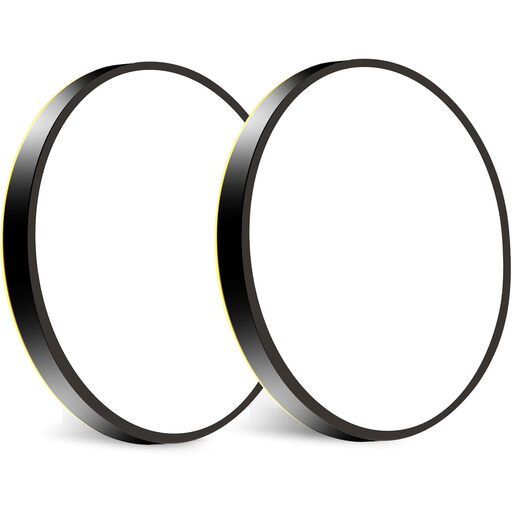
Why This Fits Their Persona: Ideal for anyone seeking functional and safe lighting for utility spaces like the kitchen, hallway, or bathroom. The set of two allows for a uniform look across multiple rooms or large-area illumination.
With its IP54 rating, this light is explicitly designed for damp environments, avoiding the common mistake of installing an unprotected lamp in the bathroom. The bright, cool white light (6500K) is clearly specified and ideal for work areas.
Practical set of 2 for a consistent design. High protection against splashing water (IP54) for safe use in the kitchen and bathroom.
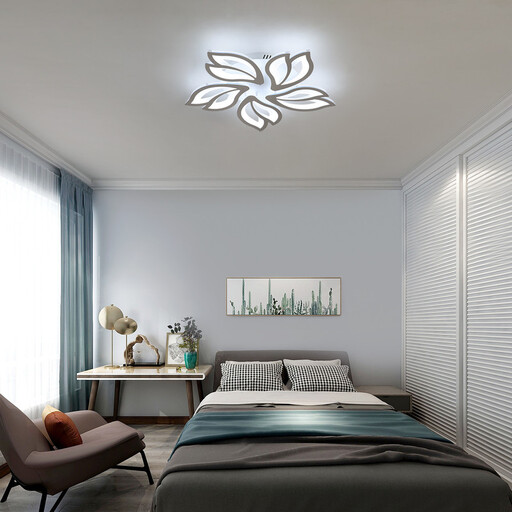
Why This Fits Their Persona: For users who see a light not just as a source of illumination, but as a central design feature in their living room or bedroom. The floral design is an eye-catcher, and the smart functions offer maximum convenience.
The adjustable colour temperature from 3000K to 6500K completely solves the problem of the wrong lighting ambiance. You can switch between cosy warm white and energising cool white at any time via remote control and continuously dim the brightness.
Full control over brightness and colour temperature via remote and app. Unique, decorative design.
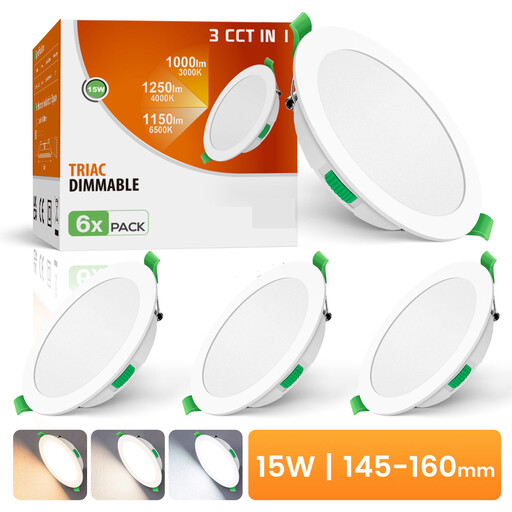
Why This Fits Their Persona: Perfect for renovators and DIY enthusiasts who need a versatile solution for various rooms. The LED recessed spotlights are low-profile, discreet, and can be used in almost any room thanks to their technical features.
This set addresses all three pitfalls: The 3CCT function (3000K/4000K/6500K selectable) prevents the wrong colour choice, the IP44 rating allows for installation in the bathroom, and the dimmability ensures the right brightness.
Maximum flexibility through selectable colour temperature, dimmability, and IP44 protection. The ultra-slim design is ideal for suspended ceilings.
We've compiled a complete, up-to-date list of products that fully meet these strict selection criteria and German safety regulations.
1. What does the IP rating on an LED ceiling light mean? The IP rating consists of two digits. The first (0-6) describes protection against foreign objects and contact, while the second (0-9) describes protection against water. For a bathroom, at least IP44 (protection against splashing water) is required to ensure safety and longevity. For dry living areas like the living room or bedroom, IP20 is usually sufficient.
2. Can I dim any LED ceiling light? No. Only lights explicitly marked as "dimmable" can have their brightness adjusted. Also, pay attention to whether a special LED dimmer is required, as conventional dimmers are often incompatible and can cause flickering or damage to the light.
3. How many lumens do I need for my living room? This depends on the size of the room and the desired atmosphere. As a guideline for pleasant ambient lighting in the living room, about 100-150 lumens per square metre is recommended. For a 25 m? living room, you would need one or more lights with a total output of 2500 to 3750 lumens. For a cosier mood, dimmable lights can be a great choice.