Joybuy Insights

LED Ceiling Light Buying Guide: How to Avoid Costly Mistakes

Choosing a new LED ceiling light can quickly become overwhelming. Online descriptions make grand promises, but disappointment often sets in after installation: the light is too harsh, the lamp looks cheap, or it simply doesn't match the room's atmosphere. As your Joybuy Product Recommendation Officer, I'll help you identify the common pitfalls and make an informed decision based on facts, not marketing hype.

The 3 Most Common Pitfalls When Buying a Ceiling Light

Before we dive into the technical details, let's shed some light on the three most common issues that can lead to a bad purchase.

  1. Misleading Power Ratings: Many manufacturers advertise high wattage figures, meant to evoke the memory of old incandescent bulbs. However, this specification says very little about the actual brightness of a modern LED lamp. You might buy a supposedly powerful light only to receive a dim glow.
  2. Inferior Materials: A ceiling light is a long-term investment. Yet, it's common for acrylic shades to yellow after a short time, metal parts to rust in humid rooms like a kitchen ceiling light, or for the paint to peel off.
  3. Lack of Flexibility: A light is purchased and installed, but its ambiance is set in stone forever. A non-dimmable ceiling light with a fixed colour temperature can feel uninviting in the living room in the evening, even if it was perfect during the day.

What Really Matters: The Crucial Metrics of an LED Ceiling Light

To avoid these traps, it's essential to interpret product data correctly. Pay attention to the following three parameters to objectively assess a light's quality and suitability.

Lumens, Not Watts: The True Measure of Brightness

Forget wattage as an indicator of brightness. For an LED ceiling lamp, the key metric is lumens (lm). Lumens measure the actual luminous flux—that is, how brightly a lamp shines. Watts merely indicate energy consumption.

  • Guideline for Living Spaces: For general ambient lighting in a living room or bedroom, around 100-150 lm per square metre is a good benchmark.
  • Guideline for Workspaces: In the kitchen or home office, where more brightness is needed, you should plan for 250-300 lm per square metre.

Colour Temperature in Kelvin (K): Ambiance at Your Fingertips

The colour temperature, measured in Kelvin (K), significantly determines the light's colour and, consequently, the atmosphere of a room.

  • Warm White (below 3,300 K): Creates a cosy, yellowish light, similar to a classic incandescent bulb. Ideal for living rooms and bedrooms.
  • Neutral White (3,300 – 5,300 K): A clean, white light that promotes concentration. Well-suited for bathrooms, hallways, or the kitchen ceiling light.
  • Cool White (above 5,300 K): Appears daylight-like to bluish and is often used in basements, garages, or commercial spaces.

A dimmable ceiling light with adjustable colour temperature offers the greatest flexibility for rooms with varying uses.

Material and Construction: Integrated LED or E27 Socket?

The construction type affects design, longevity, and flexibility.

  • Integrated LED Modules: Enable a very slim and modern design (flush mount ceiling light). The light sources are permanently installed and often have a long lifespan (manufacturers frequently claim 20,000 hours or more). The drawback: if the module fails, the entire fixture usually needs to be replaced.
  • E27 Socket: The classic screw socket (E27 ceiling lamp) offers maximum flexibility. You can replace the bulb at any time, choose the brightness and colour temperature yourself, and even use smart bulbs. Designs range from vintage pendant lights to industrial chandeliers.

Our Selection: The Right LED Ceiling Lights for Different Needs

Based on these objective criteria, we have selected a few models for typical use cases.
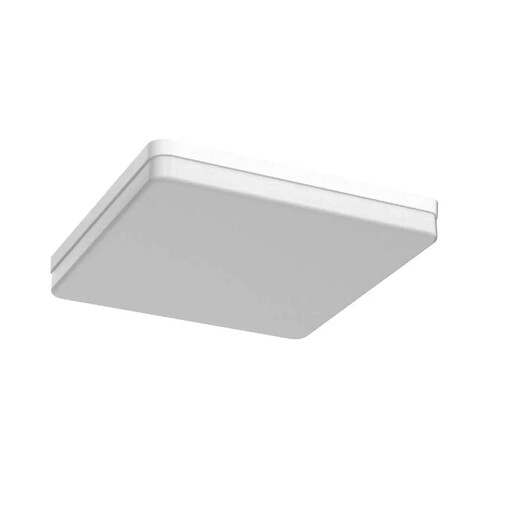
SUITABLE FOR: BUDGET-CONSCIOUS BEGINNERS
Goeco White Square LED Ceiling Light 36W 3300LM 4500K for Bathroom Bedroom Kitchen Hallway

Goeco White Square LED Ceiling Light 36W 3300LM 4500K

Why it's a great fit: Ideal for anyone seeking functional, bright, and straightforward lighting for a hallway, kitchen, or bathroom. The design is minimalist and blends unobtrusively into most environments.

How to Avoid the Pitfall

The product description provides clear, unambiguous specs: 3300 lumens of brightness and a 4500K colour temperature (Neutral White). You know exactly what you're getting, avoiding the trap of vague performance claims.

Key Advantage & Highlights

High light output for its energy consumption. The ultra-slim design (approx. 3.5 cm) makes it an excellent choice for rooms with low ceilings.
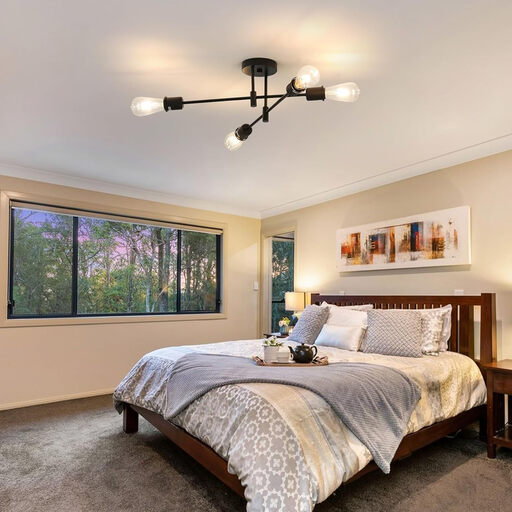
SUITABLE FOR: STYLE AFICIONADOS
Pheashine Black four-arm ceiling light, E27 socket, bulbs not included, suitable for living rooms and bedrooms

Pheashine Black 4-Arm Ceiling Light, E27 Socket

Why it's a great fit: For those who see their lighting as a design statement. This industrial-style fixture is an eye-catcher and can be customised by choosing your own bulbs (e.g., Edison bulbs).

How to Avoid the Pitfall

By using four standard E27 sockets, you bypass the inflexibility trap. You determine the brightness, colour, and dimmability yourself by selecting the appropriate bulbs. The metal construction is also robust.

Key Advantage & Highlights

The arms of the light are adjustable, allowing you to adapt the design and light distribution to your space. Maximum creative freedom.
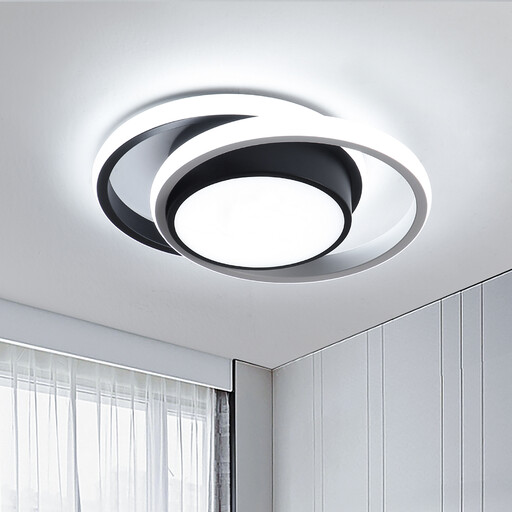
SUITABLE FOR: CONVENIENCE SEEKERS
Pheashine Dimmable LED Ceiling Light 40W ?40CM 4500LM 3000K-6000K Remote Control Black for Bedroom Kitchen Hallway

Pheashine Dimmable 40W LED Ceiling Light with Remote Control

Why it's a great fit: Perfect for multi-functional spaces like the living room or bedroom. Adjust the light via remote control to suit any situation—from bright task lighting to a cosy evening glow.

How to Avoid the Pitfall

This model solves the problem of fixed lighting. With an adjustable colour temperature from 3000K to 6000K and stepless dimming, you have full control and aren't locked into a single lighting mood.

Key Advantage & Highlights

Complete lighting control from the comfort of your sofa. The combination of dimmability and adjustable colour temperature in a modern, black design.

Looking for more options?

We've compiled a complete, up-to-date list of products that meet these strict selection criteria and UK safety regulations.

Frequently Asked Questions (FAQ)

1. How many lumens do I need for a room?

As a rule of thumb, you can use the following values as a guide:

  • Living rooms and bedrooms: approx. 100-150 lumens per m?
  • Kitchens and bathrooms: approx. 250-300 lumens per m?
  • Hallways and storage rooms: approx. 100 lumens per m? A 20 m? living room, therefore, requires about 2000-3000 lumens for good general illumination.

2. What's the difference between an E27 ceiling light and one with an integrated LED?

An E27 ceiling light uses replaceable bulbs with a standard screw socket. This gives you the freedom to change bulbs as you wish. A fixture with an integrated LED has the light source permanently built-in. This often allows for a slimmer, more modern design and a long lifespan, but if it fails, the entire fixture must be replaced.

3. How do I install an LED ceiling light?

Installation requires connecting to the 230V mains supply. Before starting any work, always switch off the fuse for the corresponding circuit and verify that the power is off with a suitable voltage tester. If you are unsure, the installation should always be carried out by a qualified electrician to avoid safety risks.