
Lieferung heute & morgen

Qualitätsgarantie

Willkommens-Angebote freischalten: KOSTENLOSE Lieferung | Bis zu 80 % RABATT | Kostenlose 30-Tage-JoyPlus-Testphase
App herunterladen
Choosing a new LED ceiling light seems simple at first glance. But often, disappointment sets in after installation: the light is too harsh or too dim, the colour temperature creates an uncomfortable atmosphere, or the lamp in the bathroom fails after just a short time. These issues are often due to common misconceptions and unclear product specifications. Before you make a decision, you should know the three most common pitfalls to avoid a bad purchase.
To make the right choice, it's essential to understand a light's technical data and match it to the specific room. Three parameters are of central importance.
Forget wattage as a measure of brightness. The luminous flux in lumens (lm) indicates how much light a lamp actually emits. The following guide values apply for appropriate illumination:
The colour temperature in Kelvin (K) determines whether the light is perceived as warm and cosy or as cool and functional.
A dimmable LED ceiling light that also allows for colour temperature adjustment offers maximum flexibility for different moods and requirements.
In rooms with high humidity or potential splash water, such as the bathroom or laundry room, the IP rating is an indispensable safety feature. The abbreviation "IP" stands for "Ingress Protection." The first digit describes protection against foreign objects (e.g., dust), and the second describes protection against water.
For the bathroom, an IP54 ceiling light is a safe choice. The "5" stands for complete protection against contact and protection against internal dust deposits, while the "4" ensures protection against splashing water from all directions. A light with no or too low an IP classification (e.g., IP20) is unsuitable for damp rooms.
Based on these objective criteria, we have compiled a few models for different needs and rooms.
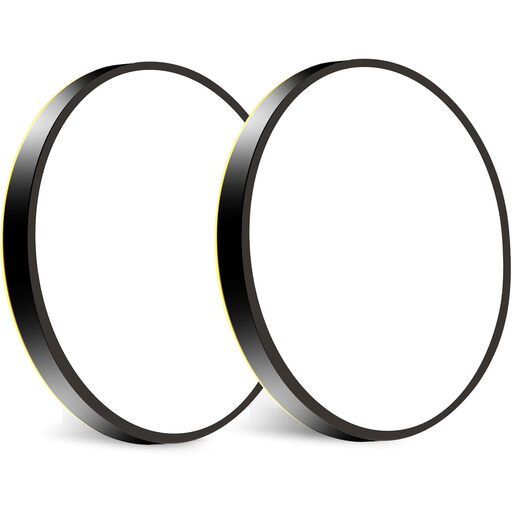
Why This Fits Their Persona: Ideal for users seeking reliable and safe lighting for a bathroom, kitchen, or covered balcony. The set of 2 offers a uniform and cost-effective solution for multiple areas.
The IP54 certification directly addresses the safety risk in damp rooms. The clear specification of 6500K Cool White and 3600 Lumens per light prevents purchasing mistakes related to colour temperature and brightness.
Protection against splash water and dust; high, clear brightness for task areas; practical set for a consistent look.
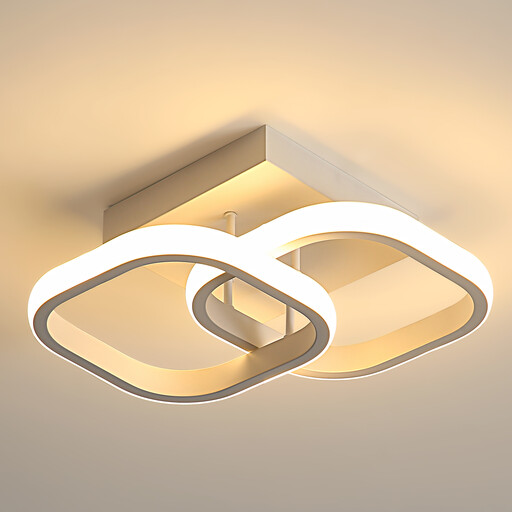
Why This Fits Their Persona: Perfect for anyone seeking discreet and stylish lighting for living rooms or bedrooms. The simple, low-profile design blends seamlessly into modern interior styles.
The precise specification of 3500K Warm White falls in the neutral-warm range, avoiding the trap of overly cool light. Its design as a low-profile LED ceiling light and square ceiling lamp specifically meets modern aesthetic demands.
Modern, minimalist design; energy-efficient LED technology; pleasant light colour for living areas.
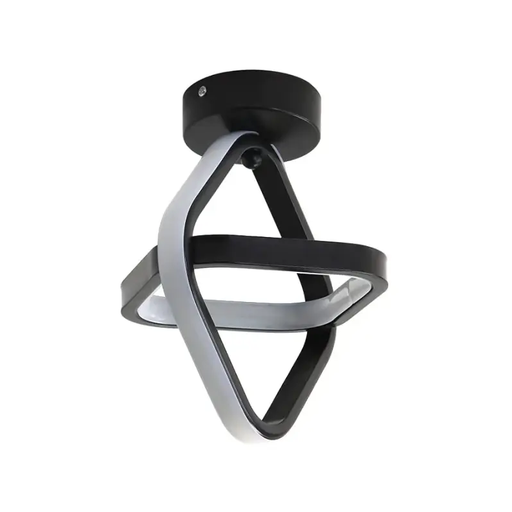
Why This Fits Their Persona: A solid and affordable choice for hallways, storage rooms, or small balconies. The black ceiling light offers a modern design without breaking the budget.
With clear values of 2700 Lumens and 3000K Warm White, this light offers reliable performance and prevents disappointment in brightness and ambiance, which is common with budget models.
Great value for money; compact design; pleasant warm white light for transitional areas.
We have compiled a complete, up-to-date list of products that fully meet these strict selection criteria and UK safety regulations.
For an average living room (approx. 20 m?), a baseline illumination of 2,000 to 3,000 lumens is recommended (100-150 lm/m?). This can be achieved with a single, powerful LED ceiling light or by combining multiple light sources.
Not always. Many dimmable LED lights require a special LED dimmer switch (leading-edge or trailing-edge). A standard switch can only turn the light on and off, not regulate its brightness. Some models have an integrated dimming function controlled by a remote or in steps via the normal light switch. Check the product description for compatibility notes.
The IP rating indicates how well a light is protected against the ingress of foreign objects and water. Different zones are defined for the bathroom. An IP44 light is protected against splashing water and is suitable for areas further away from the shower or bath. An IP54 or IP65 light offers even higher protection and is a safe choice for general ceiling lighting in the bathroom.