
Lieferung heute & morgen

Qualitätsgarantie

Willkommens-Angebote freischalten: KOSTENLOSE Lieferung | Bis zu 80 % RABATT | Kostenlose 30-Tage-JoyPlus-Testphase
App herunterladen
An LED ceiling light should illuminate the room brightly enough, complement your interior style and work reliably day after day. However, choosing the right model involves more than attractive design images and high lumen figures. Unclear product specifications, an unsuitable light colour or the lack of a dimming function often lead to disappointing purchases.
An LED ceiling lamp with a high lumen output is not automatically suitable for every room. Room size, beam angle and intended use are all important. A very bright light can feel impractical in a bedroom, while a weaker ceiling light may not provide enough illumination in a living room or office.
The statement “equivalent to a conventional light bulb with … watts” is also merely a comparison value. The luminous flux in lumens is what determines the actual brightness.
A warm white ceiling light with around 2,700 to 3,000 Kelvin creates a cosier atmosphere and is often well suited to bedrooms, living rooms or dining rooms. Neutral white light at around 4,000 Kelvin can be practical for hallways, kitchens or work areas. Daylight-like values of up to around 6,500 Kelvin appear considerably cooler and are often chosen for concentrated work or areas where good visibility is important.
If you buy a light with a fixed colour temperature, you usually cannot change it later. A dimmable LED ceiling light or a model with adjustable colour temperature offers greater flexibility.
When buying a smart ceiling light, check which connection standards it actually supports. “App control” could mean Wi-Fi, Bluetooth Mesh or a proprietary manufacturer app. You should also check whether a hub is required, whether only 2.4-GHz Wi-Fi is supported and whether the voice assistant you want to use works with Alexa, Google Assistant or another system.
The following points provide useful guidance:
Colour temperature is measured in Kelvin. The CRI or Ra value also provides information about colour rendering. For example, the Aigostar model has a specified value of Ra ≥ 80. This is an objective technical indication of colour reproduction, but it does not guarantee a particular quality of living environment.
A colour-changing ceiling light offers RGB colours in addition to white light tones. For everyday room lighting, it is also worth checking the available white-light brightness. The Hama model specifies a maximum of 1,800 lumens, as well as a separate figure of 1,000 lumens for white light.
IP20 is often sufficient for dry indoor areas. However, an LED ceiling light for a bathroom, kitchen or damp-prone cellar should have an appropriate ingress protection rating. The Hama model is rated IP54 and, according to the product description, is intended for indoor areas such as bathrooms, kitchens and cellars. However, the protection rating does not replace checking the specific installation zone and local electrical requirements.
When assessing energy consumption, compare the power consumption in watts with the luminous flux in lumens. The energy efficiency class is also relevant: the Brilliant Teranon model is specified as energy efficiency class F, the Aigostar model as E and the Brilliant Ranni light as D. With many models, integrated LED technology means that individual bulbs cannot be replaced. Always check the product specifications and warranty conditions before buying.
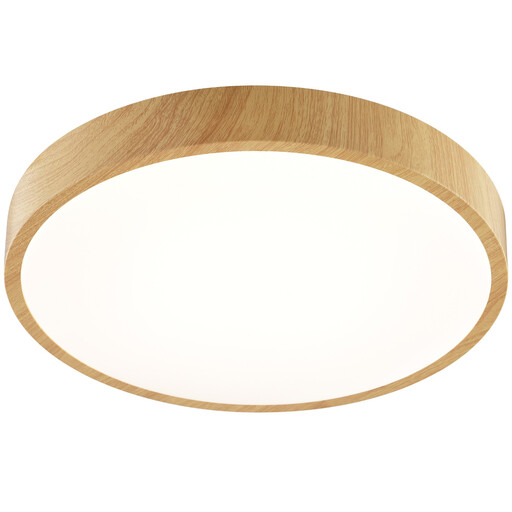
Why this product suits the profile: This 38.5 cm light provides 2,300 lumens at 24 W and 3,000 K. It is therefore suitable as warm white general lighting for living rooms, bedrooms, hallways or dining areas.
The luminous flux, colour temperature, power consumption and diameter are clearly stated. However, the light is not dimmable, which should be taken into account before purchase.
Warm white light, a compact design and a plastic surface with a wood-effect finish. IP20 is intended for dry indoor areas.
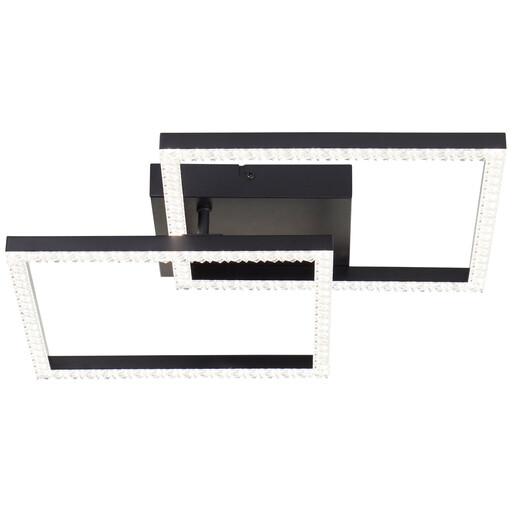
Why this product suits the profile: The square design with a black finish and crystal effect is aimed at buyers who value distinctive styling alongside general illumination.
The specifications of 20 W, 2,700 lumens, 4,000 K, 41 × 41 cm and energy efficiency class D make objective comparisons easier. The light is not specified as dimmable.
2,700 lumens at 20 W, a swivelling frame element and a compact square shape. IP20 indicates use in dry indoor areas.
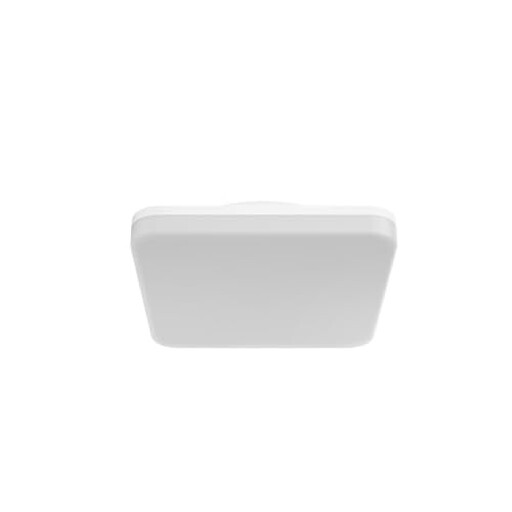
Why this product suits the profile: This smart ceiling light supports Matter, Wi-Fi, app control and voice control. Colour temperatures from 2,700 to 6,500 K, RGBW and continuously variable dimming allow you to create a range of lighting scenarios.
The supported systems and requirements are clearly specified: Matter, Apple Home, Google Home, Samsung SmartThings, Home Assistant and Smart Life. The Hama app requires 2.4-GHz Wi-Fi.
IP54 protection for certain damp indoor areas, continuously variable dimming and app-based schedules. The light delivers up to 1,800 lumens at 18 W.
We have put together a complete, regularly updated list of products that fully meet these strict selection criteria and the safety regulations applicable in the EU.
The electrical connection of a permanently installed ceiling light should be carried out in Germany by a suitably qualified electrician. Switch off the power supply before installation. In bathrooms and other potentially damp areas, the installation location, protection rating and local installation requirements must be compatible.
Power consumption is crucial for keeping running costs low. An 18-W light uses less electricity with daily use than a comparable model with a higher wattage. The actual cost depends on how long it is used and your electricity tariff. A simple calculation is:
Wattage ÷ 1,000 × operating hours × electricity price = running costs
Integrated LEDs generally do not require a separate bulb. If a fault occurs, the entire light will therefore usually need to be inspected or replaced. A dry, soft cloth is sufficient for regular cleaning; aggressive cleaning products can damage surfaces and covers.
This depends on the room size, ceiling height, wall colour and intended use. As a rough starting point, 1,500 to 2,500 lumens is often suitable for small to medium-sized rooms. Larger rooms or work areas may require more light. Several lights can provide more even illumination than a single very bright lamp.
Warm white light between 2,700 and 3,000 Kelvin is often chosen for a bedroom ceiling light. If you prefer flexible use, consider a dimmable LED ceiling light with adjustable colour temperature. For reading or tidying, a more neutral light may be more practical.
No. An LED ceiling lamp with app control must also have an IP protection rating suitable for the intended installation location. App features say nothing about protection against moisture. Before buying, check the IP marking, installation zone and manufacturer’s specifications.