
Lieferung heute & morgen

Qualitätsgarantie

Willkommens-Angebote freischalten: KOSTENLOSE Lieferung | Bis zu 80 % RABATT | Kostenlose 30-Tage-JoyPlus-Testphase
App herunterladen
An LED ceiling light should illuminate a room reliably, be compatible with the existing electrical installation and work for as long as possible without unnecessary follow-up costs. In practice, however, unsuitable purchases are often caused not by the lighting technology itself, but by unclear product specifications, incompatible installation dimensions or incorrectly assessed smart home functions.
Wattage describes power consumption, not brightness directly. For comparison purposes, luminous flux in lumens is more important. For example, a 6 W, 600 lm light is more suitable for smaller areas or as part of a lighting arrangement comprising several fixtures. By contrast, a 36 W ceiling light with 3960 lm is designed for larger living or working areas.
Room height, wall colours and beam angle also affect perceived brightness. A wide 120° beam angle distributes light over a large area, while an LED ceiling spotlight may be directed more strongly towards a specific area.
Depending on the model, a dimmable ceiling light may be operated via an app, Bluetooth, Wi-Fi, voice control or a special dimmer. This does not automatically mean that it is compatible with an existing wall dimmer. Before buying, check which control method is actually supported.
With a smart LED ceiling light, the app, gateway and network standard are also relevant. Bluetooth Mesh enables several lights to be connected, but certain products may require a gateway for remote control.
With an LED recessed light, the opening in the ceiling must match the specified diameter exactly. A light designed for 120–130 mm will not automatically fit an existing 150 mm opening. The IP rating is also crucial for damp areas. IP20 is intended exclusively for dry indoor spaces and is not suitable for bathrooms, covered outdoor areas or rooms with high condensation.
As a practical starting point, consider the luminous flux:
The CRI or Ra value describes how naturally colours appear under the light. A value of Ra ≥80 is specified for several of the lights listed here. This is a useful comparison value for living spaces, but it does not replace individual lighting planning.
A CCT ceiling light or LED ceiling light with adjustable colour temperature usually offers a range from warm white to daylight white. Warm white settings of around 2700–3000 K are often suitable for bedrooms and cosy living areas. More neutral or cooler settings can be useful in hallways, kitchens, offices or retail spaces.
The description ‘3 colour temperatures’ indicates preset light colours. A wider range such as 2700–6500 K, on the other hand, allows finer adjustment. RGBW models add coloured light, which is not necessary for every room and can make operation more complex.
Ceiling lights with 220–240 V must be connected correctly by a qualified professional. Before installation, switch off the power supply at the fuse box. For permanently wired lights, installation should be carried out by a qualified electrician in accordance with local regulations.
Also check for:
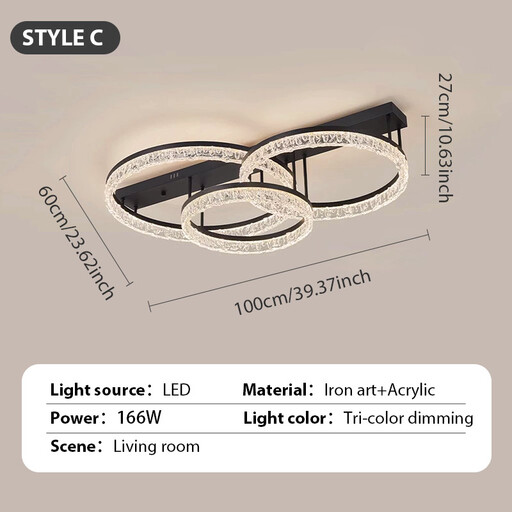
Why this product suits this profile: This round metal light offers three selectable colour temperatures and is designed for bedrooms, living rooms and hallways. It provides buyers with straightforward general lighting without the need for a separate smart home set-up.
The three light colours make the choice more transparent than a vague description such as ‘modern lighting’. Nevertheless, check the complete information on lumens and dimmability before buying.
Round design, metal construction and three colour temperatures for several dry indoor spaces.
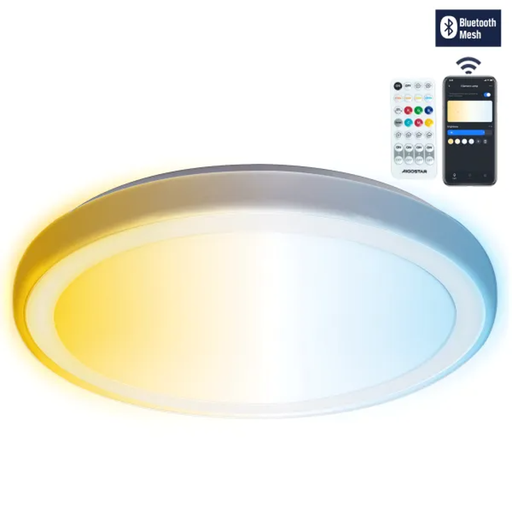
Why this product suits this profile: With 3960 lm, 36 W, 3000–6500 K, a 120° beam angle and Bluetooth Mesh configuration, it is designed for larger living rooms, offices or commercial indoor areas.
The specifications for luminous flux, colour temperature, beam angle and operating voltage allow for precise planning rather than comparison based solely on marketing terms.
3960 lm, 3000–6500 K CCT range, dimmable and Bluetooth Mesh; IP20 for dry indoor spaces.
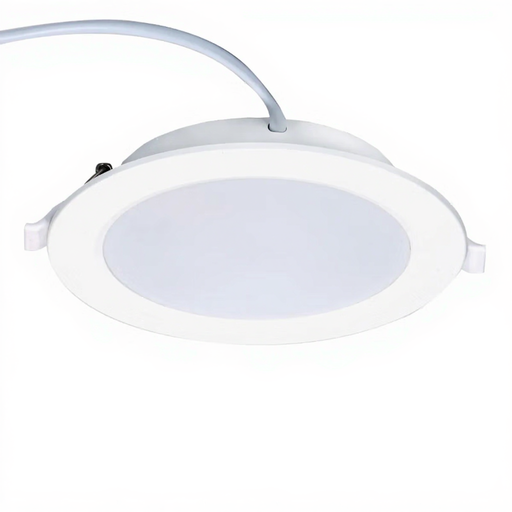
Why this product suits this profile: This recessed spotlight delivers 780 lm at 9 W and requires a ceiling opening of 120–130 mm. It is suitable for hallways, rooms and commercial indoor areas with multiple light points.
The precise installation dimensions reduce the risk of an unsuitable ceiling opening. Before ordering, measure the existing opening and check whether a gateway is required.
780 lm, 2700–6500 K, Bluetooth Mesh, dimmable and a 120° beam angle; IP20 for dry indoor spaces.
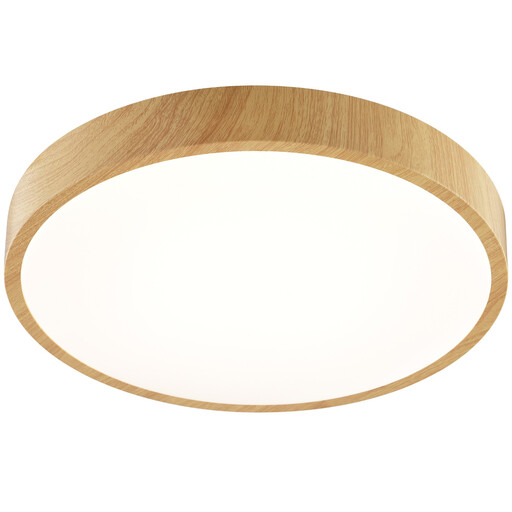
Why this product suits this profile: According to the product specifications, the 24 W light produces 2300 lm at 3000 K. It is suitable for living rooms, bedrooms, hallways or dining areas when app control is not required.
The lack of dimmability is clearly stated. This makes it easier to choose the light when you want consistent brightness without additional controls.
2300 lm, 3000 K, 24 W, 38.5 cm diameter and ceiling installation; plastic with wood-effect finish.
Running costs depend on power, daily usage time and the electricity tariff. A 6 W light used for five hours a day consumes around 10.95 kWh per year in theory. A 36 W light uses approximately 65.7 kWh under the same conditions. These figures show why energy-efficient LED lighting should be selected not only by efficiency class, but also according to the actual lighting requirements.
A very bright light can provide unnecessarily high levels of illumination in a small room. Conversely, several low-output LED recessed spotlights can result in uneven lighting. Always compare lumens per watt, room size and how the space is used.
We have put together a complete, regularly updated list of products that fully meet these strict selection criteria and the safety regulations applicable in the EU.
This depends on the room size, ceiling height and intended use. For a small hallway, 600–1000 lm may be sufficient. Larger living rooms, offices or retail areas often need a higher total luminous flux or several light sources. Even distribution is the key factor, not just a single lumen value.
The stated service life is a manufacturer’s figure and depends, among other things, on heat generation, switching cycles and operating conditions. For example, one of the Aigostar recessed spotlights listed specifies 30,000 hours and 15,000 switching cycles. The actual service life may vary.
Costs are calculated using the formula: power in kW × operating hours × electricity price. A 9 W light used for five hours a day requires approximately 16.43 kWh per year in theory. For a realistic estimate, enter your own electricity tariff and actual usage time.