
Lieferung heute & morgen

Qualitätsgarantie

Willkommens-Angebote freischalten: KOSTENLOSE Lieferung | Bis zu 80 % RABATT | Kostenlose 30-Tage-JoyPlus-Testphase
App herunterladen
An LED ceiling light should illuminate the room sufficiently, be compatible with the existing electrical installation and be easy to operate every day. However, there are clear differences between a classic ceiling lamp, an LED ceiling spotlight and a smart LED ceiling light. If you focus only on wattage, design or the longest possible service life, you may overlook important buying criteria.
Wattage describes power consumption, not brightness directly. The value that determines light output is lumens. An 18-watt light with up to 1,800 lumens may be suitable for smaller rooms, while larger living rooms or work areas require a higher light output.
The beam angle also plays a role. A wide light distribution is suitable for general lighting, while an LED ceiling spotlight or several recessed LED spotlights can illuminate specific areas more precisely.
With a dimmable ceiling lamp, you need to check how the brightness is controlled. Some models require a compatible wall dimmer, while others are operated exclusively via an app, Bluetooth Mesh, Wi-Fi or voice control. A product with app control cannot automatically be used with every existing dimmer switch.
A light with IP20 is intended for dry indoor spaces. A higher protection rating may be advisable for bathrooms, kitchens or cellars. According to the product information, the Hama model in our selection has IP54 splash protection. However, the protection rating does not replace professional installation and does not permit the light to be submerged in water.
With a recessed LED spotlight, the diameter of the ceiling cut-out is also crucial. A light requiring a 150 to 160 millimetre cut-out will not fit into a 100 to 110 millimetre opening.
When choosing an LED ceiling light, you should consider the required brightness and intended use together:
The colour rendering index Ra describes how accurately colours appear under the light. A value of Ra ≥80 is specified for several of the products listed here. This may be sufficient for decorative lighting, but for work surfaces or colour-sensitive tasks, buyers should compare the manufacturer’s specifications more closely.
A CCT colour temperature of 2700–6500 K covers light ranging from warm white to daylight white. Warm white often creates a more relaxed atmosphere in living rooms and bedrooms, while neutral or cooler settings can be used for focused work.
An RGBW ceiling light combines coloured RGB light with white light. This is useful when you want coloured scenes as well as general illumination. However, the number of colours alone says nothing about the quality of the white light rendering or the brightness that can be achieved.
Before buying, you should check the system you use:
It is also important to check whether a hub is required. Some Bluetooth Mesh systems need additional hardware for remote access, while according to the product description, the Hama model can connect directly to the Hama Home app via Wi-Fi without a hub.
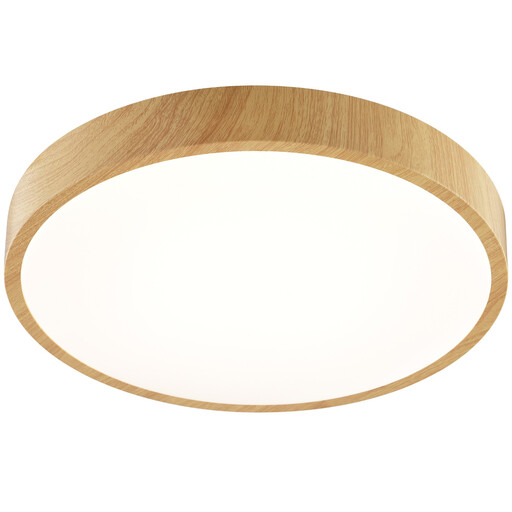
Why this product suits this profile: According to the product information, the integrated 24-watt LED provides 2,300 lumens at 3,000 K. This makes the light suitable for living rooms, bedrooms, hallways or dining areas when app and dimming functions are not required.
The performance data states both wattage and lumens. Buyers therefore do not have to estimate brightness from the wattage alone.
2,300 lumens, 3,000 K and a diameter of 38.5 cm. According to the specifications, the light is not dimmable.
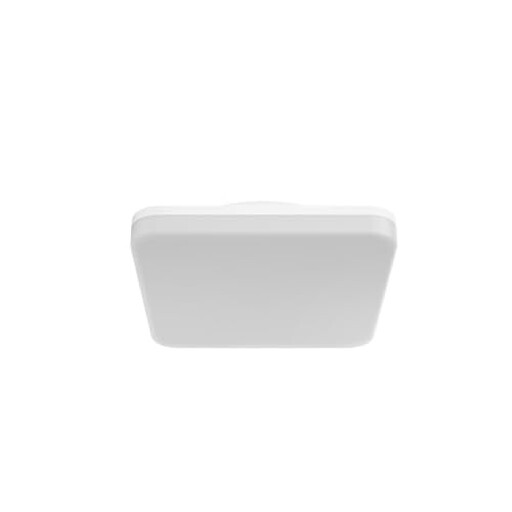
Why this product suits this profile: This model combines Wi-Fi, Matter, RGBW, seamless dimming, plus app and voice control. It is designed for users who want to integrate a ceiling lamp for the living room, bedroom, kitchen or bathroom into a smart home system.
The compatible platforms and 2.4 GHz Wi-Fi information are clearly specified. This allows you to check system compatibility before buying.
Up to 1,800 lumens, 2,700–6,500 K, RGBW, Matter and IP54 splash protection according to the product information.
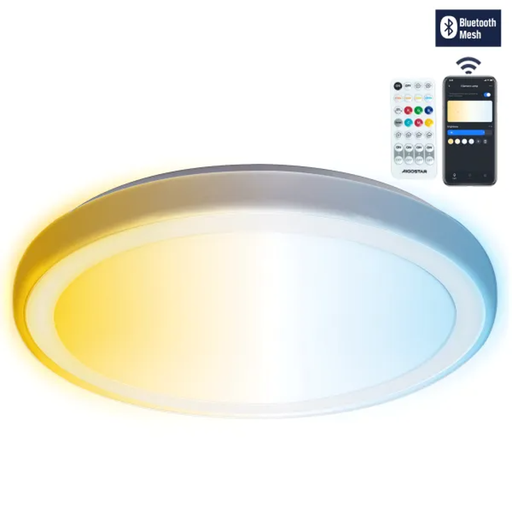
Why this product suits this profile: This ceiling light is designed for larger rooms, offices, retail spaces and areas with higher lighting requirements. It is controlled via Bluetooth Mesh.
The product data specifies 3,960 lumens, 36 watts, a 120° beam angle and 3000–6500 K. These values make it easier to plan the room’s lighting.
Bluetooth Mesh, 3,960 lumens, PF >0.9 and a diameter of 495 mm. The model is intended for dry indoor areas and has IP20 protection.
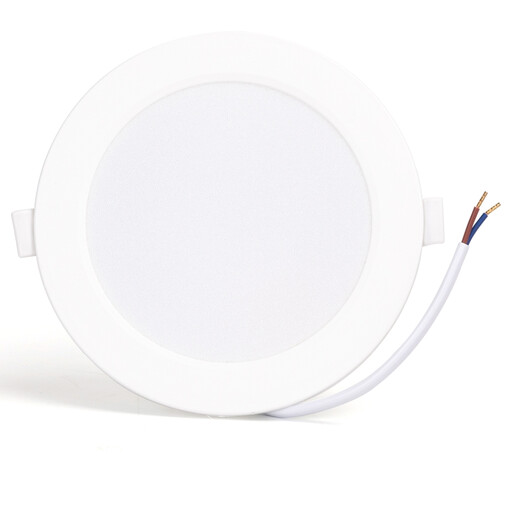
Why this product suits this profile: According to the specifications, this recessed LED spotlight requires a 100 to 110 mm opening and is suitable for hallways, rooms or shops without a central light source.
The required opening size is clearly specified. Before ordering, you can therefore check whether the existing ceiling cut-out is suitable.
600 lumens, 120° beam angle, dimmable, Bluetooth Mesh and 2700–6500 K. The protection rating is IP20.
We have put together a complete, regularly updated list of products that fully meet these strict selection criteria and the safety regulations applicable in the EU.
Work on 220–240-volt installations should be carried out in Germany by a suitably qualified electrician. Before installation, cleaning or maintenance, the power supply must be switched off at the circuit breaker.
With integrated LED lights, the light source often cannot be replaced in the same way as a conventional bulb. This is why information about service life, switching cycles and spare parts availability is relevant before buying. You can estimate the actual electricity costs using the following formula:
Power in kW × operating hours × electricity price = electricity costs
An 18-watt light uses 18 kWh over 1,000 operating hours in theory. Actual usage, the electricity tariff and standby consumption all affect the real figure.
Warm settings of around 2700 to 3000 K are often chosen for living rooms. A CCT light with a range extending up to 6500 K offers additional flexibility if the light is also used for reading, working or tidying up.
No. Voice control is only possible if the model supports a compatible voice assistant and the necessary connection. Before buying, you should check the app, Wi-Fi frequency, Bluetooth Mesh, Matter and compatible platforms.
Service life depends, among other things, on heat dissipation, operating time and switching cycles. Manufacturer specifications such as 30,000 or 50,000 hours are planning figures and do not guarantee an identical service life in every installation. The light should be operated according to the specified environment and voltage.