
Lieferung heute & morgen

Qualitätsgarantie

Willkommens-Angebote freischalten: KOSTENLOSE Lieferung | Bis zu 80 % RABATT | Kostenlose 30-Tage-JoyPlus-Testphase
App herunterladen
Choosing the right LED ceiling light can transform a room. But the market is flooded with products that promise more than they deliver. The wrong lighting mood, unsuitable materials, or a complicated installation are common consequences of an uninformed decision. As your Joybuy Product Recommendation Officer, I'll help you navigate these pitfalls and find a light that fits your needs, both functionally and aesthetically.
Many buyers focus solely on design, overlooking the technical details that determine longevity and functionality. Here are three common mistakes you should avoid:
dimmable LED ceiling light offers the necessary flexibility here.To make the right decision, you should focus on a few critical technical features. These will give you an objective basis for comparing different models.
Today, the wattage is less meaningful than the lumens (lm) value, which indicates the actual brightness of a light. The following guidelines per square metre can be used as a reference:
The colour temperature, measured in Kelvin (K), determines the lighting mood:
living room ceiling light or bedroom ceiling light.kitchen ceiling light or home office.For a bathroom ceiling light, the IP rating is essential. The code consists of two digits. The second digit is crucial for damp rooms:
Modern LED lights offer a wide variety of designs, from the discreet, low-profile ceiling light to the eye-catching modern black ceiling light. In addition to the aesthetics, pay attention to the installation method. Many models offer quick-mount systems that significantly simplify installation. For recessed spotlights, you need to check the required cut-out diameter and installation depth.
Here are some recommendations tailored to specific user profiles and their requirements.
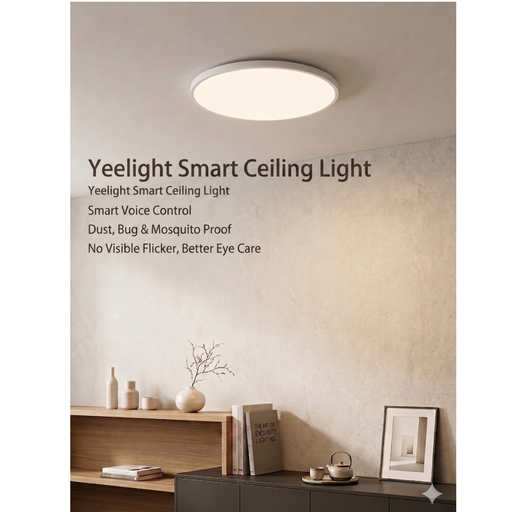
Why This Fits Their Persona: Ideal for users who want full control and integration into their smart home. This smart ceiling light can be controlled via app or voice (using Alexa, Google Home) to adjust brightness and light colour for any situation—from focused work to relaxing evenings.
The infinitely adjustable colour temperature prevents buying the wrong light colour. Its dust- and steam-proof design also makes it versatile enough for use in kitchens.
Full smart home integration and a moonlight mode with extremely low brightness for the night. RG0 certification for eye-friendly, flicker-free light.
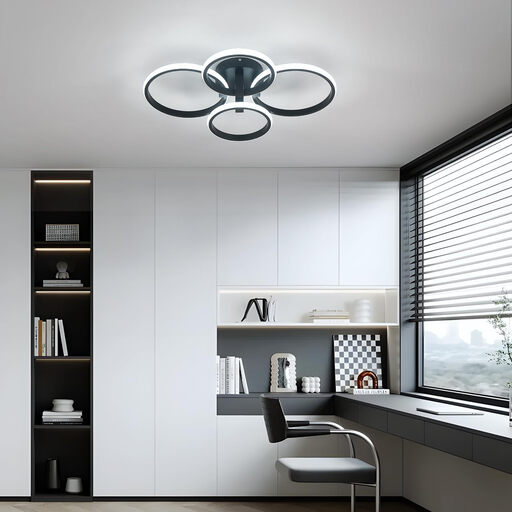
Why This Fits Their Persona: For anyone who sees their light fixture as a central design feature. This modern black ceiling light creates a striking, three-dimensional effect with its four stacked rings, becoming an eye-catcher in modern living rooms or bedrooms.
Despite the extravagant design, the technical specs are clearly defined: 48W power and 6500K cool white light. This lets buyers know they are getting bright, cool illumination that suits a minimalist style.
Striking design with a high-quality material base of aluminium and acrylic. The high output is well-suited for illuminating rooms up to 20 m?.
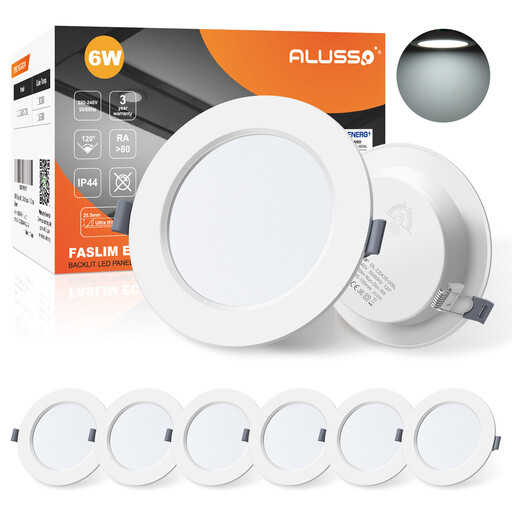
Why This Fits Their Persona: Perfect for renovators looking for a safe and discreet lighting solution for the bathroom or other damp areas. The low-profile ceiling light design is a key advantage here, especially with low ceilings.
Directly addresses the most critical mistake: the incorrect protection rating. With IP44, this spotlight is explicitly designed for use in damp rooms. Clear specifications for the installation depth (25.5 mm) also prevent nasty surprises during installation.
Safe operation in the bathroom thanks to IP44 certification. The extremely shallow installation depth and direct connection to 230V without a transformer simplify installation.
We have compiled a comprehensive, up-to-date list of products that fully meet these strict selection criteria and UK safety regulations.
1. How many lumens do I need for my living room? For an average-sized living room (approx. 20 m?), ambient lighting of 2000 to 3000 lumens is recommended (100–150 lm/m?). If you also use the room for reading or working, dimmable lights or additional light sources are a good idea to increase the brightness when needed.
2. Can I use a dimmable LED ceiling light with a regular switch? Yes, a dimmable LED light will also work with a standard on/off switch. However, it will always operate at 100% brightness. To use the dimming function, you need a compatible LED dimmer. Smart lights, on the other hand, are often dimmed via an app or remote control and do not require a special wall switch.
3. What does the IP44 rating mean for a bathroom ceiling light? The IP Code (International Protection Code) indicates the degree of protection of an enclosure against foreign objects and water. IP44 means the light is protected against solid foreign objects with a diameter greater than 1 mm (first digit "4") and is protected against splashing water from all directions (second digit "4"). This makes it safe for use in bathrooms outside the direct shower or bathtub area.