
Lieferung heute & morgen

Qualitätsgarantie

Willkommens-Angebote freischalten: KOSTENLOSE Lieferung | Bis zu 80 % RABATT | Kostenlose 30-Tage-JoyPlus-Testphase
App herunterladen
Choosing the right LED ceiling light can transform a room. But the market is flooded with products whose marketing promises often outshine the light itself. As your Joybuy Product Recommendation Officer, I'll help you identify the crucial features and navigate common purchasing traps, ensuring your investment is both long-lasting and a perfect fit.
Before we get to the solutions, it's important to understand the problems. Many buyers are disappointed shortly after their purchase because they've fallen for one of these three traps.
flat LED). LEDs generate heat that must be drawn away. If the housing is poorly designed, the chip overheats, drastically reducing its lifespan from the promised 30,000 hours to a mere fraction of that.dimmable LED ceiling light flickers or hums when connected to an existing wall switch. Models with a remote control or app control lock the user into a proprietary system, which can render the light useless if the remote is lost or breaks.To make an informed decision, focus on these objective criteria. They are the key to a lighting solution that truly meets your needs.
These two values define the fundamental atmosphere of a room.
living room ceiling light with around 2000 to 3000 lumens.modern bedroom lamp benefits from this light.A light with CCT colour tuning (Correlated Color Temperature) allows you to adjust the light colour as needed—from warm white for the evening to neutral white for the home office.
The ability to adjust brightness is a key comfort feature. Pay attention to how the dimming function is implemented. A ceiling light with remote control often offers the most straightforward solution, as the light and controller are perfectly matched, avoiding compatibility issues with external dimmers.
The design should not only be aesthetically pleasing but also functional. A black ceiling light in an industrial style can make a strong visual statement, while flat, minimalist models integrate discreetly into the ceiling. The housing material (often metal or high-quality plastic) is crucial for heat dissipation and, therefore, for longevity.
For use in damp rooms, the IP rating is essential. A bathroom light should have at least an IP44 rating, which ensures protection against splashing water from all directions.
Here are some models that represent a considered choice for specific user profiles, based on their technical specifications and design.
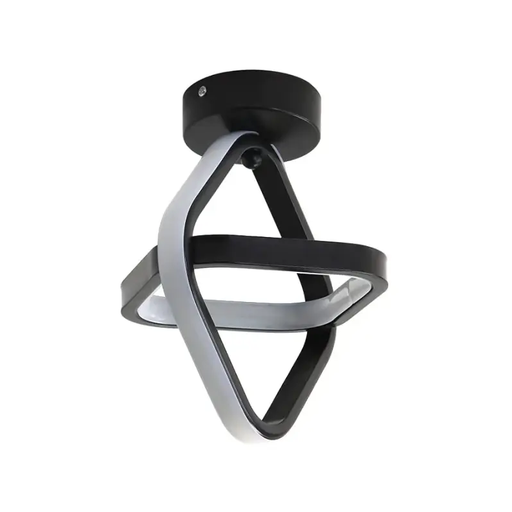
Why it's a good fit: Ideal for users seeking a functional, modern, and cost-effective solution for hallways, balconies, or smaller rooms up to 15 m?. Its clean design blends seamlessly into many interior styles.
The product provides clear, verifiable performance data (24W, 2700 lm, 3000K) instead of vague marketing promises. It focuses on a core function, thus avoiding complex, error-prone extra features.
It offers a high light output of 2700 lumens for its compact size and power consumption. The metal housing aids in heat dissipation.
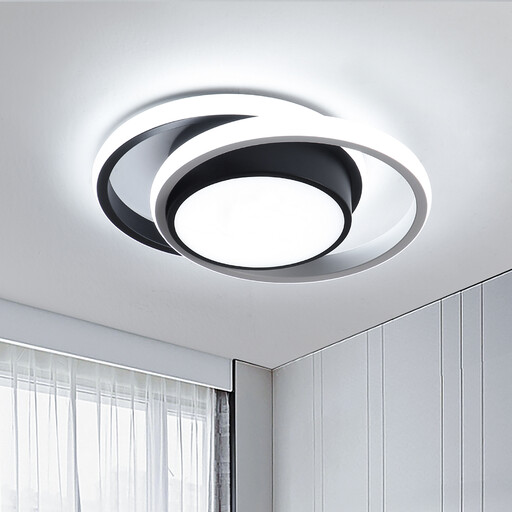
Why it's a good fit: For anyone who wants maximum flexibility in their living room or bedroom. Adjusting the brightness and light colour via remote control creates the perfect atmosphere for any situation—from movie night to reading.
The integrated system of the light and remote control bypasses the compatibility trap. All functions (dimming, CCT colour tuning) are perfectly matched and work without external devices.
It offers a wide colour temperature adjustment range from 3000K to 6000K. The high light output of up to 4500 lumens is also sufficient for larger rooms.
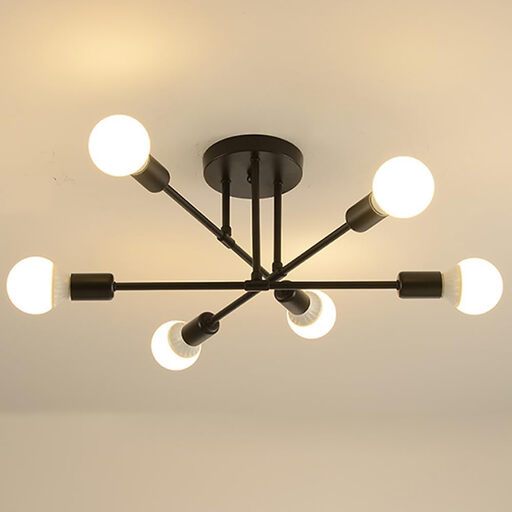
Why it's a good fit: For users who see their light fixture as a central design statement. The Sputnik style is a focal point in living and dining rooms with industrial or modern mid-century decor.
This model separates the frame's design from the lighting technology. By using standard E27 sockets, the user has full control over brightness, light colour, and dimmability by choosing their own compatible bulbs.
High flexibility thanks to adjustable arms and a free choice of E27 bulbs (e.g., LED filament, smart home bulbs). The metal frame is robust and durable.
We have compiled a complete, up-to-date list of products that fully meet these strict selection criteria and rigorous safety standards.
1. How many lumens do I need for my living room? For comfortable ambient lighting in a living room, a value of about 100 to 150 lumens per square metre is recommended. For a 25 m? room, you should therefore plan for one or more lights with a total output of 2500 to 3750 lumens. Dimmable models offer the flexibility to adjust the brightness as needed.
2. What does CCT colour tuning mean on an LED light? CCT stands for "Correlated Color Temperature." A light with a CCT function allows you to change the colour temperature of the light, either continuously or in steps. Typically, you can switch between a cosy warm white (approx. 3000 Kelvin) and an energising neutral or daylight white (up to 6500 Kelvin), often conveniently via remote control.
3. What IP rating is necessary for a bathroom light? The IP rating is crucial for use in a bathroom. Lights installed directly above a shower or bathtub (Zone 1) require at least an IP65 rating. For most other areas on the ceiling or wall that might only be exposed to splashing water (Zone 2), an IP44 rating is sufficient and required. Always look for this certification.