
Lieferung heute & morgen

Qualitätsgarantie

Willkommens-Angebote freischalten: KOSTENLOSE Lieferung | Bis zu 80 % RABATT | Kostenlose 30-Tage-JoyPlus-Testphase
App herunterladen
Choosing a new LED ceiling light can quickly become overwhelming. The market is flooded with models that promise similar features but vary significantly in quality and durability. Often, well-intentioned purchases lead to disappointment, whether due to unpleasant light, a complicated installation, or a short lifespan.
This guide will help you navigate the common pitfalls. We focus on the objective criteria that distinguish a good ceiling light from an unsuitable one, ensuring your investment pays off in the long run.
Common Problems When Choosing a Ceiling Light:
To make an informed decision, you should focus on measurable technical parameters rather than marketing promises.
The relevant unit for a light's brightness is the luminous flux, measured in lumens (lm). The wattage (W) only indicates energy consumption. For good ambient lighting, you can use the following guidelines:
A ceiling light in a living room of 20 m? should therefore provide about 2,000 to 3,000 lm to ensure pleasant and sufficient brightness.
The colour temperature, measured in Kelvin (K), determines the light's colour and thus the atmosphere of a room.
A modern ceiling lamp with adjustable colour temperature offers the flexibility to adapt the lighting to the specific activity.
A dimmable ceiling light allows for seamless adjustment of brightness. This is particularly advantageous in the living room and bedroom. A smart ceiling light offers even more convenience. It can be controlled via an app, voice assistant (like Alexa or Google Home), or a remote control. Features like schedules, colour temperature adjustment, or synchronisation with other devices are often standard.
Based on the criteria mentioned, we have compiled a few models for different user profiles.
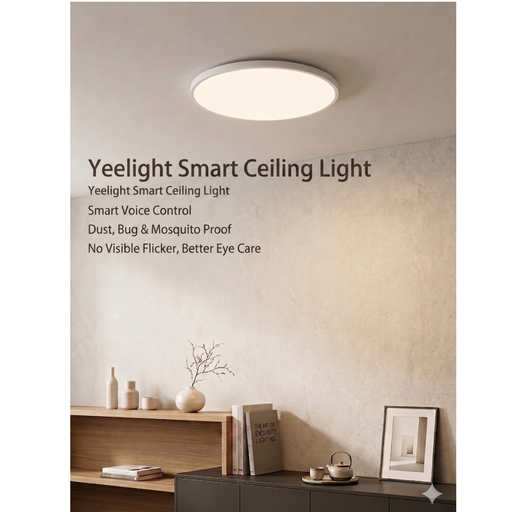
Why it's a match: This model is designed for users who want complete control and integration into their smart home system. Compatibility with popular platforms like Alexa, Google Home, and SmartThings allows for seamless voice or app control.
Solves the problem of inflexibility with precisely adjustable brightness and colour temperature. The fully sealed design also prevents dust and insects from getting inside, addressing the point of maintainability.
Comprehensive smart home compatibility and a special moonlight mode with extremely low brightness for nighttime.
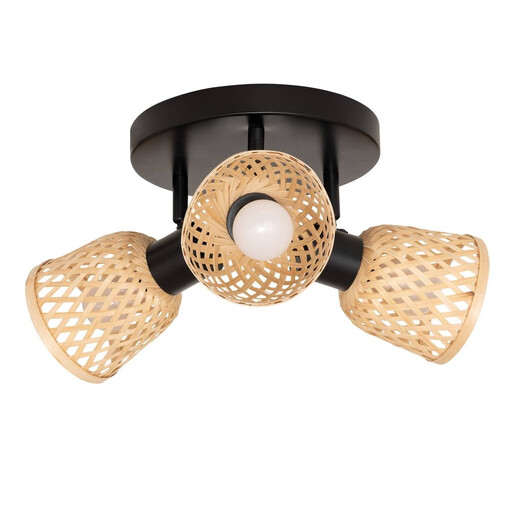
Why it's a match: For users who prioritise design. This wooden ceiling light (bamboo) combines a modern, black metal base with natural materials, creating a warm, inviting atmosphere. It pairs well with Scandinavian or Boho interior styles.
The three adjustable spotlights offer flexibility in light direction, thus avoiding a rigid lighting situation. The use of steel and FSC-certified bamboo speaks to a solid construction.
Appealing combination of materials for a warm lighting effect and individually adjustable light sources for targeted accents.
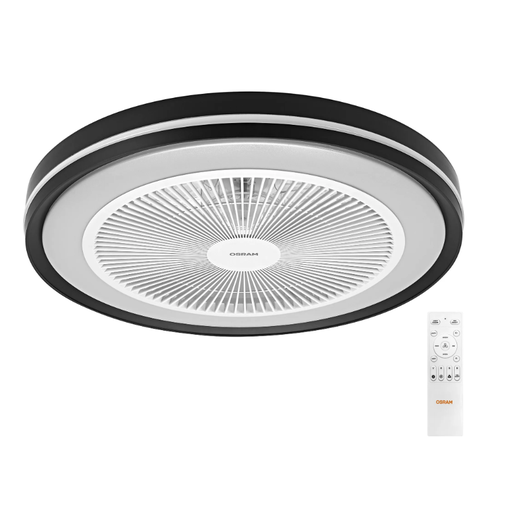
Why it's a match: This model is a 2-in-1 solution that combines lighting and air circulation. It is ideal for users seeking maximum utility in a small footprint, such as in a bedroom or home office.
Offers high flexibility with a dimmable light, adjustable colour temperature (3000–6500 K), and a six-speed fan. All functions are conveniently controlled via remote control.
Combination of a light and a quiet DC fan, fully controllable via remote, including a timer function.
We have compiled a complete, up-to-date list of products that fully meet these strict selection criteria and German safety regulations.
Lumens (lm) is the unit for luminous flux and describes the actual brightness a lamp emits. Watts (W), on the other hand, only measure energy consumption. For modern, energy-efficient LED lights, the lumen value is the more meaningful indicator of brightness.
For living rooms and bedrooms, a warm white colour temperature below 3,300 Kelvin is generally recommended. This light is perceived as cosy and relaxing. Models with adjustable colour temperature offer the advantage of being able to adapt the light as needed – for example, warmer in the evening and more neutral for reading.
Installing a ceiling light involves working with your home's electrical system. For safety reasons and to ensure correct functionality, the installation must be carried out by a qualified electrician in accordance with national installation codes. Always switch off the power supply at the fuse box before carrying out any work on the light fixture.