
Lieferung heute & morgen

Qualitätsgarantie

Willkommens-Angebote freischalten: KOSTENLOSE Lieferung | Bis zu 80 % RABATT | Kostenlose 30-Tage-JoyPlus-Testphase
App herunterladen
The right LED ceiling light can transform a room—or make it feel uncomfortable and impractical. Often, misleading marketing claims and vague product descriptions lead to decisions you'll later regret. As your Joybuy Product Recommendation Officer, I'm here to help you identify the crucial features and avoid common pitfalls, ensuring your next ceiling light is a perfect match for your needs.
Before we dive into solutions, it's important to understand the most common problems. Many buyers focus solely on design, overlooking functional aspects that are critical for everyday use.
To avoid these mistakes, you should focus on three objective criteria. These will help you make an informed decision for any room, whether it's the living room, kitchen, or bedroom.
The colour of the light directly impacts the mood. It's measured in Kelvin and can be divided into three categories:
Some models offer adjustable colour temperature (CCT - Correlated Colour Temperature), allowing for maximum flexibility.
Forget wattage and focus on lumens. The lumen value indicates the actual brightness of a light. As a rule of thumb for general illumination, you can use the following guidelines:
Therefore, a 20 m? living room requires about 2000–3000 lumens, which can be distributed across multiple light sources.
The design should complement the function. A modern ceiling light with a geometric shape pairs well with minimalist interiors. A black ceiling light in an industrial style, such as an industrial pendant lamp or a dining table pendant light, creates a bold accent. For those who want maximum control, consider smart lighting. It can be controlled, dimmed, and colour-adjusted via an app or voice command, eliminating compatibility issues with external dimmers.
Here are a few recommendations tailored to different needs and interior styles, specifically chosen to avoid the pitfalls mentioned above.
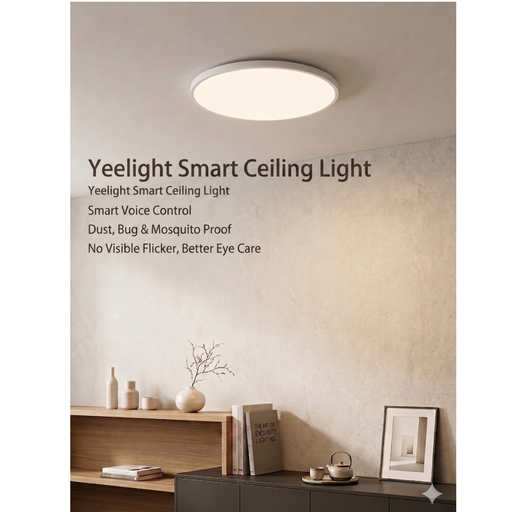
Why This Fits Their Persona: Perfect for users who want to fully integrate their lighting into their smart home system (Alexa, Google Home, etc.). It offers complete control over brightness and colour temperature for any situation, from focused work to a relaxing movie night.
Completely solves the dimming and colour temperature problem. Control is managed via app or voice, so there are no compatibility issues with external dimmers. The colour temperature is steplessly adjustable.
Full smart home integration and adjustable colour temperature. The "Moonlight Mode" provides an extremely gentle light for the night.
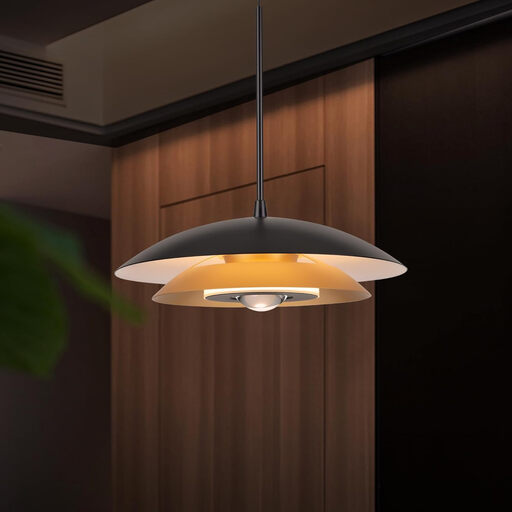
Why This Fits Their Persona: Ideal for anyone looking for a statement piece for their dining area or kitchen island. The combination of a matte black outer shade and a gold inner shade embodies the modern industrial look and creates a warm, inviting atmosphere.
The colour temperature is clearly defined at 3000K (Warm White), perfectly suited for living and dining areas, thus avoiding the trap of an inappropriate lighting atmosphere. It is dimmable with compatible switches.
The architectural double-shade design provides glare-free, warm light. The integrated 12W LED module is energy-efficient and long-lasting.
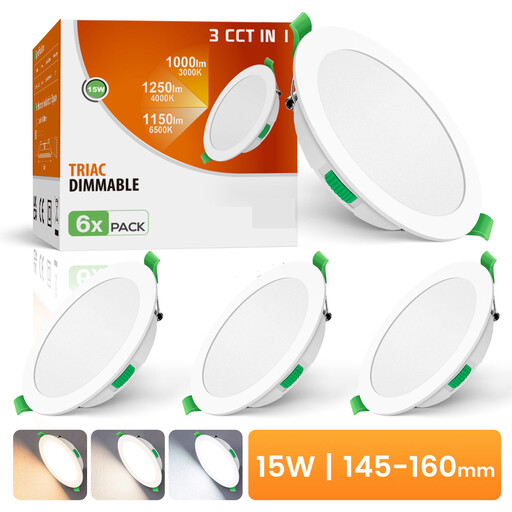
Why This Fits Their Persona: A flexible solution for bathrooms, hallways, or kitchens where functionality is paramount. The set allows for uniform illumination, and its technical features are designed for demanding environments.
The 3CCT function allows you to choose between Warm, Neutral, and Cool White directly during installation, which eliminates the colour temperature trap. The IP44 rating ensures the light is suitable for damp locations like bathrooms.
High flexibility thanks to adjustable colour temperature (3CCT) and dimmability. The **IP44** rating makes it splash-proof and ideal for bathrooms.
We've compiled a complete, up-to-date list of products that fully meet these strict selection criteria and safety regulations.
1. How many lumens do I need for my living room? For comfortable ambient lighting in living spaces, a value of about 100 to 150 lumens per square metre is recommended. For a 20 m? living room, that would be between 2000 and 3000 lumens. This brightness can be achieved with a single, powerful ceiling light or by combining multiple light sources such as ceiling, floor, and table lamps.
2. What does IP44 mean on a ceiling light? The IP rating indicates how well an electrical device is protected against the ingress of foreign objects and water. For IP44, the first digit (4) means the light is protected against solid foreign objects with a diameter greater than 1 mm. The second digit (4) means it is protected against splashing water from all directions. This makes lights with this rating suitable for use in bathrooms (outside the direct shower or bathtub area).
3. Can I use any dimmable LED light with my old dimmer switch? No, unfortunately, this is a common misconception. Older dimmers (often leading-edge dimmers) were designed for the high loads of incandescent bulbs and often don't work well with the low-energy electronics of LEDs. This can lead to flickering, buzzing, or a limited dimming range. For smooth operation, you should either use a dimmer recommended by the light manufacturer (usually a trailing-edge dimmer) or opt for a smart light with an integrated dimming function.