
Lieferung heute & morgen

Qualitätsgarantie

Willkommens-Angebote freischalten: KOSTENLOSE Lieferung | Bis zu 80 % RABATT | Kostenlose 30-Tage-JoyPlus-Testphase
App herunterladen
An LED ceiling light should illuminate a room evenly, complement your interior style and perform reliably day after day. Yet product descriptions don’t always lead you straight to the right choice. High lumen values, a modern look or a stated lifespan can sometimes hide important details.
The most common buying mistakes come down to three things:
Lumens (lm) describe the total amount of visible light emitted. Watts, on the other hand, indicate electrical power consumption. With integrated LEDs, the lumen value is therefore the most relevant figure for comparing brightness.
As a rough guide:
The actual effect also depends on ceiling height, wall colour, the shape of the light and how the light is distributed. A flat LED ceiling light with a diffuser cover spreads light differently to several directional LED recessed spotlights.
Colour temperature is measured in Kelvin (K):
A dimmable LED ceiling light with a fixed colour temperature usually only changes the brightness. If you want to switch between warm white and cooler light, look specifically for a light with a switchable colour temperature. Also check whether a dimmer is built in or whether a compatible external dimmer is needed.
The IP rating describes the level of protection against solid objects and water. For dry indoor spaces, IP20 is common for many ceiling lights. A light with IP44 is protected against splashing water from any direction and may be suitable for bathrooms or kitchens, depending on the installation area. However, it does not automatically replace the need to check the permitted protection zones in a bathroom.
With LED recessed spotlights, you also need to consider:
Work on a 230-volt connection must only be carried out by a suitably qualified professional. Before installation, be sure to check the circuit, the installation instructions and local regulations.
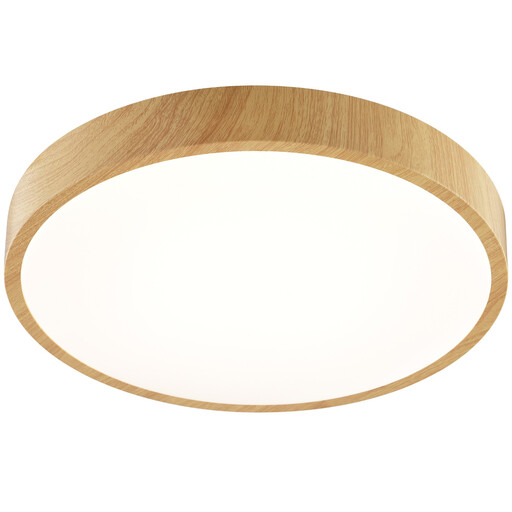
Why this product fits the profile: This LED ceiling light combines a compact size with 24 W, 2300 lm and warm white light at 3000 K. The wood-effect finish suits living rooms, bedrooms, hallways and dining areas.
The details on luminous flux, colour temperature and dimmability are clearly stated. Important: this model is not dimmable and is intended for dry indoor environments.
2300 lm, 3000 K and a decorative wood-effect finish; diameter 38.5 cm.
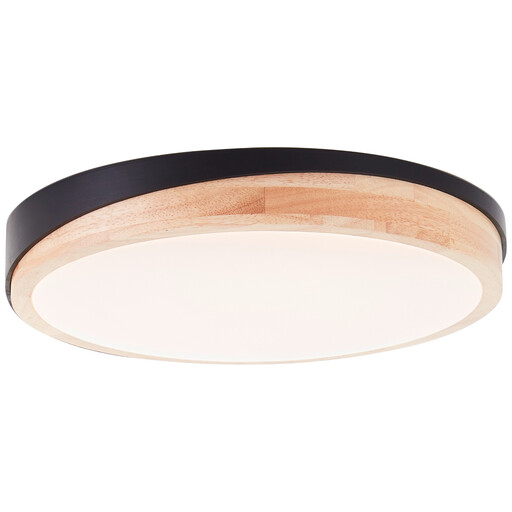
Why this product fits the profile: This light combines a diameter of 35 cm with 2400 lm, 3000 K and built-in three-step dimming. The wood surface is described as real wood according to the product information.
The three-step dimming and memory function are specific features. With IP20, this model is intended for dry indoor spaces, not bathrooms.
2400 lm, 3000 K, three dimming levels and FSC certification in the product data.
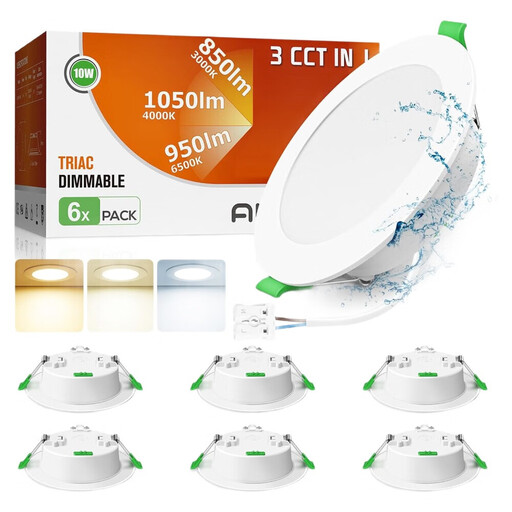
Why this product fits the profile: This recessed spotlight offers three selectable colour temperatures: 3000 K, 4000 K and 6500 K. Dimming from 10 to 100 per cent requires a compatible trailing-edge dimmer.
The IP44 rating and the required 90–100 mm ceiling cut-out are clearly stated. This means you can check in advance whether the light and the installation location are compatible.
1050 lm per light, three colour temperatures, IP44 and a slim design with a depth of 34 mm.
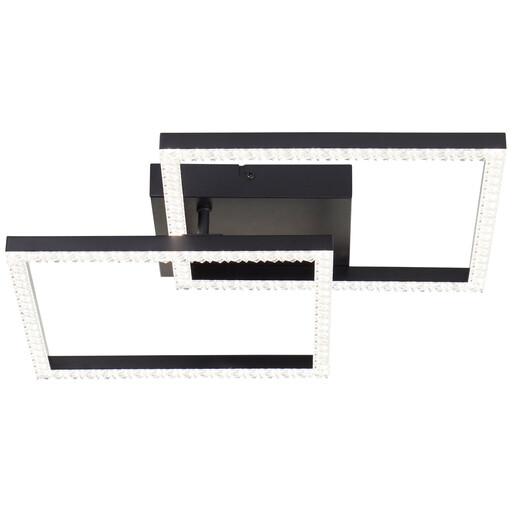
Why this product fits the profile: The square, black construction with a crystal-effect finish creates a visible statement. A pivoting element allows limited adjustment of the light direction.
The product data states 20 W, 2700 lm, 4000 K and IP20. This makes it clear before purchase that the light is designed for dry indoor areas and neutral white light.
2700 lm, 4000 K, 41 × 41 cm and a pivoting light element.
For cost considerations, wattage, daily usage time and electricity price are key. A 24 W light uses approximately 24 kWh over 1000 hours of operation. The actual cost will depend on your individual tariff.
The energy efficiency class should also be noted. In the selection, the stated classes range, for example, from D to F. However, the efficiency class is only part of the decision: luminous flux, switching behaviour, colour temperature and installation suitability must all suit the room. Integrated LEDs eliminate the need for regular bulb changes, but if they fail, they cannot be replaced individually like a traditional bulb.
We have put together a complete, regularly updated list of products that fully meet these strict selection criteria and the safety regulations in force in the EU.
That depends on the room size, ceiling height, wall colour and the desired lighting effect. As a buying criterion, you should always consider the lumen value together with the design and light distribution. Using multiple lights or additional floor and wall lights can create a more even illumination.
A 3000K ceiling light produces warm white light and is often chosen for bedrooms and living areas. Whether it is right for you depends on your personal usage. For focused work, neutral white light at 4000 K may be more practical.
The lifespan is stated by the manufacturer in operating hours and depends on factors such as heat dissipation, switching frequency and operating conditions. Figures like 30,000 or 50,000 hours are product data and not a guarantee of identical service life in every household. For long-lasting use, pay attention to installation instructions, ventilation and the permitted environment.