
Lieferung heute & morgen

Qualitätsgarantie

Willkommens-Angebote freischalten: KOSTENLOSE Lieferung | Bis zu 80 % RABATT | Kostenlose 30-Tage-JoyPlus-Testphase
App herunterladen
An LED ceiling light should illuminate the room evenly, use little electricity and suit both the ceiling height and interior décor. However, unclear product specifications and exaggerated marketing claims often lead to disappointing purchases. An LED ceiling lamp with a high wattage is not automatically brighter, a modern ceiling light will not necessarily suit every room, and a dimmable ceiling light requires compatible technology in both the fitting and the switch.
This guide explains which specifications matter before you buy and which models suit different living situations.
Wattage describes energy consumption, not the amount of light produced directly. For brightness, the key measurement is luminous flux in lumens. An energy-efficient LED lamp can produce sufficient light using comparatively few watts. When comparing products, you should therefore always consider wattage and lumens together.
Room size is also relevant. A light producing 2,300 lumens may be sufficient for a bedroom or hallway, while a large living room may require several light sources.
Colour temperature is measured in kelvins:
A living room ceiling light with 6,500 kelvins may feel too cool for some users. Conversely, warm white light in the kitchen or work area can limit high-contrast illumination.
A flush ceiling light is practical for low or standard-height ceilings because it projects very little into the room. Before buying, however, you should check the diameter, height, mounting plate and connection type. Bathrooms also require a suitable IP rating. If this information is missing, the model should not be used in areas exposed to direct water or high humidity.
With permanently integrated LEDs, the light source cannot be replaced in the same way as with a ceiling light featuring an E27 socket. However, regular bulb replacement is no longer necessary. With E27 models, the light colour and brightness can be changed later by choosing a different light bulb.
The following specifications are useful for an initial assessment:
The Goeco Square LED Ceiling Light is described as offering 36 watts, 3,300 lumens and a beam angle of 180 degrees. According to the product information, it is intended for rooms of approximately 15 to 20 square metres. These figures should be used as a guide, as ceiling height, wall colour and existing light sources all affect how the light is perceived.
A non-dimmable light should be bought with a colour temperature that suits the room. According to its product description, the Brilliant Teranon uses 3,000 kelvins warm white, but it is not dimmable. A smart ceiling light, on the other hand, often offers adjustable brightness and colour temperature. Before buying, check whether it is controlled via an app, voice assistant, remote control or conventional wall switch.
Acrylic or plastic covers can distribute light evenly while reducing weight. Metal bases provide a stable mounting surface. Decorative models featuring wood, fabric or glass place greater emphasis on appearance and may project further into the room.
A flush design is often suitable for bedrooms, hallways and rooms with low ceilings. In a dining room or a space with sufficient ceiling height, a decorative light with an E27 socket may be a practical choice.
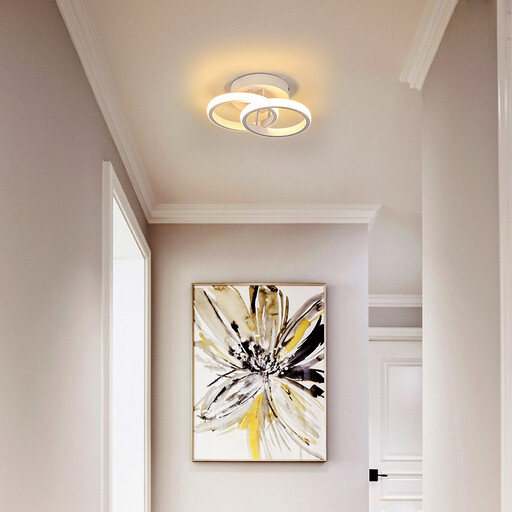
Why this product suits the profile: This 22-watt light with 3,000 kelvins is designed to provide cosy ambient lighting in bedrooms, living rooms, dining areas or hallways. The slim double-ring design is suitable for rooms with limited ceiling height.
The product description specifies both power consumption and colour temperature. This makes it easier to compare the light with other models.
Integrated LED technology, 22 watts and warm white light at 3,000 kelvins; low-profile design for ceiling mounting.
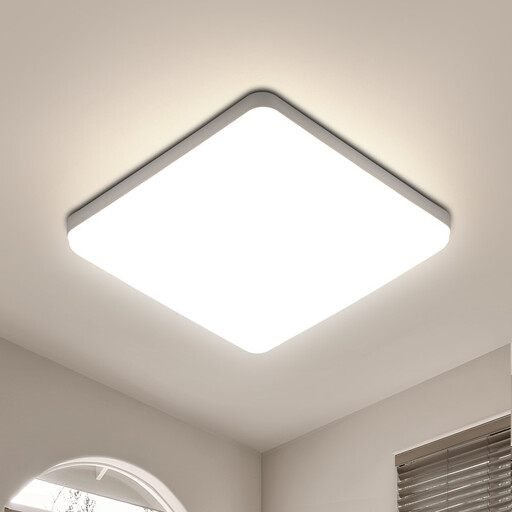
Why this product suits the profile: According to the product data, this square LED ceiling light provides 3,300 lumens at 4,500 kelvins and is specified for kitchens, bathrooms, bedrooms, hallways and living rooms.
The information on lumens, colour temperature, CRI above 80, 180-degree beam angle and an approximate height of 3.5 centimetres makes the selection process more transparent.
Metal and acrylic construction, 3,300 lumens and a stated lifespan of approximately 30,000 hours.
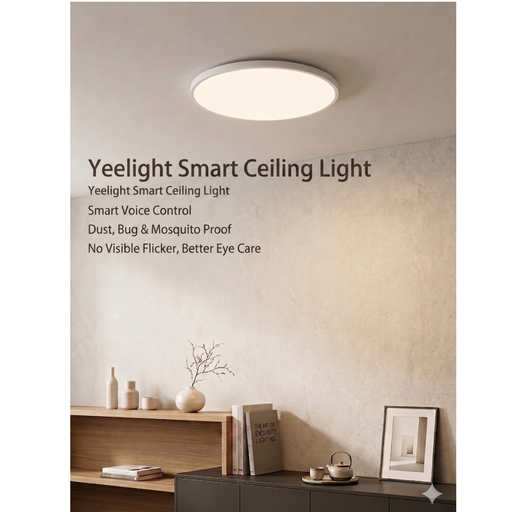
Why this product suits the profile: This smart ceiling light is designed for users who want to adjust brightness and colour temperature via an app or voice control.
The product data specifies the available control methods, dimmable brightness, adjustable colour temperature and an exceptionally low moonlight setting. Before buying, check compatibility with your own smart home system.
App control, support for Alexa, Google Home and SmartThings, plus an enclosed housing to help keep out dust and insects.
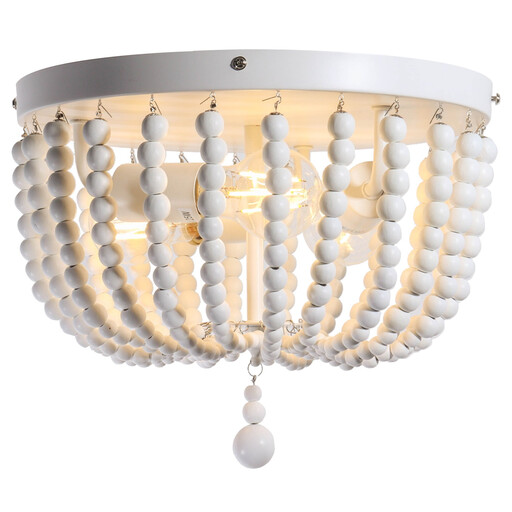
Why this product suits the profile: This decorative light features three E27 ceramic sockets, allowing you to tailor it to the room with separately selected light bulbs.
The lamp socket is clearly specified as E27. Buyers can therefore choose the light colour and brightness by selecting suitable light bulbs, rather than being limited to a fixed LED colour temperature.
Three E27 sockets, a wooden bead lampshade and stated VDE wiring for indoor use.
We have put together a complete, regularly updated list of products that fully meet these strict selection criteria and the safety regulations applicable in the EU.
Before installation, the power supply must be switched off at the fuse box and the circuit must be checked to ensure it is not live. If you are unsure or have no experience with electrical installations, installation should be carried out by a qualified electrician. This is particularly important for lights with an earth conductor or complex smart home connections.
The following simple calculation can help you estimate running costs:
Annual cost = wattage ÷ 1,000 × hours of use per day × 365 × electricity price.
A 22-watt light used for three hours a day consumes 24.09 kilowatt hours per year in theory. The actual cost depends on your electricity tariff. The advertised lifespan, such as 30,000 or 50,000 hours, is a product specification and not a guarantee of the actual service life under all conditions.
This depends on the room size, how it is used and the existing light sources. A light providing around 2,000 to 3,000 lumens may be sufficient for smaller rooms. Larger living rooms or work areas may benefit from higher values or multiple lights. The manufacturer’s specifications and the desired lighting effect are the key factors.
For a bedroom ceiling light, warm white at around 3,000 kelvins is a popular choice. A kitchen ceiling light with neutral white between approximately 4,000 and 4,500 kelvins can provide more functional illumination. With a smart ceiling light, the colour temperature can be adjusted depending on the model.
No. The light must be explicitly specified as dimmable and compatible with the dimmer being used. With a ceiling light featuring an E27 socket, the light bulb fitted must also be dimmable. With smart home models, brightness is often adjusted via an app or voice control rather than a conventional dimmer.