
Lieferung heute & morgen

Qualitätsgarantie

Willkommens-Angebote freischalten: KOSTENLOSE Lieferung | Bis zu 80 % RABATT | Kostenlose 30-Tage-JoyPlus-Testphase
App herunterladen
An LED ceiling light should illuminate a room appropriately, be safe to install and work reliably day after day. However, product descriptions do not always make it easy to choose the right one. They often list numerous features while omitting important details about brightness, installation or suitability.
Three common buying pitfalls:
When choosing an LED ceiling light, check the luminous flux in lumens. A small bedroom will often need less light than a kitchen or open-plan living area. However, a single figure only provides a rough guide, as the beam angle and room size also play a role.
The colour temperature in Kelvin describes the character of the light:
A dimmable LED lamp is practical when a room is used for different purposes. Check whether it can be dimmed via a wall switch, remote control or app. For smart models, the supported apps and networks should also be specified.
Before buying, be sure to compare the diameter, height, cable length and installation type. A flush ceiling light is often suitable for rooms with low ceilings. A pendant light, on the other hand, needs sufficient clearance from furniture and walkways.
Fixed-wired lights must be installed by a suitably qualified electrician. This applies, for example, to a hard-wired kitchen light. The circuit must be switched off before installation or cleaning.
A battery-powered lamp can be used wherever there is no mains connection. Buyers should check the required batteries, timer and permitted environment. Battery operation should not be taken to mean consistently high room brightness.
For bathrooms, kitchens, basements or other areas with increased humidity, the IP rating is important. IP54, for example, means protection against dust in harmful quantities and against water splashes from various directions. However, the light must not be immersed in water.
For a Wi-Fi ceiling light, the description should include specific details about the frequency band. The smart model featured here works with 2.4 GHz Wi-Fi. Anyone wanting to connect different smart home systems should also look for Matter. Depending on the setup, a Matter ceiling lamp can be paired with compatible platforms such as Apple Home, Google Home, Samsung SmartThings or Amazon Alexa. Actual control depends on the relevant system and configuration.
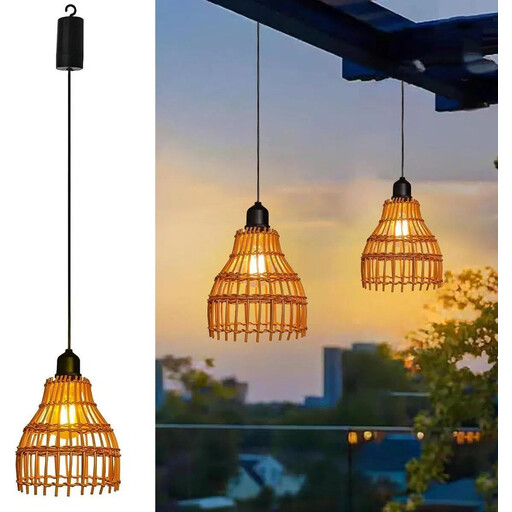
Why this product suits the profile: This battery-powered hanging lamp does not require a wall connection and can be positioned flexibly using a hook – ideal for decorative indoor lighting or sheltered outdoor areas.
The product details specify the power source, the 100 cm cable length and the timer with a 6/18-hour setting. Batteries are not included; the lampshade is made from acrylic, not solid wood.
4 AA batteries, integrated timer, A60 Edison bulb and a non-removable acrylic shade.
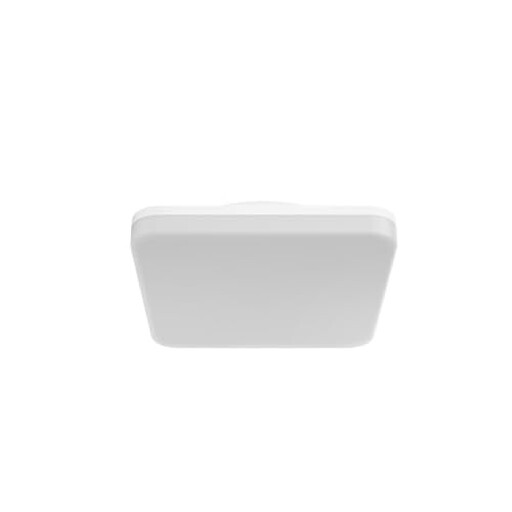
Why this product suits the profile: This smart ceiling light combines app, voice and Matter control with adjustable white light and RGBW colours for living rooms, bedrooms, kitchens or bathrooms.
The details specify Matter, compatible platforms, 2.4 GHz Wi-Fi, IP54 and the required 220–240-volt connection. This allows key requirements to be checked before installation.
18 W LED, up to 1,800 lumens, 2,700–6,500 K, continuous dimming and RGBW control via app or voice.
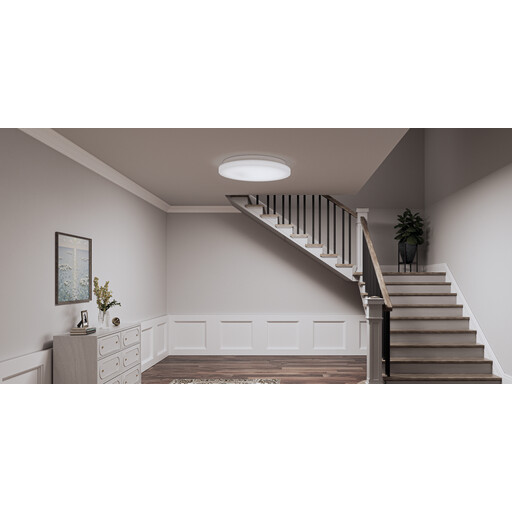
Why this product suits the profile: This sensor ceiling light is designed for use with presence detection, making it an interesting option for hallways, entrance areas or rooms with frequently changing uses.
Presence detection is explicitly listed as a product feature. Nevertheless, check the full details on the product page regarding sensor range, installation height and settings before buying.
C300 model with a stated presence-detection function for automated indoor lighting.
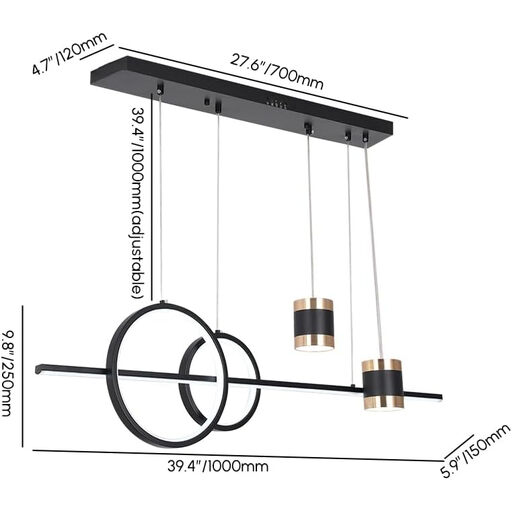
Why this product suits the profile: This four-light pendant is designed for kitchen islands and dining rooms, combining a black geometric design with downward-facing light.
The light is specified as a hardwired ceiling-mounted fitting with 220 V. Installation should be carried out by a qualified electrician, so the fixed connection is not mistaken for a simple plug-and-play solution.
Four LED light sources, metal and silica construction, remote control and dimensions of 125 × 100 × 12 cm.
We have put together a complete, regularly updated list of products that fully meet these strict selection criteria and the safety regulations applicable in the EU.
Not every light needs to be a classic LED ceiling light. For a dining area, a pendant light or hanging lamp can focus the light precisely over the tabletop. A black chandelier is better suited to a decorative interior concept; with this style, the fitting, bulb and ceiling height should all work together.
If you prefer a light with replaceable bulbs, pay attention to the fitting. The Pheashine model, for example, has E27 sockets, but the bulbs are not included. This should be factored into your overall cost planning.
Consumption depends on the wattage and the number of hours it is used each day. A light with an output of 18 W used for five hours a day consumes 0.09 kWh per day in theory. To calculate the running cost, multiply this figure by your electricity tariff. Smart schedules or sensors can reduce usage time, but they do not replace proper brightness planning.
The lifespan depends on the LED module, electronics, heat dissipation and usage. Check the lifespan stated by the manufacturer, as well as the warranty terms. With permanently integrated LEDs, later replacement is usually handled differently than with a light using E27 or other replaceable bulbs.
That depends on the model. A Wi-Fi ceiling light generally requires the relevant app and a compatible Wi-Fi band. With a Matter ceiling lamp, you may also be able to connect it to a compatible smart home platform. Before installation, check whether your smartphone, router and voice assistant are supported and whether a hub is required.