
Lieferung heute & morgen

Qualitätsgarantie

Willkommens-Angebote freischalten: KOSTENLOSE Lieferung | Bis zu 80 % RABATT | Kostenlose 30-Tage-JoyPlus-Testphase
App herunterladen
Switching to LED lighting is a logical step for anyone modernising their living space. However, the market for LED ceiling lights is crowded, and not every product lives up to its advertising. As a Joybuy Product Recommendation Officer, I see the selection problems that arise daily. Certain shortcomings can quickly turn a seemingly good investment into a disappointment. This guide will help you identify the typical pitfalls and make an informed decision.
Many buyers focus on design and price, overlooking technical details that are crucial in daily use. Here are three common mistakes you should avoid:
To avoid the problems mentioned above, you should check three technical features before buying. These define the functionality and longevity of your new lighting.
The IP (Ingress Protection) rating indicates how well a light fixture is protected against the ingress of foreign objects and water. It consists of two digits.
For living rooms and bedrooms, IP20 (protection against solid objects >12.5 mm, no water protection) is often sufficient. However, different requirements apply in damp environments:
Colour temperature is measured in Kelvin (K) and determines whether the light appears warm and cosy or cool and stimulating.
A particularly flexible solution is lights with 3CCT selectable colour temperature. With these models, you can switch between three preset colour temperatures (e.g., 3000 K, 4000 K, and 6500 K) via a switch or remote control, adapting the lighting to any situation.
If you want dimmable recessed spotlights, pay attention to compatibility with your dimmer switch. There are two main types: leading-edge and trailing-edge dimmers. Many modern LEDs require a trailing-edge dimmer to function without flickering. Check the product description for relevant information.
Two measurements are crucial for installation: the cut-out diameter and the installation depth. For suspended ceilings with limited space, a slim-profile ceiling light or an LED recessed spotlight with a shallow installation depth is advantageous. Models designed as 230V recessed lights can be connected directly to the mains power without needing a separate transformer, which simplifies installation.
Based on the criteria above, we have identified several products that offer a well-thought-out solution for different user profiles and applications.
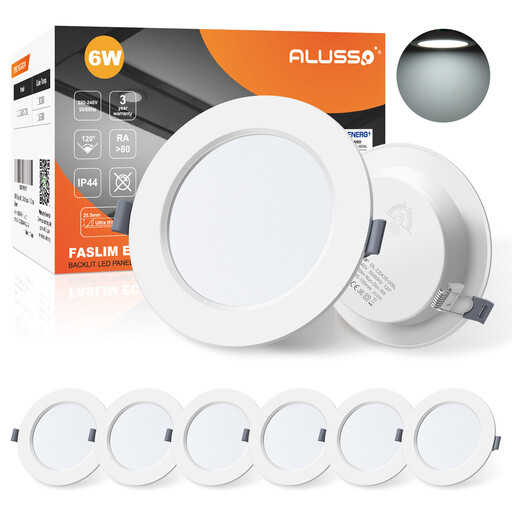
Why This Fits Their Persona: Ideal for a straightforward and cost-effective upgrade for bathrooms or kitchens. This set provides functional and safe lighting without complex extra features that are often unnecessary.
With its IP44 rating, it is explicitly designed for damp rooms, thus avoiding the risk of moisture damage. As it is not dimmable, the risk of compatibility issues with dimmer switches is completely eliminated.
The very shallow installation depth of 25.5 mm makes it suitable for ceilings with limited space. The direct 230V connection requires no transformer.
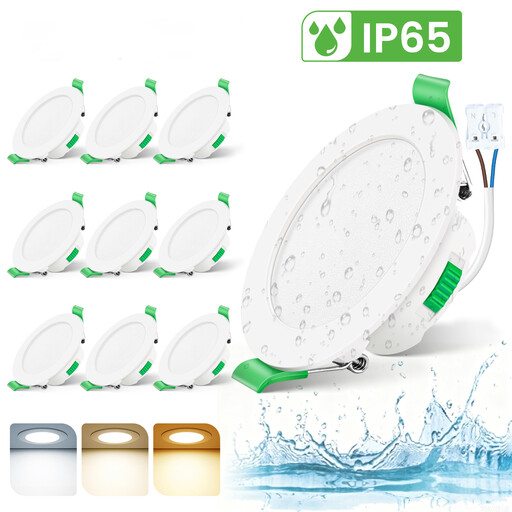
Why This Fits Their Persona: Perfect for users who want maximum control over the lighting ambiance in different rooms. Whether for focused work in the kitchen or a relaxing bath, the lighting adapts flexibly.
The 3CCT function solves the problem of a fixed colour temperature. The high IP65 rating makes it safe even for the most demanding damp environments. Its dimmability is designed for trailing-edge dimmers, which simplifies compatibility.
Combines high flexibility (dimmable, 3CCT) with maximum protection (IP65). The ultra-slim design with a 29 mm installation depth is another practical advantage.
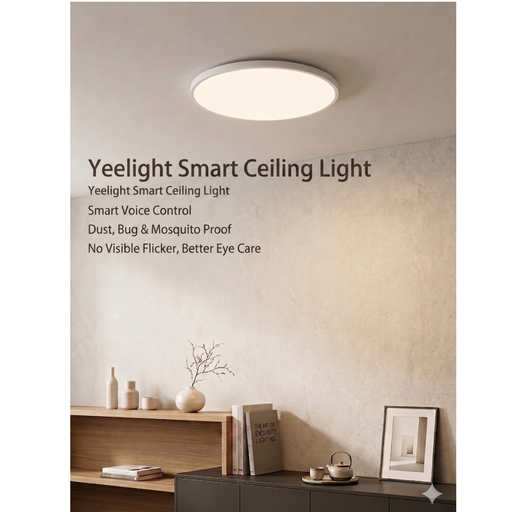
Why This Fits Their Persona: For anyone who wants to seamlessly integrate their lighting into their smart home system. Control via app or voice (Alexa, Google Home) offers maximum convenience and automation possibilities.
As a smart home light, dimming and colour temperature are controlled digitally, which eliminates compatibility issues with physical dimmer switches. The fully enclosed design protects against dust, insects, and steam.
Stepless adjustment of brightness and colour temperature via the app. The special moonlight mode provides an extremely gentle light for the night without disturbing sleep.
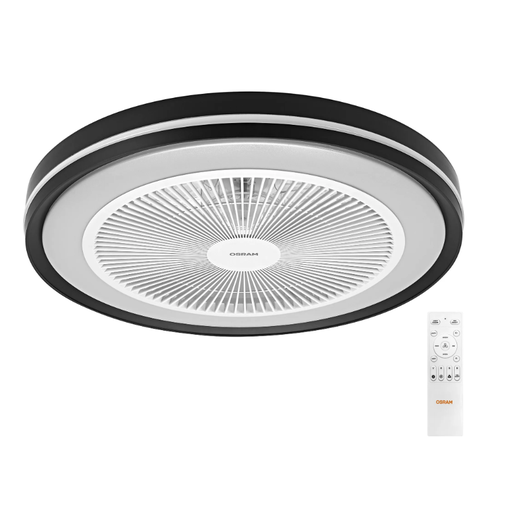
Why This Fits Their Persona: For those who need both lighting and air circulation in smaller rooms like bedrooms or home offices. This 2-in-1 device saves space and installation effort.
This model integrates a dimmable light with a continuously adjustable colour temperature (3000–6500 K), avoiding the trap of an unsuitable, fixed light ambiance. All functions are conveniently controlled via remote.
Combines lighting and ventilation in one compact device. The quiet DC motor is ideal for use in the bedroom, and the timer function adds extra convenience.
We have compiled a complete, up-to-date list of products that fully meet these strict selection criteria and all relevant safety regulations.
1. How long does an LED ceiling light last? The lifespan of LED bulbs is specified in operating hours and typically ranges from 25,000 to 50,000 hours. With an average use of four hours per day, this corresponds to a lifespan of over 17 years. Unlike traditional incandescent bulbs, LEDs do not suddenly fail at the end of their life but gradually lose their brightness.
2. Can I install LED recessed spotlights myself? In many regions, including the UK and Germany, any work on 230V electrical installations must be carried out by a qualified electrician. This is for your safety and ensures that all regulations are met. Even if connecting 230V recessed lights seems straightforward, hiring a professional is often a legal requirement.
3. What does 3CCT mean in practice for LED lights?3CCT selectable colour temperature means you can adjust the light colour of the fixture to suit your needs. Typically, you can choose between three preset values before installation or via a switch/remote: Warm White (e.g., 3000 K) for a cosy atmosphere, Neutral White (e.g., 4000 K) for everyday activities, and Cool White (e.g., 6500 K) for focused work. This gives you the flexibility to optimise a room's lighting for different purposes.