
Lieferung heute & morgen

Qualitätsgarantie

Willkommens-Angebote freischalten: KOSTENLOSE Lieferung | Bis zu 80 % RABATT | Kostenlose 30-Tage-JoyPlus-Testphase
App herunterladen
A new LED ceiling light should illuminate the room well, complement your décor and work reliably day to day. The choice ranges from a simple ceiling light to a dimmable ceiling light or a smart LED ceiling light with Bluetooth Mesh. This variety can make comparisons tricky: wattage is often mistaken for brightness, smart-home features may go unused without the right accessories, and installation dimensions are sometimes checked only when it’s time to fit the light.
Wattage describes power consumption, not brightness. The key figure for comparison is luminous flux, measured in lumens. A light with 2,700 lm can illuminate a room much more brightly than a model with far fewer lumens, even if their power ratings are similar.
You should also take the size of the room into account, whether you’re lighting a living room, dining room or office. A single light with limited luminous flux may leave darker areas in a large room. By contrast, a lower light output may be enough for a hallway or a smaller bedroom.
A warm white ceiling light at around 2,700 to 3,000 K creates a cosy feel and is often a good fit for a bedroom, living room or hallway. Neutral white at around 4,000 K, for example, is suitable for work areas, kitchens and dining rooms. Values up to 6,500 K produce a noticeably cooler light and may suit focused work or spaces where good visibility is important.
Models with adjustable colour temperature, such as a 3000K–6500K ceiling light, offer more flexibility. However, how useful this is depends on whether you control the light using a wall switch, remote control, app or gateway.
With an LED recessed spotlight, the ceiling cut-out must match the manufacturer’s specifications exactly. For example, the Aigostar Smart LED Recessed Spotlight 9W requires a cut-out of 120 to 130 mm. A cut-out of 100 to 110 mm is specified for the 6 W recessed spotlight. A cut-out that is too large or too small can make installation more difficult and affect secure fitting.
The IP20 rating is intended for dry indoor spaces. Lights with this rating are not designed for bathroom areas exposed to splashes or for outdoor use. Electrical installation should be carried out by a qualified professional.
As well as luminous flux, the beam angle matters. An angle of 120° spreads light relatively widely and can work well for even general lighting. An LED ceiling spotlight with an adjustable element, on the other hand, directs light more precisely towards specific areas.
The colour rendering index, Ra, indicates how natural colours look under the light. The Aigostar models featured here have a stated rating of Ra ≥ 80. This is a useful point of comparison for everyday living and working spaces, but it doesn’t replace assessing the light quality for yourself.
A dimmable light should clearly state how you can adjust its brightness. The Brilliant Baarlo uses an integrated 3-step dimmer with a memory function. A smart LED ceiling light can also let you adjust the colour temperature and brightness using an app or voice control.
For Bluetooth Mesh ceiling lights, check whether you need a gateway or hub for remote control. Depending on the model, you may only be able to use local functions without this accessory. You should also check that the light is compatible with your existing smart-home setup before buying.
An energy-efficient ceiling light isn’t defined by low wattage alone. What matters is the relationship between luminous flux and power consumption, as well as the stated energy efficiency class. Product data sheets may show different classes, such as D, E or F. Check the rating for the specific item you’re considering.
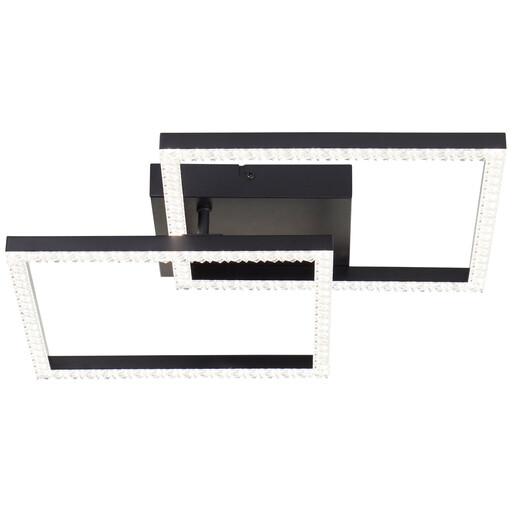
Why this product suits this type of buyer: With a fixed colour temperature of 4000 K and a luminous flux of 2700 lm, this light offers a clearly defined option for a living room, bedroom or hallway.
The specifications list 20 W, 2700 lm, 4000 K and 41 × 41 cm, making it easy to compare with other lights without relying on vague marketing claims.
2700 lm luminous flux, 4000 K colour temperature and an adjustable element.
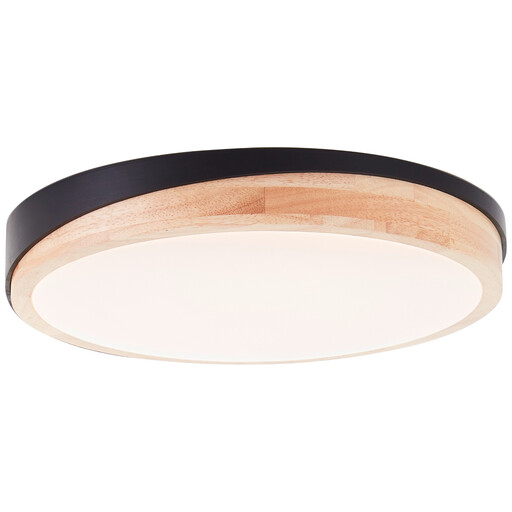
Why this product suits this type of buyer: Combining wood, plastic and metal with warm white light, this ceiling light is well suited to living spaces where materials and adjustable brightness matter.
The product details clearly state 3000 K, 2400 lm and three dimming levels, so you can get a better idea of the light it will provide before you buy.
2400 lm, 3000 K and an integrated 3-step dimmer with memory function.
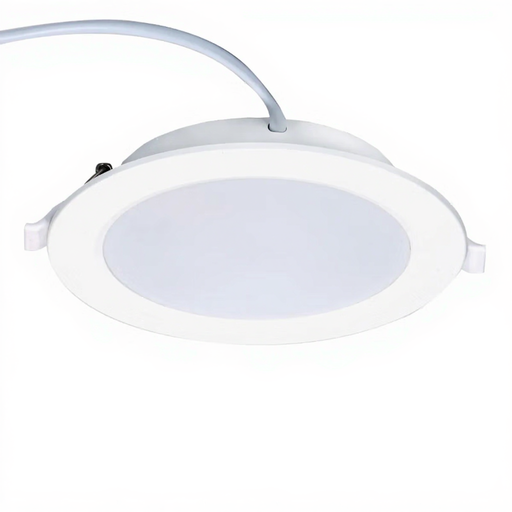
Why this product suits this type of buyer: This LED recessed spotlight is suitable for hallways, rooms and commercial indoor spaces where you want to connect multiple lights and control them centrally.
The required ceiling cut-out of 120–130 mm and the IP20 rating are clearly stated, so you can check the installation location and fitting dimensions in advance.
780 lm, 2700K–6500K, Bluetooth Mesh and a stated lifespan of 30,000 hours.
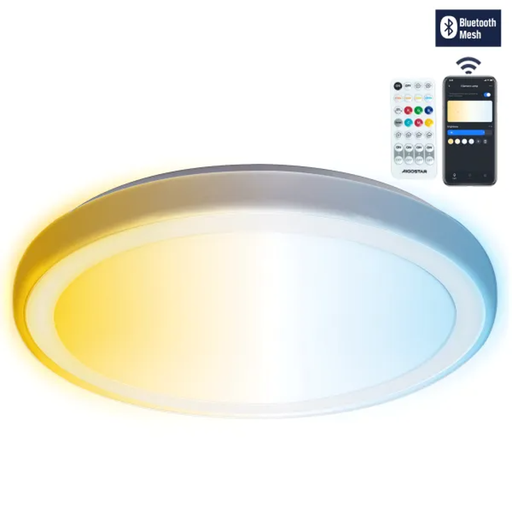
Why this product suits this type of buyer: Designed for ceiling mounting, its 3960 lm output and adjustable colour temperature make it an interesting option for larger living spaces, offices or shop floors.
Bluetooth Mesh is backed up by clear specifications: 36 W, 3960 lm, a 120° beam angle and an IP20 rating for dry indoor spaces.
3960 lm, 3000K–6500K, Bluetooth Mesh and a stated power factor of over 0.9.
We’ve put together a complete, regularly updated list of products that meet these strict selection criteria and fully comply with the safety regulations in force in the EU.
It depends on the size of the room, ceiling height, wall colours and how you use the space. For general lighting, total luminous flux matters more than wattage. Living spaces often benefit from warm white light, while work areas may need greater brightness and a more neutral colour temperature.
The stated lifespan varies by model. The Aigostar recessed spotlights mentioned here are rated for 30,000 hours. This is a manufacturer’s figure and depends on factors including operating conditions, heat dissipation and correct installation. Replace a light if you notice visible damage, flickering or unusual heat.
Running costs are calculated using power consumption × operating time × electricity price. A 24 W light uses 24 kWh over 1,000 hours of operation. For a realistic estimate, take standby consumption, dimming and actual daily usage into account.