
Lieferung heute & morgen

Qualitätsgarantie

Willkommens-Angebote freischalten: KOSTENLOSE Lieferung | Bis zu 80 % RABATT | Kostenlose 30-Tage-JoyPlus-Testphase
App herunterladen
LED Christmas fairy lights should look lovely, work reliably and suit the place where you plan to use them. In practice, unsuitable purchases are often down to overlooked technical details rather than the colour of the light: a set rated IP20 is used outdoors, the stated length includes only the lit section, or the cost of batteries is underestimated.
This buying guide explains which details to look out for when choosing Christmas lights and which styles suit different needs.
Don’t rely on the phrase “for indoor and outdoor use” alone. The IP rating is what matters:
The power supply and battery compartment must also be suitable for where you plan to use the lights. A water-resistant light element does not automatically make an unprotected power supply suitable for outdoor use.
A set of fairy lights may list the connecting cable, lead and illuminated section separately. For example, the Atmosphera LED garland is 165 cm long overall, including 140 cm of illuminated section and a 25 cm lead. So, before buying lights for a Christmas tree or balcony, check how much of the total length actually has lights on it.
Timers, colour-changing effects, music control and app connectivity can be useful, but not every decoration needs them. For example, RGB LED fairy lights are great for changing up the colour scheme, while warm white often creates a calmer look on a traditionally decorated tree. Think about which features you’ll actually use, rather than simply counting the different modes.
Warm white light is a popular choice for Christmas trees, windows and living spaces. If the colour temperature is listed, it can help you choose the right shade. According to the product details, the M.TK model has a colour temperature of 3000 Kelvin and 720 LEDs.
More LEDs don’t automatically mean brighter lights. Spacing, beam angle, power and layout all affect the overall look. With decorative lights featuring larger baubles or figures, their shape may stand out more than an even spread of individual points of light.
Battery-operated fairy lights can be placed anywhere, without needing a nearby socket. Check:
Mains-powered models are generally better for longer daily use in a fixed location. For a 9-watt set of fairy lights, you can estimate electricity use from the number of hours it’s switched on and your own electricity tariff. The actual cost depends on how you use the lights and your tariff.
Flexible cables and even spacing are useful when choosing fairy lights for a Christmas tree. For balcony, patio or garden lighting, cable length, fixing points and the reach of the lead matter more. With hanging lights, check that the spacing suits your existing wall, railings or branches.
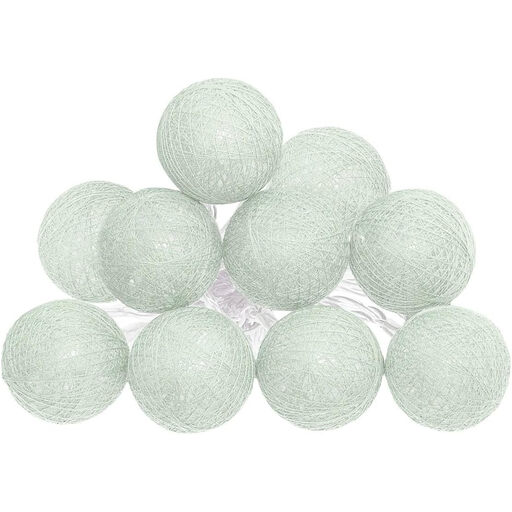
Why it suits this profile: This compact garland is intended for dry indoor spaces, making it a good choice for bedrooms, shelves or party decorations. It takes 2 AA batteries, which need to be bought separately.
The product details clearly state the total length, lit length and IP20 rating. This makes it clear that the garland isn’t designed for damp outdoor areas.
10 illuminated baubles, warm white LED light and an on-product switch.
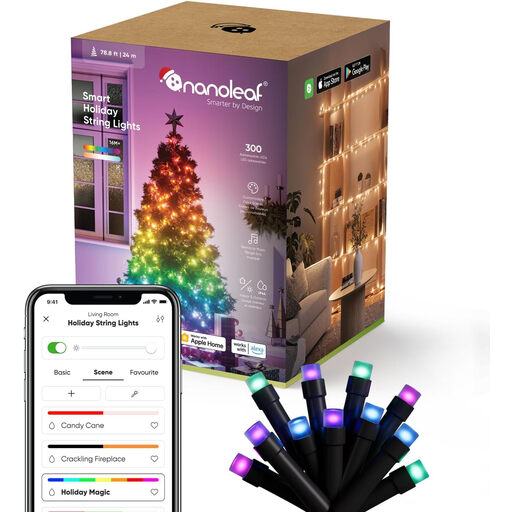
Why it suits this profile: This 24-metre smart set of fairy lights is ideal for households looking for app and voice control, as well as changing RGBIC lighting effects.
The product name specifies indoor and outdoor use, along with the available control options. Before installing the lights, check the specific IP rating in the product description.
RGBIC LEDs, music synchronisation, Matter support over Wi-Fi and compatibility with popular voice assistants, according to the product details.

Why it suits this profile: This hanging light system is designed for larger areas on façades, trees or covered outdoor spaces. Its warm white lights create a falling-rain effect.
The IP44 rating is clearly stated, along with the reminder that it protects against splashing water. This helps avoid the mistaken assumption that the lights can be fully immersed in water.
720 LEDs, 15 hanging points spaced 70 cm apart, 10 × 0.5 m coverage and a memory function, according to the product details.
We’ve put together a complete, regularly updated list of products that meet these strict selection criteria and fully comply with the safety regulations in force in the EU.
Consumption depends on the electrical power and how long the lights are on each day. With a 9-watt power supply, five hours of use works out at 45 watt-hours. For battery-operated models, you’ll need to factor in the cost of replacement batteries instead of electricity.
No. IP20 is intended for dry indoor spaces. For a balcony, patio or garden, choose a model approved for outdoor use with a suitable IP rating. Remember to check the power supply, battery box and connections too.
There’s no single lifespan that applies to every model. It depends on factors including hours of use, temperature, moisture, physical strain, and the quality of the cables and connections. Regular visual checks and storing the lights somewhere dry between decorating seasons can help keep them in good condition.