
Lieferung heute & morgen

Qualitätsgarantie

Willkommens-Angebote freischalten: KOSTENLOSE Lieferung | Bis zu 80 % RABATT | Kostenlose 30-Tage-JoyPlus-Testphase
App herunterladen
An LED desk lamp should provide even light across your work area, take up little space and adapt to different tasks. Students, people working from home, readers and crafters may value different features more than decorative looks.
Many disappointing purchases aren’t caused by the LED technology itself, but by unclear product details and unsuitable designs. Before you buy, it’s worth checking the actual features, how the lamp works and where it’s intended to be used.
A high lumen rating describes the amount of light produced, but doesn’t automatically mean the lamp will provide comfortable illumination. It’s also important to consider whether the light is distributed evenly, whether the lamp causes glare and whether you can direct the beam where you need it. A 700-lumen lamp may suit a large desk, while a compact bedside reading lamp needs much less light.
Terms such as eye-friendly desk lamp, “Eye-Caring” and “glare-free light” often come from product marketing. Check them against specific details, such as a matte diffuser, even light distribution, a low-flicker design or a stated certification. These claims don’t establish a general medical benefit.
A flexible lamp arm is useful if it reliably stays in position. For a clamp lamp, the maximum clamp width is also important. With a rechargeable LED lamp, check the battery capacity, charging port and run time. Without these details, it’s difficult to tell whether the lamp will last through longer study or work sessions.
Look for the lumen rating and several brightness settings. A dimmable lamp is more practical for different situations: a low setting for reading in bed, a medium one for working at your desk and a brighter setting for craft projects.
A wide, diffused light can reduce shadows on your work surface. If an LED desk lamp has a narrow beam, it’s best if the lamp head is adjustable. This lets you direct the light onto books, your keyboard or your project.
Colour temperature is measured in kelvin:
A higher CRI value indicates more accurate colour rendering. This is particularly useful for drawing, crafting or working with coloured materials. However, the CRI value alone tells you nothing about brightness, glare or personal comfort.
A desk lamp with a USB-C charging port works with many modern chargers. Still, check whether a cable is included and whether you can use the lamp while it’s charging. A foldable LED desk lamp can be a good choice for a small work surface. A clamp lamp saves desk space, but needs a stable edge and a suitable clamp width.
For use in a German household, you should also check the power adapter, plug type, instruction manual and any conformity markings. For rechargeable models, charging time and run time matter more than a high battery capacity on its own.
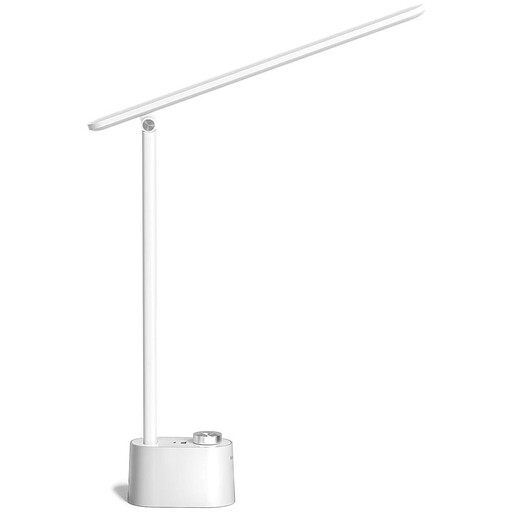
Why this product suits this profile: Its foldable design is ideal for small desks, student rooms and changing workspaces. The USB-A and USB-C ports offer extra charging options.
According to the product details, brightness can be adjusted from 15 to 100 per cent. The three stated colour temperatures and matte diffuser help address inflexible lighting or glare from a concentrated beam.
Foldable design, 500 lumens, USB-A and USB-C charging ports, and an adjustable light direction.
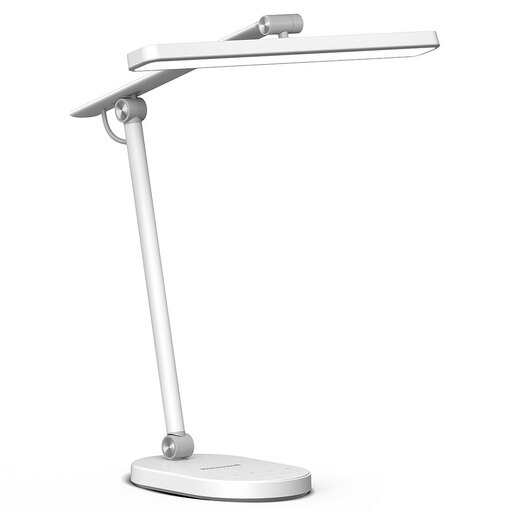
Why this product suits this profile: For a home office or permanent workspace, multiple lighting modes, a stable base and automatic shut-off are practical features.
The product details list 700 lumens, five brightness levels and three colour temperatures. This makes it easier to tailor the lamp to your room and task.
RG0 rating, anti-glare claim, ambient light sensor, memory function and 60-minute timer, according to the product description.
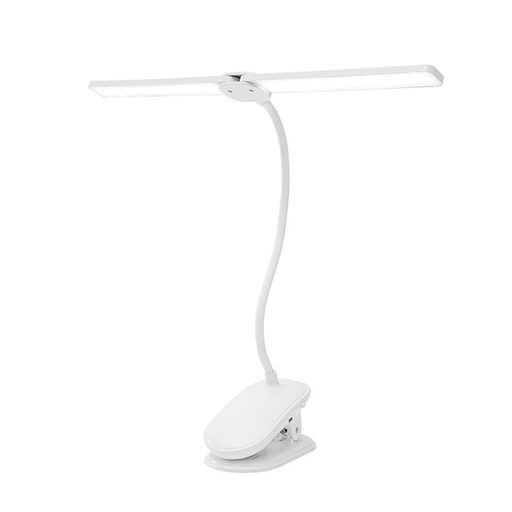
Why this product suits this profile: The two independently adjustable lamp heads are useful for reading, needlework, a workbench or a shared work surface. The clamp fitting saves desk space.
The product description lists a clamp width of up to 5 cm, 360-degree adjustment and a USB-C port. This makes it easier to fit the lamp in different places.
2400-mAh battery, up to 30 hours’ run time on the low setting according to the product details, three colour modes and use while charging.
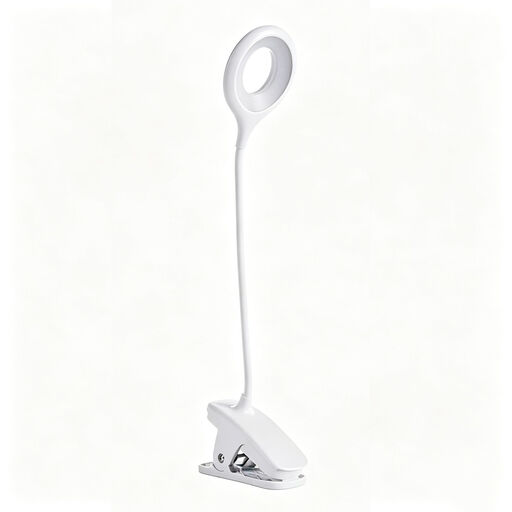
Why this product suits this profile: This cordless reading light can be attached to a bed, shelf or table. Its touch controls and flexible neck are designed for short, occasional use in different places.
Three brightness levels, a 360-degree swan neck and a padded clamp help avoid fixed positioning and unnecessary use of space.
1200-mAh battery, USB-C charging, up to 12 hours’ run time on the lowest setting according to the product details, and use while charging.
We’ve put together a complete, regularly updated list of products that meet these strict selection criteria and fully comply with the safety regulations in force in the EU.
Position the lamp so that its head doesn’t shine directly into your eyes. Right-handed people often place a lamp on the left, while left-handed people often put it on the right, to minimise shadows from their writing hand. Choose a distance that suits the size of your work surface. If you’re using a clamp lamp, also check that the clamp is secure and won’t damage a delicate surface.
Its lifespan depends on the LED module, electronics, heat dissipation and how long it’s used for. The Honeywell HWT-H01W, for example, is listed with an average lifespan of 30,000 hours. This is a manufacturer’s figure, not a guarantee for every use. For rechargeable lamps, you should also factor in battery ageing.
LED lights generally use relatively little power. Actual consumption depends on the wattage, brightness setting and how long the lamp is on. A 10-watt lamp used at full power for three hours a day would use around 0.9 kWh per month. Using a lower setting can reduce consumption accordingly.