
Lieferung heute & morgen

Qualitätsgarantie

Willkommens-Angebote freischalten: KOSTENLOSE Lieferung | Bis zu 80 % RABATT | Kostenlose 30-Tage-JoyPlus-Testphase
App herunterladen
An LED desk lamp should provide even lighting for your workspace, take up little room and adapt to different tasks. In practice, unclear product specifications, an unsuitable fitting or insufficient light output can easily lead to the wrong purchase. This applies to students, people working from home and anyone who enjoys reading, crafting or working with watercolour pencils.
With LED lights, wattage alone tells you relatively little about brightness. The key measure is luminous flux in lumens. A compact clip-on lamp with 160 lm may be enough for a book or small work area. For a large desk or technical drawings, however, a wider spread of light may be more suitable.
The term eye-friendly lamp is not a standardised, protected quality mark. Instead, look for specific details such as low-flicker light, a matte diffuser, several brightness settings and a suitable colour temperature. A lamp is no substitute for good room lighting and does not promise any medical benefits.
A flexible lamp arm is useful when you need to direct the light precisely. However, a base that is too light or a poorly fitting clamp can make the lamp unstable. So check the dimensions, clamp range and base. With a clip-on lamp, it’s also important to make sure your desk is within the maximum clamp thickness.
For reading, writing and craft projects, specific lumen figures are more useful than general marketing claims. A lamp with 160 lm is better suited to a limited area. Models with 400 or 500 lm can cover a larger work surface, provided their design distributes the light evenly.
The CRI, also known as the colour rendering index, describes how naturally colours appear under a lamp. A rating of Ra 80 is common for many everyday lights. For creative projects using coloured pencils or watercolour paper, natural colour rendering can be important. The way colours appear also depends on the paper, the room lighting and the colour temperature.
Colour temperature is measured in Kelvin:
A dimmable LED lamp lets you adjust the light to suit the time of day and the task. Check whether the brightness is adjusted in steps or continuously. With touch controls, the switch should be easy to reach and not too easy to activate accidentally.
A cordless desk lamp is useful if there are no nearby sockets or you often move your workspace. As well as battery capacity, check the stated run time at different brightness settings. For example, the Aigostar Clip Lamp with a 1200-mAh battery has stated run times of 3, 7 and 30 hours. These figures always depend on the mode selected.
A desk lamp with USB or USB-C is a good choice for a fixed workspace. A rechargeable table lamp offers more flexibility, but needs to be charged regularly. With a clip-on lamp, the maximum clamp thickness matters too: according to the product information, the Aigostar clip accessory fits desk edges up to 74 mm thick.

Why this product suits this profile: This compact clip-on lamp takes up little room and offers three brightness settings with neutral white 4000 K light. Its built-in battery means you can use it without keeping it plugged in.
The specifications of 160 lm, 2.5 W, 4000 K and three brightness settings make it easier to judge the intended lighting area than a design description alone.
1200-mAh battery, flexible lamp neck, 160 lm and three brightness settings.

Why this product suits this profile: This LED desk lamp offers 3000, 4000 and 5000 K colour temperatures, with brightness of up to 400 lm. You can configure it for reading, home working and different times of day.
The three clearly stated colour temperatures and flexible lamp neck reduce the risk of choosing a light based on appearance alone.
400 lm, touch controls, three colour temperatures and a built-in battery with 2 × 1800 mAh.
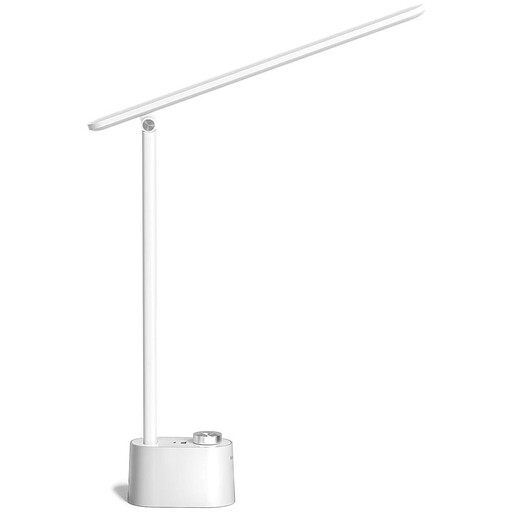
Why this product suits this profile: Ideal for home-working desks where space is limited, this foldable lamp combines a stated brightness of 500 lm with USB-A and USB-C charging ports.
The product details specify brightness and colour temperature, including 3000, 4000 and 5500 K, rather than relying on a general description of light quality.
15–100 % dimming range according to the product details, 500 lm, CRI 95 and two charging ports.
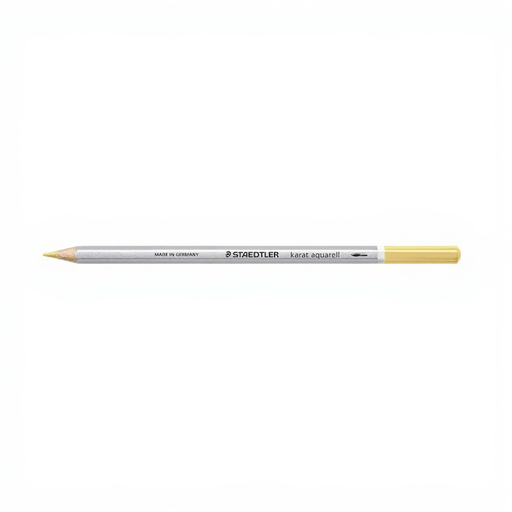
Why this product suits this profile: These watercolour pencils let you draw dry or blend the colours on watercolour paper. They’re a useful addition for crafters and artists who want to light their work surface precisely.
The pack contains six pencils in Light Ochre. It also specifies water-soluble techniques and FSC-certified wood from sustainably managed forests.
Water-soluble lead, hexagonal wooden barrel and several techniques, including dry, dry on wet and wet on wet.
We’ve put together a complete, regularly updated list of products that meet these strict selection criteria and the safety regulations in force in the EU.
Position the lamp so your hand doesn’t cast a heavy shadow across your work surface as you write. Right-handed people usually place the lamp on the left, while left-handed people tend to place it on the right. The beam should reach the area you need without shining directly into your eyes. If you’re using a clip-on lamp, check before each use that the clamp is secure and the lamp neck isn’t tipping over the edge of the desk.
For longer sessions, it’s a good idea to combine room lighting with task lighting. This means your LED desk lamp won’t have to compensate for an extreme difference in brightness between your work surface and its surroundings.
For a small reading area, 160 lm may be enough. For a larger desk, 400 to 500 lm is often more practical. The beam angle, distance from the lamp and size of the work area you need to light are still important factors.
It’s a good choice if you want to use the lamp in different places or without a cable. Check the run time at each brightness setting, charging time and connection type. For a fixed workspace, a wired desk lamp with a USB port may be more straightforward.
Its lifespan depends on the LED module, electronics, heat dissipation and how it’s used. Manufacturer estimates such as 20,000, 25,000 or 30,000 hours are guidelines, not a guarantee of a specific lifespan in the home. Also look for a sturdy lamp neck, a stable base and the option to replace the cable if it wears out.