
Lieferung heute & morgen

Qualitätsgarantie

Willkommens-Angebote freischalten: KOSTENLOSE Lieferung | Bis zu 80 % RABATT | Kostenlose 30-Tage-JoyPlus-Testphase
App herunterladen
An LED desk lamp can illuminate your workspace precisely without taking up much room. However, claims like "eye protection", "daylight" or "particularly energy-efficient" aren't always directly comparable. What really matters are measurable values, a suitable design, and a power supply that fits where you'll use it.
A high lumen figure describes the total light output, but it doesn't automatically mean even lighting across your desk. A lamp with a narrow beam can still cast shadows, even with high brightness. For reading, drawing or focused screen work, the lamp head, beam angle and adjustable arm are just as important.
Terms like desk lamp with eye protection can refer to various features, such as a frosted cover, reduced glare, flicker-free light or a specific LED technology. So check whether concrete details on CRI, colour temperature, dimming levels and light distribution are provided. A lamp doesn't replace proper ergonomic workplace lighting and isn't a medical device.
Touch control, a USB port, a rechargeable battery or automatic brightness adjustment can be handy. At the same time, extra features increase the demands on operation and power supply. A cordless desk lamp needs regular charging, while a USB lamp requires a suitable port with enough power.
Brightness is given in lumens (lm). For a small bedside table, a lower light output is often enough compared to a large desk. More important than the highest possible figure is even illumination without directly seeing the LED.
The colour rendering index (CRI or Ra) describes how naturally colours appear under the light. A higher value can be useful for drawing, crafting, product photography or other colour-critical tasks. The specification should refer to the specific model, not just a general product series.
Colour temperature is given in Kelvin (K):
A desk lamp with adjustable colour temperature offers more flexibility than a model with just one light colour. A dimmable desk lamp should also offer several clearly defined levels or stepless adjustment. This lets you adapt the brightness to the room light, your task and the time of day.
A flexible arm or a movable lamp head allows precise positioning. A foldable desk lamp is ideal for small work surfaces and for travel. A clamp-on lamp saves desk space but must be securely attached to the edge of the table. With a monitor lamp, make sure the bracket fits your screen and doesn't create an unstable load.
Also pay attention to:
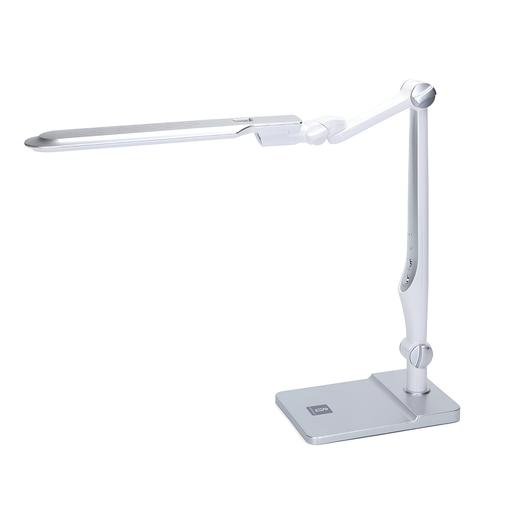
Why this product fits the profile: The combination of touch control, dimming and a range from 3000 to 6500 K covers typical needs for studying, working and reading.
The product data lists specific colour temperatures, touch operation and a flexible lamp arm, rather than relying solely on general marketing claims.
9 W LED power, adjustable colour temperature and flexible positioning.
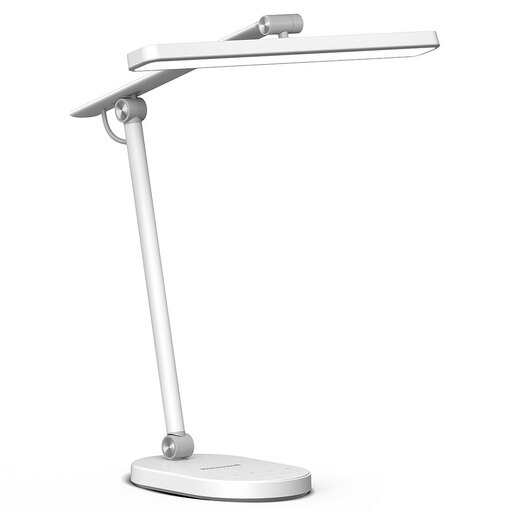
Why this product fits the profile: For long work or reading sessions, this model offers 700 lm, three colour temperatures, five brightness levels and a sensor for automatic adjustment to ambient light.
CRI 97, RG0 rating and a glare-reducing design are listed as concrete product features. These specifications are not equated with a medical effect.
Automatic brightness adjustment, timer, memory function and adjustable arm.
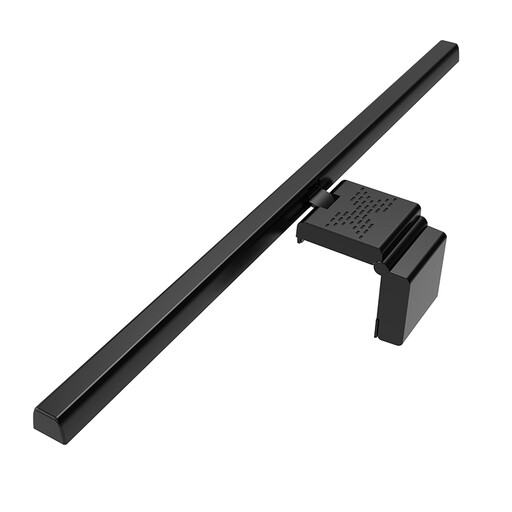
Why this product fits the profile: This monitor lamp is designed for larger screens and workspaces with limited depth. Its clamp-on mounting keeps your desk surface clear.
The asymmetric optics direct light onto the work area. Compatibility is stated for monitors from 24 inches, curved monitors and laptops.
50 cm wide light bar, stepless brightness and three colour temperatures from 3000 K to 6500 K.

Why this product fits the profile: This compact LED reading lamp can be used freestanding or as a clamp-on light, making it ideal for bed, travel and small shelves.
The application is clearly defined: 3000 K, two brightness levels and 16 lm. This means you're not choosing an oversized work lamp for mobile use.
37 g weight, 350° rotation, 45° tilt and built-in 200 mAh battery with USB charging.
We've put together a full, regularly updated list of products that fully meet these strict selection criteria and the safety regulations in force in the EU.
The lamp head should illuminate your work area without shining directly into your eyes or reflecting in your monitor. For right-handed people, positioning it on the left is often helpful; for left-handed people, on the right. The key is that your hand and pen cast as little shadow as possible on the work surface.
The lifespan depends on the LED module, heat dissipation, power supply and daily usage time. Manufacturer claims such as 20,000, 30,000 or 50,000 hours are guidelines, not a guarantee for the entire lamp. With models that have built-in LEDs, replacing the light source is often not possible.
The consumption mainly depends on the wattage and the daily operating time. A 9 W lamp running for four hours a day uses roughly 0.036 kWh per day. Dimming can reduce consumption depending on the technology. For an accurate estimate, check the power consumption of your specific model and your electricity tariff.