
Lieferung heute & morgen

Qualitätsgarantie

Willkommens-Angebote freischalten: KOSTENLOSE Lieferung | Bis zu 80 % RABATT | Kostenlose 30-Tage-JoyPlus-Testphase
App herunterladen
An LED desk lamp should provide targeted lighting for your workspace, reading chair or bedside table. In practice, however, unclear brightness specifications, limited adjustment options and unsuitable dimensions often lead to disappointing purchases. If you focus only on wattage or a modern casing, you may not notice important differences until the lamp is set up.
This guide explains which technical specifications matter, which designs are best suited to different uses and which models from our selection cover a range of everyday situations.
Power consumption in watts describes energy usage, not the amount of light directly. For brightness, the luminous flux in lumens is the key specification. Depending on the LED technology, a 4 W lamp can produce significantly different amounts of light. If you want to illuminate a work surface evenly, you should therefore check the lumen rating and beam angle.
Some lamps offer just two or three fixed brightness levels. This may be sufficient, but it is not the same as stepless dimming. Lights also differ in colour temperature: warm white light around 3000 K often feels more subdued in living rooms and bedrooms, while 4000 K tends to appear more neutral. A colour temperature of 5000 K may be useful for tasks requiring concentration, but it should suit the surrounding environment.
A cordless LED desk lamp or rechargeable desk lamp needs to be charged regularly. The battery capacity, charging cable and stated operating time are therefore important. With a clip-on lamp, you also need to consider the thickness of the desk. A clamp that does not open wide enough or cannot hold the lamp securely can make the entire product impractical.
Luminous flux is specified in lumens (lm). A small bedside table generally needs less light than a large desk. The CRI or Ra value describes colour rendering. An Ra 80 rating means that colours appear relatively differentiated under the light. This value is a technical guide, but it does not promise any particular visual or health benefit.
You should also check whether the lamp emits direct or diffused light. A wide beam angle can illuminate a larger area, while an adjustable lamp neck directs the light more precisely onto a book, keyboard or drawing surface.
A dimmable table lamp with several colour temperatures can be adapted to different times of day and activities. With a touch lamp, the controls should be clearly described. Does it offer fixed levels, stepless adjustment or an additional memory function?
According to the product specifications, the Aigostar Battery LED Desk Lamp offers 3000 K, 4000 K and 5000 K, a brightness of 400 lm and touch control. This allows you to adjust the light to suit the situation. The stated power is 4 W.
A space-saving lamp should not only be compact, but also stand securely or be easy to attach. Check the following:
Fixed wall installation has different requirements from a flexible reading lamp. Hard-wired lights must be installed by a qualified electrician.
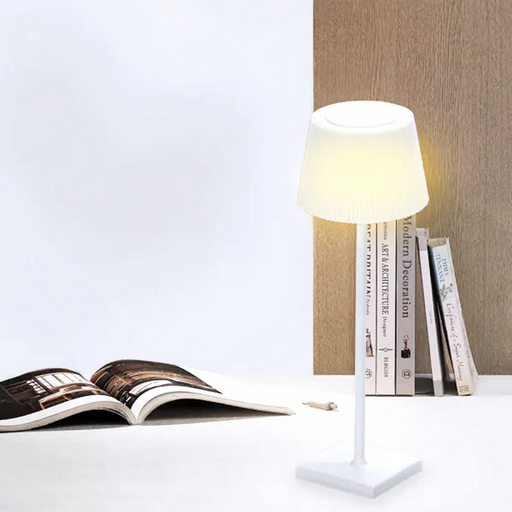
Why this product suits the profile: This rechargeable table lamp is ideal for anyone looking for a flexible solution for a desk, side table or reading area.
The product specifications state 400 lm, three colour temperatures and an integrated battery with 2 × 1800 mAh. This makes the key purchase information easy to verify.
Touch control, 3000/4000/5000 K and a flexible neck with a height of 380 mm.
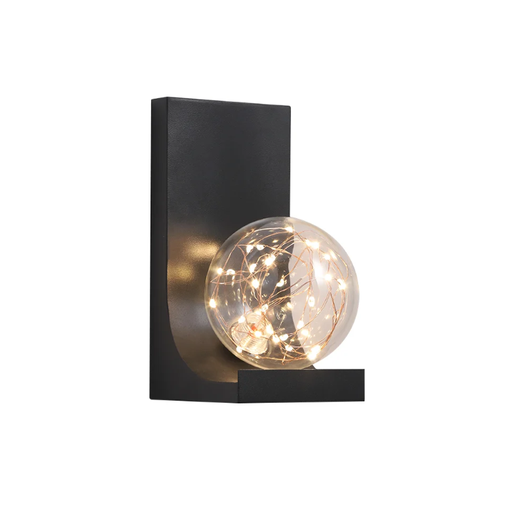
Why this product suits the profile: This wall light is aimed at buyers who prefer a modern, permanently installed lighting solution for a hallway, bedroom or living area.
The product description explicitly states that the LED is non-replaceable and that professional installation is required. These points should be taken into account before buying.
6 W integrated LED, warm white light, metal and glass construction, and low-profile wall mounting.
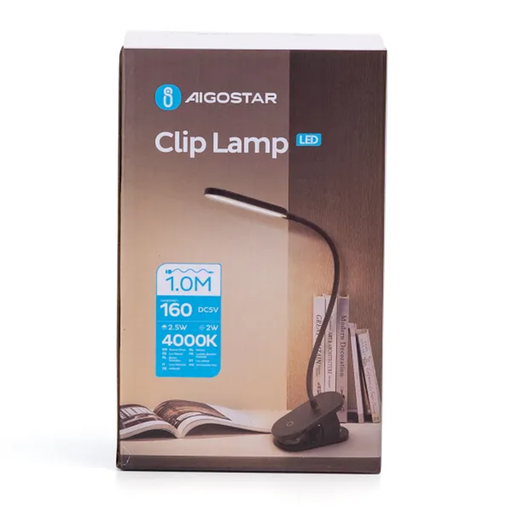
Why this product suits the profile: Clip-on mounting is useful for students, craft workspaces and small desks because it leaves the desktop clear.
The specifications state 160 lm, 2,5 W, three operating times of 3, 7 and 30 hours, and a 1200 mAh battery. The flexible neck allows precise positioning.
Clip-on mounting, 4000 K neutral white light, touch control and an adjustable silicone lamp neck.
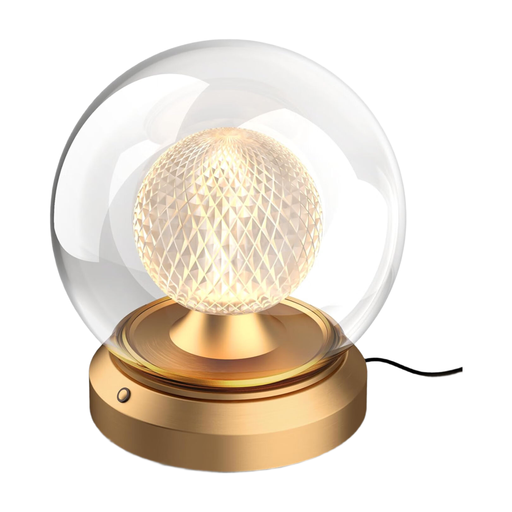
Why this product suits the profile: This compact modern bedside lamp is suitable for bedrooms, bookshelves and small side tables with a fixed power supply.
The product data states four dimming levels, a memory function and a colour temperature of 3000 K. This makes the control system easy to assess before buying.
Compact dimensions, 6 W LED, four touch dimming levels and a memory function.
We have put together a complete, regularly updated list of products that fully meet these strict selection criteria and the safety regulations applicable in the EU.
Position the light so that your arm casts as little shadow as possible across the work surface. Right-handed users often place the lamp on the left, while left-handed users generally position it on the right. The lamp head should not shine directly into your eyes. With a flexible reading lamp, it is best to direct the light towards the book or document rather than a glossy surface.
For video meetings and screens, a light source positioned to the side is often more suitable than a lamp directly behind the monitor. With a clip-on lamp, the desk edge should be free from cables and sufficiently sturdy.
This depends on the size of the area and how you intend to use it. A lower light output may be sufficient for a small reading area, while a larger desk will generally need more light. Compare the lumens, beam angle and position of the light together instead of looking at wattage alone.
Lifespan is stated in operating hours and depends on usage, heat dissipation and the power supply. The products mentioned here, for example, have stated lifespans of 20,000 to 25,000 hours. With integrated LEDs, check whether the light source can be replaced. According to the product description, the LED in the Homary model cannot be replaced.
LED lights often operate with comparatively low power consumption. For running costs, the wattage, daily usage time and electricity tariff are the key factors. Battery-powered models also require energy for charging. A simple calculation is: power in kW × operating hours = energy consumption in kWh.