
Lieferung heute & morgen

Qualitätsgarantie

Willkommens-Angebote freischalten: KOSTENLOSE Lieferung | Bis zu 80 % RABATT | Kostenlose 30-Tage-JoyPlus-Testphase
App herunterladen
LED lighting can provide practical illumination, add decorative touches with RGB LED lights, or create more even lighting for photos and videos. The choice ranges from smart LED bulbs and LED strips to portable LED video lights. But it’s not just the number of colours or the advertised brightness that matters: you need to choose lighting that’s right for where you’ll use it.
Power consumption in watts tells you how much electricity a light uses, not directly how bright it is. For brightness, look at the luminous flux in lumens. For example, a smart GU10 bulb rated at 4.9 W and 420 lm is suitable for directional lighting in a fitting, but won’t necessarily replace lighting designed to illuminate a whole room.
The claim ‘equivalent to 40 W’ is also just a comparison with traditional light bulbs. To choose the right light, consider lumens, beam angle and room size together.
RGB colours work well for decorative scenes, gaming setups or ambient lighting. For reading, working and judging product colours, however, adjustable white tones and reliable colour rendering are more important. A dimmable LED bulb with a colour temperature of 2,700 to 6,500 K offers more flexibility than a model that only produces coloured effects.
For photos and video, the CRI rating may also be relevant. A higher rating indicates more natural colour rendering under the specified test conditions. Don’t take the manufacturer’s rating as evidence of a medical benefit or a guarantee of better results.
IP20 is intended for dry indoor spaces only. An LED wall light or LED strip for a bathroom, kitchen or balcony needs an IP rating suited to its installation location. IP44, for example, means protection against splashing water, but not immersion.
With self-adhesive strips, you’ll also need to consider the surface, heat dissipation and where to position the power supply. An unsuitable surface or covered adaptor can cause problems with adhesion and safety.
Colour temperature is measured in kelvins:
Stepless dimming lets you fine-tune the brightness, rather than choosing from just a few fixed levels. If you’re buying a clip-on reading light or monitor light, check whether you can control it directly on the device and whether it can be attached securely.
A Wi-Fi LED bulb can often be controlled via an app, schedule or voice assistant. Before you buy, check whether you need a gateway and whether the bulb works with your network. Many products require 2.4 GHz Wi-Fi.
Matter-compatible lighting can make it easier to connect lights to different smart home systems. Even so, check which platforms are actually supported. According to the product details, the Hama Smart GU10 bulb is compatible with Matter, Alexa, Google Assistant and Apple HomeKit, and doesn’t require an additional gateway.
For a cordless LED light, check the battery capacity, charging port and realistic battery life. Video and photography lights may also offer mounting options such as a 1/4-inch thread, magnetic mount or cold shoe adaptor. A mains-powered photography light may be more practical for longer shoots, as you won’t need to stop to recharge it.
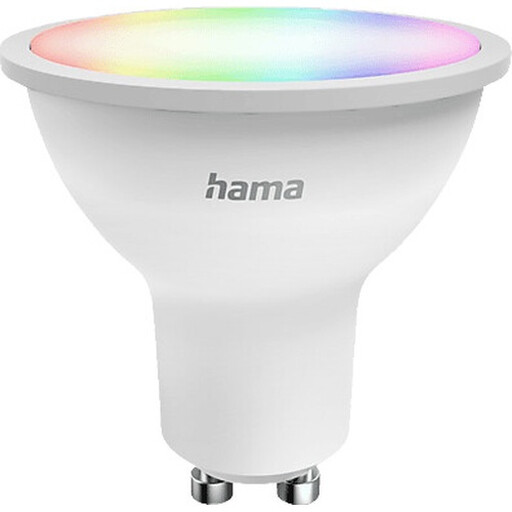
Why it’s a good fit: This bulb fits standard GU10 sockets and combines app control with dimmable white tones and RGB colours.
The specifications of 420 lm, 4.9 W and 2,700–6,500 K make it easier to choose than relying on a colour display alone.
Matter, Wi-Fi, app and voice control; dimmable RGBW lighting without a separate gateway.
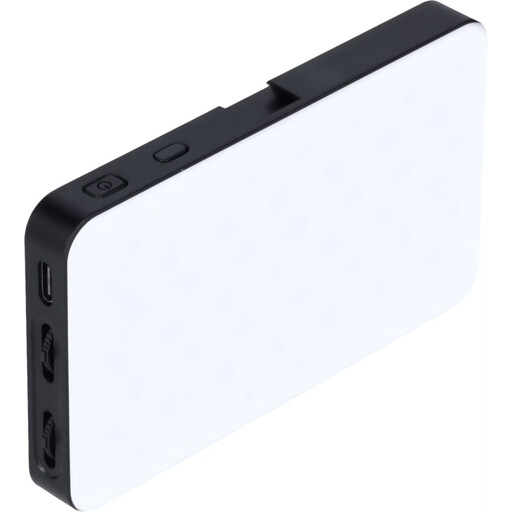
Why it’s a good fit: Content creators and videographers get a compact light with bi-colour mode, RGB control and app operation.
As well as 360 RGB colours, it offers a colour temperature range of 2,500–9,000 K and brightness control in 1% increments.
91 LEDs, 8 W power consumption, CRI and TLCI ratings of 98+ according to the product details, plus battery and tripod connections.
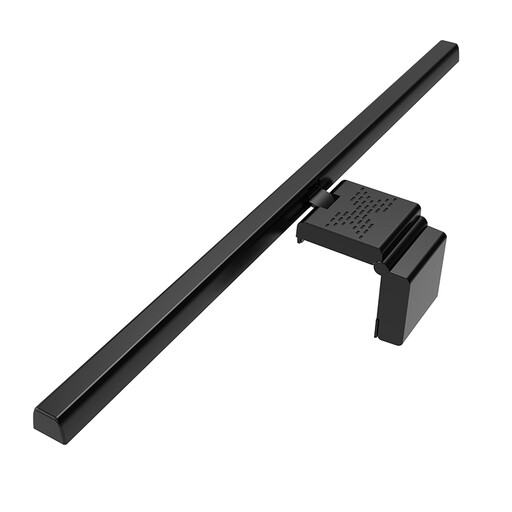
Why it’s a good fit: This monitor light is designed for home offices with limited desk space and large or curved monitors.
Its asymmetrical beam is directed towards the desk, while the clamp mount saves space.
50 cm long, with three colour temperatures of 3,000, 4,500 and 6,500 K, plus stepless brightness control via USB.
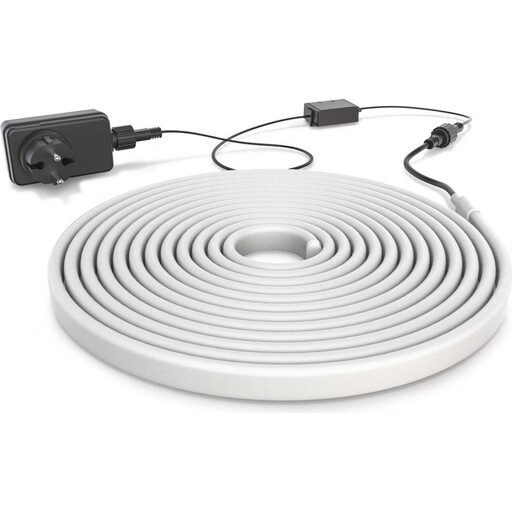
Why it’s a good fit: This 5 m LED strip is ideal for indirect lighting on furniture, behind TVs or along walls.
The IP44 rating offers more placement options than IP20, but you’ll still need to check it’s suitable for the actual installation location.
RGBIC effects, 300 lm, dimming, Matter compatibility, plus app, voice and remote control.
We’ve put together a complete, regularly updated list of products that meet these strict selection criteria and fully comply with the safety regulations in force in the EU.
Consumption depends on the power rating in watts and how many hours a day the light is on. A 5 W light running for ten hours uses 0.05 kWh. For a realistic estimate, also take into account power supplies, standby consumption and the brightness setting you actually use.
Lifespan is often given in operating hours, but it depends on temperature, usage and the electronics. Replacing a light with an integrated LED can be more involved than changing a GU10 or E27 bulb. Check whether the bulb can be replaced and what warranty or manufacturer information is available.
A monitor light saves desk space and can direct light onto your work surface. A desk lamp usually gives you more freedom to position the light. The key things to consider are monitor width, how securely the light clamps on, colour temperature and whether you can avoid reflections on the screen.