A reliable light source is indispensable in many situations—whether during a power outage, on a hike after dark, or for repair work in poorly lit corners. However, the market for LED flashlights is vast, and the technical specifications can be overwhelming. This guide aims to provide clarity by explaining the most important selection criteria and presenting a selection of models for various applications. The goal is to give you an informed basis for purchasing the right LED flashlight.
What to Look for When Buying an LED Flashlight
To find the right model for your needs, you should consider several technical features. These determine the performance and practical utility of the flashlight in everyday life.
1. Luminous Flux (Lumens) and Beam Distance
The luminous flux, measured in lumens (lm), indicates the total brightness emitted by a light source. A higher lumen count means a brighter flashlight. The required brightness depends heavily on the intended use:
- Everyday Use (up to 300 lumens): For tasks around the house, in the garden, or when walking the dog, a small flashlight with 100 to 300 lumens is generally sufficient.
- Outdoor Activities (300–1000 lumens): For camping, hiking, or night walks, an outdoor flashlight in this range provides good illumination of the path and immediate surroundings.
- Demanding Applications (over 1000 lumens): An exceptionally bright flashlight with over 1000 lumens is useful for search and rescue operations, cave exploration, or as a tactical flashlight to illuminate large areas or distant objects.
2. Power Source: Rechargeable or Disposable Batteries?
Modern LED flashlights are powered by either disposable batteries (e.g., AA, AAA) or by built-in or replaceable rechargeable batteries.
- Battery-powered models: They are often ready to use immediately and are well-suited for an emergency kit, as spare batteries are easy to store.
- Rechargeable flashlights: These models are more cost-effective and environmentally friendly in the long run. Many can now be conveniently charged via USB-C, making them compatible with power banks, laptops, or car adapters.
3. Durability and Water Resistance (IP Rating)
The IP rating indicates how well a device is protected against the ingress of foreign objects (first digit) and water (second digit).
- IPX4: Protection against splashing water from all directions. Sufficient for normal everyday use in the rain.
- IPX7: Protection against temporary immersion (up to 1 meter deep for 30 minutes).
- IP68: Complete protection against dust and continuous immersion. A waterproof flashlight with this rating is designed for demanding outdoor conditions and professional use.
Our Top LED Flashlight Picks
Here we present four models that are suitable for different user groups due to their specific features.
WUBEN PL01 Pen Flashlight
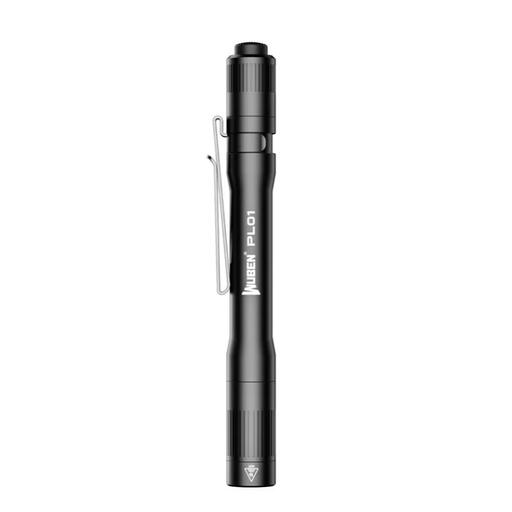
- Why It Stands Out: The WUBEN PL01 combines the shape of a pen with the power of a full-fledged flashlight. Its slim design and clip make it an ideal EDC (Everyday Carry) flashlight that can be discreetly stored in a shirt or trouser pocket.
- Advantages:
- Luminous Flux: Up to 650 lumens in a very compact body.
- IP Rating:IP68 certified, making it dustproof and waterproof.
- Power Source: Compatible with 2 AAA batteries, ensuring a simple power supply.
- Operation: Four light modes for flexible adaptation to any situation.
- Who Is It For? Tradespeople, technicians, and anyone who needs a small but powerful light for inspections, repairs, or daily use.
WUBEN E7 Mini Flashlight with Magnet
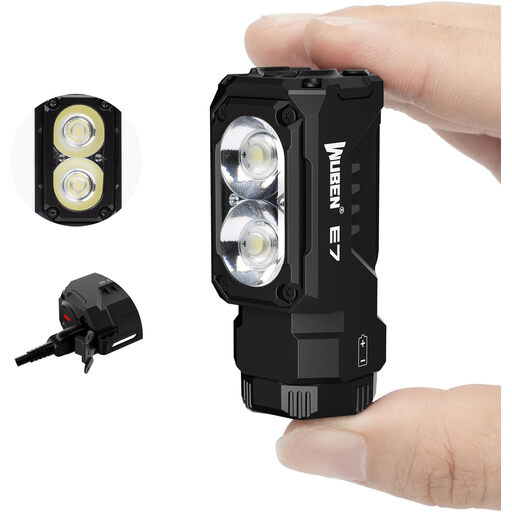
- Why It Stands Out: The WUBEN E7 is a powerhouse in a mini package. With its immense brightness and magnetic tail, it offers exceptional flexibility. It can be attached to metallic surfaces to keep your hands free or used as a headlamp.
- Advantages:
- Luminous Flux: A very bright 1800 lumens for extensive illumination.
- Functionality: Magnetic base and the option to be used as a headlamp.
- Power Source: A rechargeable flashlight via a modern Type-C port.
- IP Rating:IP68 certified, making it extremely durable for use as a camping light or in rescue operations.
- Who Is It For? Outdoor enthusiasts, campers, mechanics, and rescue personnel who need an extremely bright, versatile, and robust flashlight.
Philips SFL4000T/10 LED Flashlight
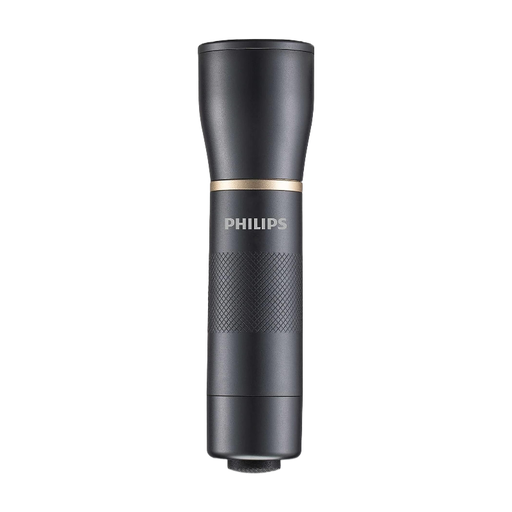
- Why It Stands Out: The Philips SFL4000T/10 is a straightforward and reliable companion for everyday life. Its focus is on simple operation and solid basic functionality, backed by a well-known brand.
- Advantages:
- Luminous Flux:120 lumens with a beam distance of up to 140 meters, ideal for most daily tasks.
- Ready to Use: Includes 3 AAA batteries.
- Material: Robust aluminum housing with IPX4 protection against splashing water.
- Handling: Compact design and simple one-button operation.
- Who Is It For? Homeowners and users looking for a simple, reliable, and ready-to-use flashlight for the household, car, or emergencies.
WUBEN G5 Tactical LED Flashlight
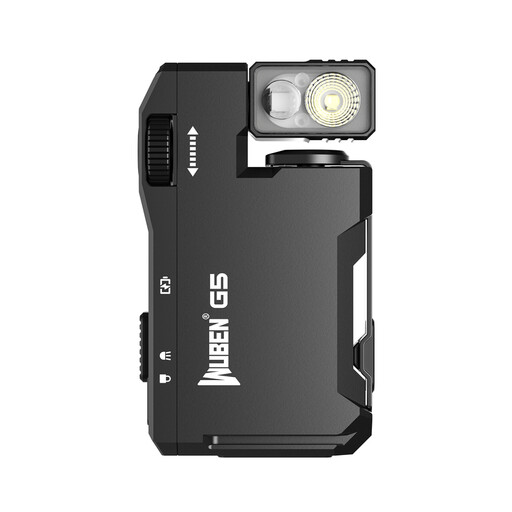
- Why It Stands Out: The WUBEN G5 flashlight is designed as a tactical tool. It combines high brightness with durability and useful modes for demanding environments.
- Advantages:
- Luminous Flux: Bright 1200 lumens for a clear view even at a distance.
- IP Rating:IP68 certified, making it a reliable waterproof flashlight for any weather.
- Power Source: Integrated battery, rechargeable via USB-C.
- Modes: Six different light modes suitable for tactical applications, outdoor adventures, or emergency situations.
- Who Is It For? Security personnel, preppers, hikers, and anyone who needs a very robust and bright flashlight with tactical features for outdoor use.
Didn't Find the Right Model?
The range of lighting solutions is diverse. If the models presented here do not exactly meet your requirements, you may find the right product in our broader selection.
? Discover more models in the Black LED Light category
Frequently Asked Questions (FAQ)
1. How many lumens should a good LED flashlight have?
The ideal lumen count depends on the intended use. For home use, 100–300 lumens are often sufficient. For outdoor activities like camping or hiking, 300–1000 lumens are a good choice. Professional or tactical applications may require over 1000 lumens to ensure maximum brightness and range.
2. What does the IP rating on a flashlight mean?
The IP (Ingress Protection) rating classifies the degree of protection a housing provides against the entry of foreign objects (first digit) and water (second digit). IPX4 means protection against splashing water, while IP68 indicates that the flashlight is dust-tight and will not be damaged by continuous immersion under conditions specified by the manufacturer.
3. Are rechargeable flashlights better than battery-powered ones?
Both systems have their advantages. A rechargeable flashlight is more environmentally friendly and cost-effective in the long run, as there is no need to buy disposable batteries. Models with a USB-C charging port are particularly flexible. Battery-powered flashlights, on the other hand, are ideal for emergency kits because spare batteries can be easily stored and quickly replaced without needing a power source for recharging.


