
Lieferung heute & morgen

Qualitätsgarantie

Willkommens-Angebote freischalten: KOSTENLOSE Lieferung | Bis zu 80 % RABATT | Kostenlose 30-Tage-JoyPlus-Testphase
App herunterladen
The right lighting can transform a garden, patio, or balcony into an extended living space after sunset. Well-designed LED garden lighting not only enhances safety on pathways but also creates an inviting atmosphere for evenings outdoors. However, with the vast array of models available—from simple string lights to smart control systems—the selection can be overwhelming.
This article serves as your guide. We'll introduce different types of LED outdoor lighting, explain the key features to consider when making your choice, and present a selection of products for various applications.
To find the perfect lighting for your outdoor area, you should consider several technical and functional aspects.
The type of power source determines both flexibility and installation effort.
Since outdoor lighting is exposed to the elements, its protection rating is a crucial criterion. The IP (Ingress Protection) rating indicates how well a device is protected against the entry of foreign objects and water. For general garden use, a weatherproof IP44 rating is a common standard. This means the light is protected against splashing water from all directions and can easily withstand rain. For mains-powered models, it's important to check whether the IP rating applies to the entire unit or if the plug needs to be protected separately.
Modern LED technology enables a variety of light functions that go far beyond simple on/off switching.
Here is a selection of products that cover different functional and design requirements.
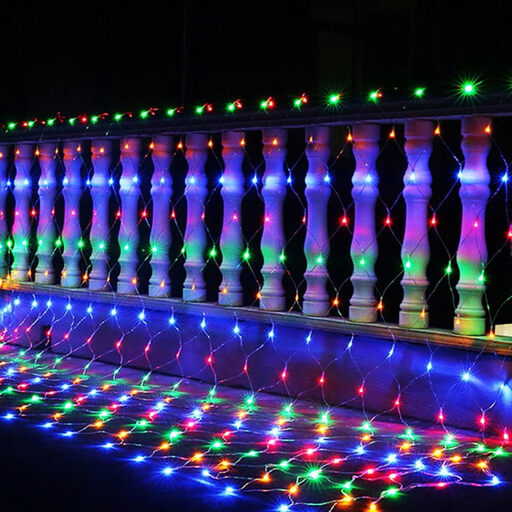
Why it stands out: This net light offers a simple way to decorate large surfaces like hedges, walls, or fences evenly. With 200 LEDs spread over a 3x2 metre area, it creates expansive ambient light in the garden.
Advantages:
Who is it for? This product is ideal for users looking for a quick and easy way to create decorative, large-area lighting for parties, holidays, or general garden design. Installation is straightforward: simply spread it out and plug it into a socket.

Why it stands out: This 5-pack of solar lights for the garden combines wireless flexibility with a choice between warm white light and an automatic colour-changing mode.
Advantages:
Who is it for? This set is a great choice for garden owners who want to illuminate paths, flowerbeds, or lawn edges without any installation hassle. The combination of solar power and an automatic sensor ensures low-maintenance operation.
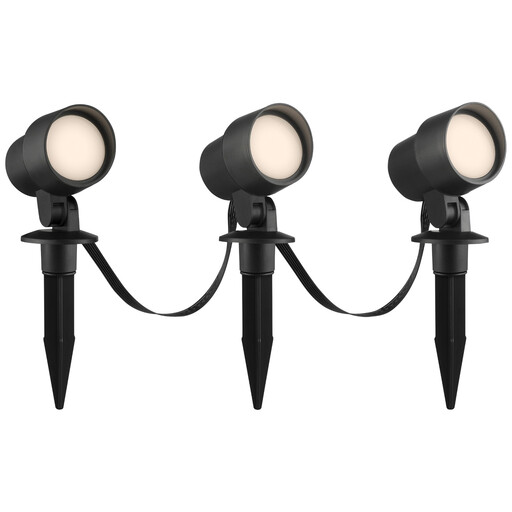
Why it stands out: This set of three garden spotlights with ground stakes offers full control over your lighting design through smart garden lighting. Colour temperature, colour, and brightness can be conveniently controlled via an app.
Advantages:
Who is it for? This set is aimed at tech-savvy users who want precise and customisable accent lighting for their garden. It's perfect for highlighting specific objects and flexibly changing the lighting mood at any time via the app.
The products featured here cover common use cases. If you are looking for more specific solutions, such as models with different power ratings or designs, you can find a wider selection in our Low-Voltage Colour LED Landscape Lighting category. There, you can discover more products for your individual lighting project.
The IP44 rating indicates that an electrical device is protected against the ingress of solid foreign objects larger than 1 mm in diameter and against splashing water from all directions. For LED garden lighting, this is a common standard that ensures the light can withstand normal rain. However, unless otherwise specified, the power adapter should be placed in a dry location.
The runtime of solar lights depends on the battery's capacity and the intensity of sunlight during the day. After a full charge on a sunny day, many models, like the featured Grundig lights, can achieve a runtime of 6 to 8 hours. On cloudy days or in winter, the runtime may be shorter.
Most LED lights designed for outdoor use with a rating like IP44 are built for year-round operation. Materials such as plastic or aluminium are weather-resistant. Nevertheless, it is advisable to follow the manufacturer's instructions. Especially in extreme weather conditions like heavy frost or hail, it may be wise to protect more sensitive components or temporarily dismantle the lights.