
Lieferung heute & morgen

Qualitätsgarantie

Willkommens-Angebote freischalten: KOSTENLOSE Lieferung | Bis zu 80 % RABATT | Kostenlose 30-Tage-JoyPlus-Testphase
App herunterladen
LED garden lighting can mark out paths, accentuate seating areas or highlight plants and fences decoratively. However, when buying, it is not just the number of LEDs or a low price that matters. The key considerations are where the lighting will be used, how it is powered, its protection rating and how it is installed. Checking these points in advance helps you avoid unsuitable purchases and choose a solution that fits your outdoor space.
Lots of LEDs do not automatically mean even or pleasant illumination. With an LED garden string light, you also need to consider the distance between the bulbs, the cable length and the light colour. Warm white light is often considered pleasant for seating areas, while paths or work areas may require a clearer, brighter effect.
Dynamic modes should also suit the intended use. Flashing and wave functions are better suited to decorative settings than to calm, permanent terrace lighting.
The protection rating IP44 means protection against solid foreign objects measuring 1 millimetre or more, as well as splashing water from various directions. It is suitable for many sheltered outdoor areas, but does not replace a fully protected connection.
IP65 additionally provides protection against dust and water jets. Even with an IP65 string light, however, the power supply, plug or solar panel should be positioned in accordance with the manufacturer’s instructions. The light’s protection rating does not automatically apply to every component of the installation.
A solar string light for outdoor use is flexible, but it needs sufficient daylight to charge. Shade from house walls, trees or canopies can reduce the illumination time. Mains-powered systems provide a more predictable power supply, but require a suitable socket and safe cable routing.
For garden spotlights with ground spikes, you should also check whether the ground is soft and stable enough. Hard surfaces or heavily compacted soil may require a different mounting method.
For a covered terrace or sheltered balcony, IP44 outdoor lighting may be sufficient, provided the connection remains protected from direct rain. For open areas exposed to harsher weather, a higher protection rating such as IP65 is often more suitable. The specific product information for the light, cable, controller and power supply is always decisive.
Pay attention to the following points:
Warm white LED lighting at around 2,500 to 3,000 Kelvin creates a more cosy lighting effect. Neutral white light appears more functional and can be useful for paths or practical areas. RGB garden lighting also offers coloured scenes, while CCT systems can switch between different shades of white.
Dimmable outdoor lighting is useful if the same light is to be used at different times of day. With smart garden lighting, you should check whether it can be controlled via an app, voice assistant or only with a remote control. Wi-Fi range, any required bridge and compatibility with your existing system are also important.
A 1 x 1 metre LED light net is suitable for smaller bushes, sections of fencing or individual decorative areas. For a long hedge, on the other hand, a string light with a sufficient overall length is more practical. Also check whether hooks, brackets or ground spikes are included.
The lights should be installed without putting strain on the cables or plug connections. For seasonal use, dry storage and cleaning with a soft, slightly damp cloth are recommended.
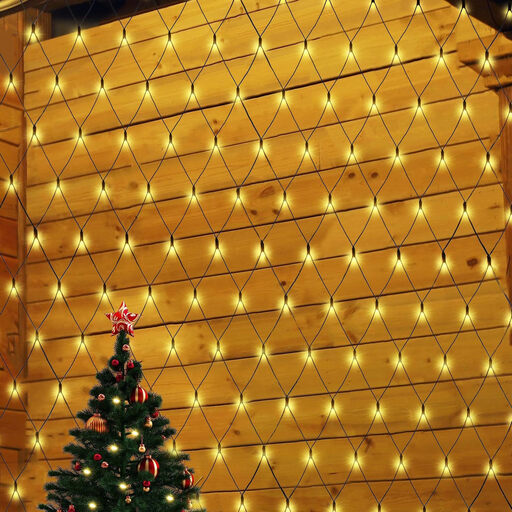
Why this product suits this profile: The compact LED light net is designed for smaller areas such as bushes, fences or individual wall sections, with no need to align individual lights.
The product details specify 96 warm white LEDs, an area of 1 x 1 metre, nine lighting modes and an IP44 rating. This makes it easier to assess the coverage and intended location before buying.
The product description lists 2500 Kelvin, a memory function, a 3-metre connection cable, mounting hooks and brackets.
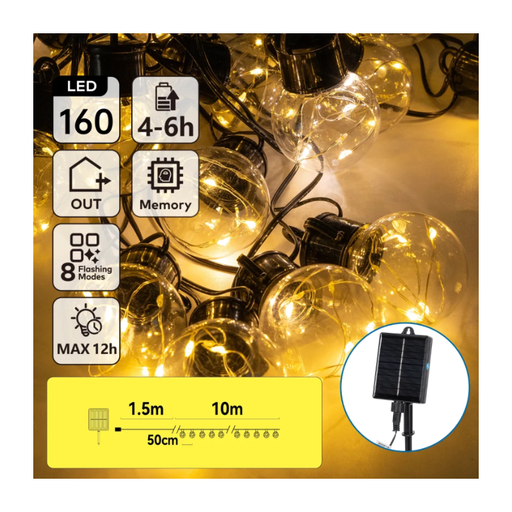
Why this product suits this profile: This solar-powered string light is ideal for buyers who want to illuminate outdoor areas decoratively without permanently installed power cables.
The specifications state a length of 10 metres, IP65, a charging time of 4 to 6 hours and a maximum illumination time of up to 12 hours. This helps buyers plan placement and use more realistically.
The product data lists 160 LEDs, G50-shaped bulbs, a 1200 mAh lithium battery and a polycrystalline silicon solar panel.
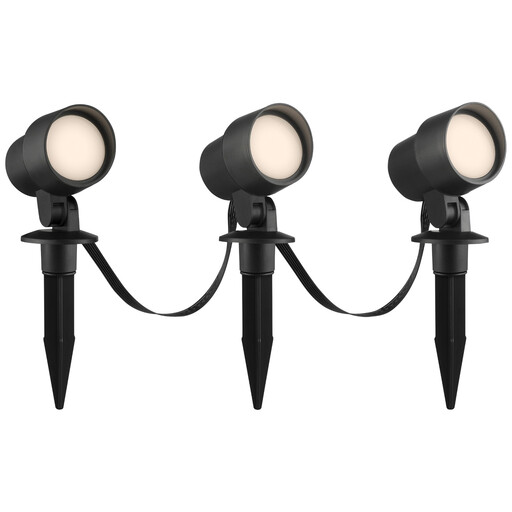
Why this product suits this profile: The three garden spotlights with ground spikes can be positioned flexibly along paths, flowerbeds or terraces and controlled via the Tuya Smart app.
The product description explicitly states IP44, dimming functionality, as well as RGB and CCT control. This makes the protection rating and lighting options clearer than with vague advertising claims.
The listed product features include three lights, adjustable shades of white, RGB colours and app or voice control via Tuya Smart.
We have put together a complete, regularly updated list of products that fully meet these strict selection criteria and the safety regulations applicable in the EU.
For a harmonious result, it helps to divide the garden into zones:
During installation, cables should not be under tension or left permanently in water. Disconnect the power supply before cleaning and maintenance. Power supplies may only be operated at the specified voltage.
Consumption depends on the power rating, number of lights and daily operating time. LEDs generally require less electrical power than many conventional light sources. For an accurate estimate, multiply the stated wattage by the daily usage time and electricity price. Solar models do not incur ongoing mains electricity costs while operating; however, the illumination time depends on the battery, charging time and sunlight.
IP44 can be suitable for sheltered outdoor areas. The string light should not be exposed to heavy direct rain on a permanent basis, and the power supply must remain protected from water in accordance with the instructions. For open areas that are more exposed to the elements, an IP65 string light may be better suited to the surroundings.
Its service life is influenced by LED quality, power supply, moisture, UV radiation and mechanical stress. Safe installation, dry storage for seasonal use and following the manufacturer’s instructions can help improve operating conditions. Before buying, you should also check the availability of spare parts, warranty details and whether the power supply can be replaced.