
Lieferung heute & morgen

Qualitätsgarantie

Willkommens-Angebote freischalten: KOSTENLOSE Lieferung | Bis zu 80 % RABATT | Kostenlose 30-Tage-JoyPlus-Testphase
App herunterladen
The right LED garden lighting can illuminate paths, highlight flower beds, decorate your patio or light up your garage and driveway. In practice, however, unclear information about light output, ingress protection and installation often leads to disappointing purchases. This is especially true of garden solar lights and decorative outdoor lighting, where it pays to take a close look at the technical specifications.
Wattage primarily describes energy consumption, not brightness itself. Lumens are more important when comparing products. A low-wattage garden spotlight may be enough for a path, while a driveway or larger courtyard requires considerably more light output.
Light colour also affects the overall effect:
With RGB garden lighting, the colour effect takes centre stage. For security lighting, colour-changing light does not automatically replace a bright, neutral-white LED floodlight.
The IP rating should be checked before you buy. IP44 protects against solid foreign objects measuring 1 millimetre or more, as well as splashing water. This is suitable for many decorative solar ground lights and sheltered areas, but not for permanent immersion or powerful jets of water.
IP66 provides greater protection against dust and strong jets of water. Even so, cables, connectors and power supplies must also be suitable for outdoor use and properly protected. An IP44 light should not be installed in a permanently exposed location where standing water or severe weather is expected.
Garden solar lights need sufficient direct daylight. Shade from trees, walls or canopies reduces charging performance. The stated operating time generally applies under suitable charging conditions. In winter or after several overcast days, the operating time may be shorter.
Before buying, make sure you know:
For paths and flower beds, understated lighting with a low output is often sufficient. A garden spotlight with an adjustable angle can be used to highlight individual plants, walls or architectural features. For garages, courtyards and security areas, lumens, beam angle and installation height are more important than wattage alone.
An outdoor LED floodlight should be positioned so that it does not shine directly into windows or neighbouring properties. Motion sensors, timers or dusk sensors can control operation as required.
For outdoor areas, housing materials, seals and mounting are just as important as the IP rating. Stainless steel can give solar lights a clean, understated appearance. Plastic is lightweight and commonly used for decorative products. For permanently mounted lights, the bracket and screws should be suitable for the wall or surface.
Solar lights and battery-powered string lights can usually be installed without an electrical connection. Mains-powered LED outdoor lighting, on the other hand, requires weather-protected connections. In Germany, permanently wired models should be installed by a qualified electrician.
With smart LED light strips, you should also check whether they are genuinely intended for outdoor use. A protective coating against dust or light mechanical stress does not automatically make a product suitable for rain and moisture.
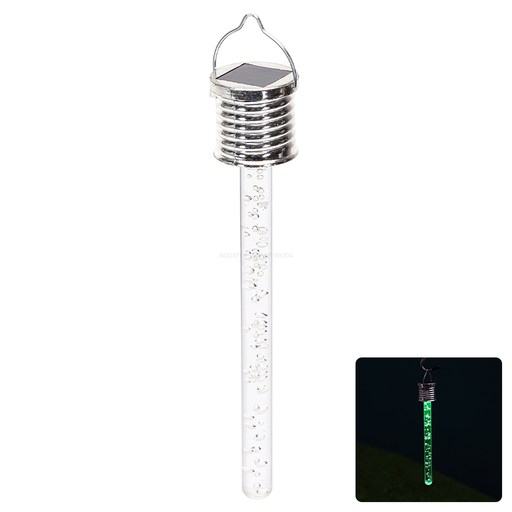
Why this product suits this profile: The ground spike is suitable for soft flower beds and lawns. RGB lighting, automatic dusk activation and a solar panel allow you to create a decorative display without a mains connection.
The technical specifications state a charging time of 4 to 6 hours, an operating time of up to 8 to 12 hours and an IP44 rating. This makes it easier to assess whether it is suitable for a sheltered garden area that is not prone to flooding.
RGB colour changing, amorphous silicon solar panel, stainless-steel look and a compact size of approximately 34 × 32 × 193 mm.
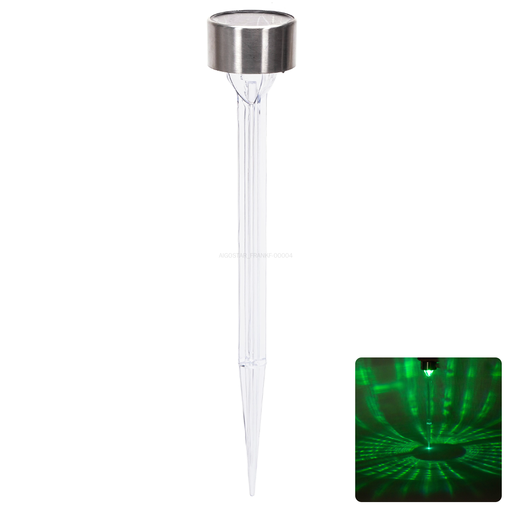
Why this product suits this profile: Its slim design is intended for paths, lawn edges and flower beds. The cable-free installation allows for flexible positioning, provided the location receives direct sunlight.
The IP44 rating clearly indicates protection against splashing water, but not immersion. For permanently wet locations or areas at risk of flooding, a different IP rating should be chosen.
RGB lighting, polycrystalline solar panel, 200 mAh Ni-MH battery and a stated charging time of 4 to 6 hours.
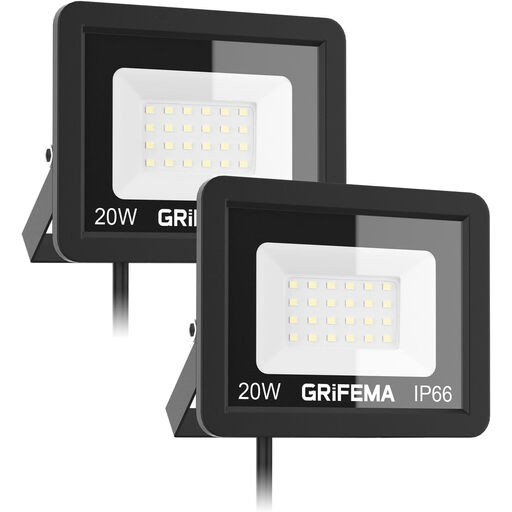
Why this product suits this profile: This two-pack is aimed at buyers who want to illuminate their garage, courtyard, patio or garden with bright, cool light. The 180-degree bracket supports flexible positioning.
With IP66 protection and a stated total output of 2200 lumens, the protection rating and light output are easier to assess than with products that simply claim to be “bright”. No plug is included; the connection must therefore be planned accordingly.
Two lights, each rated at 20 W, 6500 K, adjustable 180-degree brackets and IP66 protection.
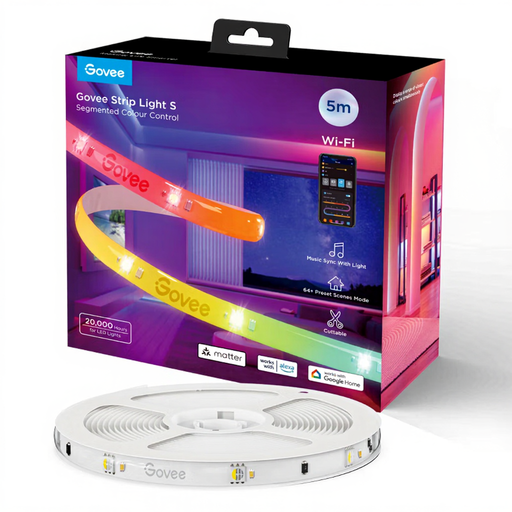
Why this product suits this profile: This light strip is intended for indoor spaces such as living rooms, gaming rooms and home cinemas. Matter, Wi-Fi, Bluetooth and segmented RGBIC control will appeal to users who want to manage scenes via an app or voice assistant.
The product information explicitly states that it is intended for indoor use. This helps prevent a coated LED strip from being mistakenly used as a waterproof outdoor light in exposed garden areas.
5 m length, 24 W, segmented RGBIC colours, 64 scene modes and support for Matter, Apple Home, Google Home, Alexa and SmartThings.
We have put together a complete, regularly updated list of products that fully meet these strict selection criteria and the safety regulations applicable in the EU.
When installing lights, avoid directing them in a dazzling way towards roads, windows or neighbouring properties. Ground spikes require a stable surface, while wall-mounted spotlights must be securely fixed. Solar panels should be cleaned regularly to remove dust and leaves.
For seasonal decoration, options such as an outdoor string light, star lights or meteor lights are suitable. For products with IP44, the same rule applies here: they are designed to withstand splashing water, but not immersion. Battery-powered models should be switched off and their batteries removed during extended periods when they are not in use.
Running costs depend on the power rating, daily operating time and electricity tariff. The basic calculation is: Wattage ÷ 1,000 × operating hours × electricity price. Solar lights do not consume mains electricity while operating, but they do require suitable light conditions and may contain rechargeable batteries that are subject to wear.
Lifespan depends on the LED module, electronics, temperature, moisture and usage. A manufacturer’s specification such as 15,000 hours is a technical guideline, not a guarantee of the total lifespan of the complete light. With solar products, the battery may age sooner than the LED module.
For sheltered, decorative areas, IP44 may be sufficient if the light is not exposed to standing water. For more demanding locations, products with a higher IP rating such as IP66 are a more suitable choice. It remains essential that the power supply, cable and connectors are also suitable for the intended outdoor area.