
Lieferung heute & morgen

Qualitätsgarantie

Willkommens-Angebote freischalten: KOSTENLOSE Lieferung | Bis zu 80 % RABATT | Kostenlose 30-Tage-JoyPlus-Testphase
App herunterladen
The right garden lighting can transform an outdoor space from a dark patch into an atmospheric oasis. However, the market is flooded with products whose promises prove problematic on closer inspection. Before you invest, it's crucial to understand the typical pitfalls that often lead to disappointment and unnecessary expense. This guide will help you separate the wheat from the chaff and find durable, suitable LED lighting for your garden, balcony, or patio.
Many buyers focus on design and price, overlooking critical technical details. This often leads to three recurring problems:
solar lights for the garden are practical and eco-friendly, but many budget-friendly models disappoint. Their solar panels are too small or inefficient to sufficiently charge the battery on cloudy days. The result: the runtime is often just a few hours instead of providing light all night. The battery capacity (measured in mAh) is a decisive but often ignored value here.To avoid the problems mentioned above, you should focus on a few crucial technical features. These determine the longevity, functionality, and safety of your LED garden lighting.
The choice of power source depends entirely on your intended use and the on-site conditions.
outdoor Christmas lighting or for illuminating large areas. Pay attention to sufficient cable length and the IP rating of the power plug. These are often low-voltage systems (e.g., 30V) where a transformer reduces the voltage, increasing safety.decorative garden lights or solar garden stakes to be placed in areas without a power outlet. Check the battery capacity (mAh) and the size of the solar panel. High-quality monocrystalline panels offer better charging performance even in less-than-optimal light conditions.balcony lighting for a party or for small decorative accents. The advantage is maximum flexibility without cables. The disadvantage is the need for regular battery changes, unless rechargeable batteries are used.The IP rating is not a marketing term but a standardised specification that defines how well an electrical device is protected against the ingress of foreign objects and water. For outdoor use, the following values are relevant:
outdoor string lights. It can withstand rain, but not a strong jet of water.Important Note: Always check the IP rating for all components. A weatherproof string light with an IP65 rating is of little use if its power adapter is only IP20 (no water protection) and is left unprotected in the rain.
Modern outdoor LED lighting can do more than just shine. Depending on your needs, you can choose between various functions:
colourful outdoor LED lighting) or RGBCCT technology, which can display millions of colours as well as various shades of white (from warm to cool white).outdoor net lights offer different programs like flashing, waves, or gentle fades. A memory function that remembers the last setting is particularly practical.smart outdoor lighting can be controlled via an app using Bluetooth or Wi-Fi. This allows you to set timers, dim the brightness, and synchronise with other smart devices, often by voice command.Here are some product recommendations tailored to specific needs and use cases.
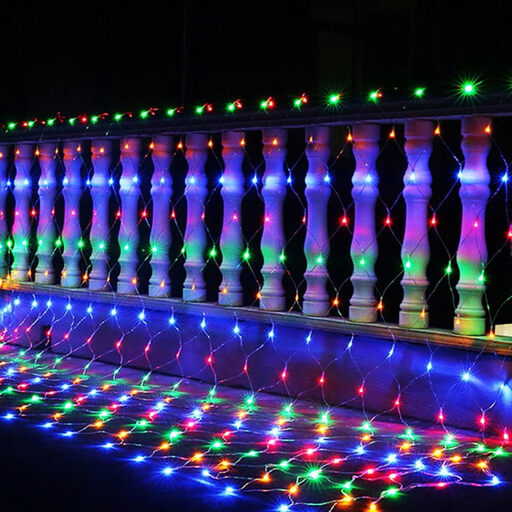
Why This Fits Their Persona: Ideal for users who want to quickly and easily decorate a large area like a hedge, wall, or balcony for parties or the holiday season. The net design ensures even light distribution without the hassle of draping individual strands.
The net itself is IP44 splash-proof, making it suitable for outdoor use. It is clearly stated that the adapter must be kept dry, which prevents the most common installation mistake.
8 different lighting modes and a memory function offer variety and convenience. The 30V low-voltage operation provides added safety.
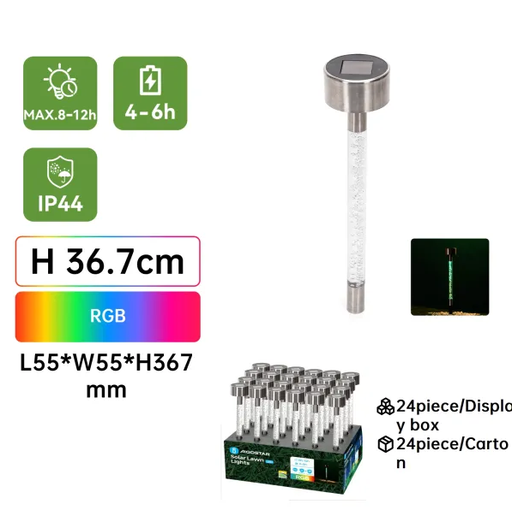
Why This Fits Their Persona: Perfect for garden owners who want to create individual accents in flowerbeds, along paths, or on the lawn without laying cables or incurring electricity costs. The ground stake allows for flexible and easy placement.
This product avoids the trap of unrealistic solar performance through transparent specifications: the runtime of 8–12 hours is directly linked to a charging time of 4–6 hours under suitable conditions. This sets realistic expectations.
Completely autonomous operation thanks to the integrated solar panel and battery. The IP44 certification ensures the necessary weather resistance for use in unprotected garden areas.
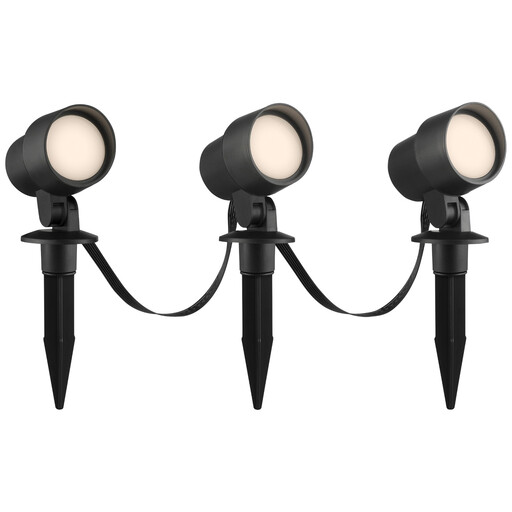
Why This Fits Their Persona: For users who want full control over their lighting ambiance. Ideal for targeted illumination of plants, paths, or architectural elements with customisable colours, white tones, and brightness—all controllable via smartphone.
This set avoids the trap of limited flexibility. As a set of 3 with ground stakes, the spotlights can be flexibly distributed throughout the garden. Tuya Smart compatibility ensures a future-proof and expandable control solution.
Full control over RGB colours, CCT white tones (warm to cool), and dimmability via app or voice. The IP44 rating ensures reliable outdoor operation.
We have compiled a complete, up-to-date list of products that meet these strict selection criteria and safety regulations.
The power consumption of LED lighting is extremely low. A string or net light with 200 LEDs, like the Yakimz model shown above, consumes only 3.6 watts, for example. With a daily runtime of 6 hours over 30 days, this would amount to less than 1 kilowatt-hour (kWh) of electricity, which has a minimal impact on your electricity bill.
Yes, but with limitations. The performance of solar lights in the garden depends directly on the number of sunshine hours and the intensity of the light. In winter, the days are shorter and often cloudy, which means the battery cannot be fully charged. This results in a significantly shorter runtime at night. For reliable lighting during the winter months, mains-powered systems are often the better choice.
The IP44 rating means that the product is protected against solid foreign objects larger than 1 mm in diameter and against splashing water from all directions. In plain terms: a string light with an IP44 rating can withstand normal rain. However, it should not be sprayed directly with a garden hose (water jets) or immersed in water. It is the common minimum standard for a safe weatherproof string light.