
Lieferung heute & morgen

Qualitätsgarantie

Willkommens-Angebote freischalten: KOSTENLOSE Lieferung | Bis zu 80 % RABATT | Kostenlose 30-Tage-JoyPlus-Testphase
App herunterladen
For many car owners, upgrading to modern LED headlights is a logical next step. The advantages are clear: significantly better road illumination, a contemporary look, and a potentially longer lifespan compared to halogen lamps. However, the market for aftermarket headlights is confusing and full of pitfalls that can quickly lead to expensive bad buys or even legal trouble.
As your Joybuy Product Recommendation Officer, I'm here to help you separate the wheat from the chaff. We'll highlight the most common mistakes and show you which technical features to look for to make an informed decision.
Before you invest, you should be aware of the most common problems that can arise with low-quality products.
To avoid these mistakes, focus on the following objective criteria. These determine the safety, legality, and longevity of your new lighting system.
The most important criterion for legal operation on European roads is the E-Mark. It is an "E" in a circle, followed by a number indicating the country of approval (e.g., E1 for Germany). This mark confirms that the headlight meets the technical requirements of the Economic Commission for Europe (ECE). Ensure that the seller explicitly states ECE compliance. Without this mark, retrofitting headlights is not permitted for public road use.
Raw brightness isn't everything. A precise beam pattern is crucial for safety.
The longevity of an LED headlight depends directly on its construction.
Based on these criteria, we have selected a few products from our range that represent a suitable solution for specific user profiles.
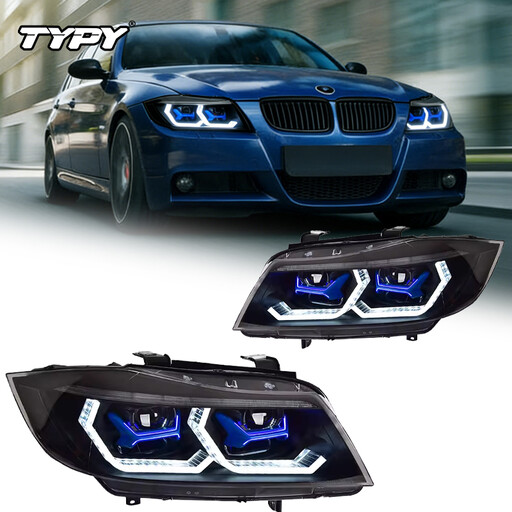
Why This Fits Their Persona: Ideal for owners of a BMW 3 Series (E90) looking to replace outdated halogen or xenon lighting with a modern design featuring integrated Angel Eye headlights and LED technology, enhancing both aesthetics and light output.
Designed as a model-specific solution for the E90, it avoids the fitment and compatibility issues common with universal retrofit kits.
An all-in-one design with an LED projector lens, Angel Eye style DRLs, and dynamic turn signals in a single housing. Often designed as a plug-and-play solution.
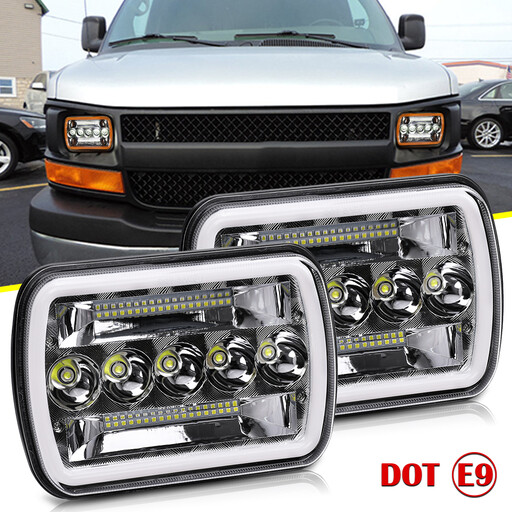
Why This Fits Their Persona: Perfect for drivers of off-road vehicles (e.g., Jeep XJ/YJ) or older trucks who need a rugged and extremely bright lighting solution in the standard 7x6 inch format. This off-road auxiliary light directly replaces old sealed-beam units.
The robust aluminium housing acts as an effective heat sink, and the IP68 certification ensures protection against water and dust, addressing common failure points from overheating and moisture.
High light output (manufacturer claims 20,000 LM per pair) and multifunctionality with low beam, high beam, DRL, and turn signal in one unit. Wide voltage range of 12-24V.
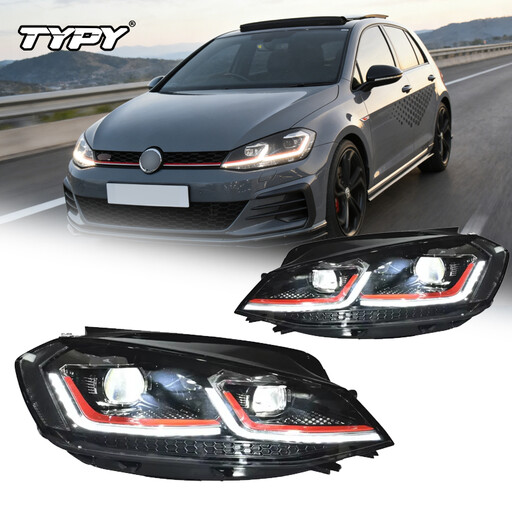
Why This Fits Their Persona: Specifically for drivers of the popular VW Golf 7 (non-GTI/R/GTD models) who want a significant visual and technical upgrade for their front lighting. It gives the vehicle a look reminiscent of higher trim levels.
The precise fit for the Golf 7 (MK7) ensures a hassle-free installation and prevents panel gaps or electrical incompatibilities that can occur with universal products.
Offers a complete solution with LED technology for low and high beams, as well as integrated dynamic turn signals, giving the vehicle a modern, premium feel.
We've curated a complete, real-time updated list of products that fully meet these strict selection criteria and safety regulations.
Yes, absolutely. Any main headlight used on public roads in the EU must have an ECE approval (E-Mark). Other regional certifications may also be required. Driving without valid approval is illegal.
A direct 1:1 swap of xenon bulbs for LED bulbs is often not permissible or technically sound. However, upgrading entire xenon to LED headlight assemblies is possible. This involves replacing the whole headlight unit. Look for model-specific solutions designed for vehicles originally equipped with xenon headlights to ensure compatibility with the onboard electronics and automatic levelling systems.
The lifespan of high-quality LED headlights is often quoted by manufacturers at 30,000 to 50,000 operating hours. This is a theoretical value. In practice, the actual lifespan heavily depends on the quality of the thermal management. A well-cooled headlight can easily last the entire life of a car, while a poorly cooled one can lose brightness or fail after just one to two years.