
Lieferung heute & morgen

Qualitätsgarantie
App herunterladen
Kategorien
Upgrading vehicle lighting from halogen to LED technology is a technical decision based on parameters like light output, energy efficiency, and lifespan. Compared to conventional halogen bulbs, LED car bulbs offer a different light characteristic and a potentially longer operational life. This article analyses the key technical criteria for selecting LED headlights and presents specific models for common base types.
The decision for a retrofit kit should be based on an analysis of technical specifications and compatibility with your vehicle. The following points are of central importance.
The base type is the primary compatibility criterion. It defines the mechanical and electrical interface between the bulb and the headlight housing. The most common types are:
The exact designation of the required base can be found in the vehicle's manual or directly on the socket of the original bulb. An LED bulb with a 1:1 design identical to the halogen bulb simplifies installation and ensures that the headlamp's original light distribution is maintained.
Modern vehicles monitor the lighting system's function via an on-board control unit, often based on a CAN bus (Controller Area Network). Because LEDs have a lower power draw than halogen bulbs, the system may incorrectly diagnose a faulty bulb and display an error message on the dashboard. LED bulbs labelled "CAN Bus Ready" or with integrated drivers are designed to prevent these error messages in many vehicle models.
The lifespan of an LED is directly dependent on its thermal management. High operating temperatures can reduce luminosity and shorten its lifespan. There are two primary cooling concepts:
Manufacturer specifications for lifespan (e.g., 50,000 or 70,000 hours) are theoretical values determined under laboratory conditions.
Based on the technical criteria mentioned above, we have compiled a selection of products for common applications.
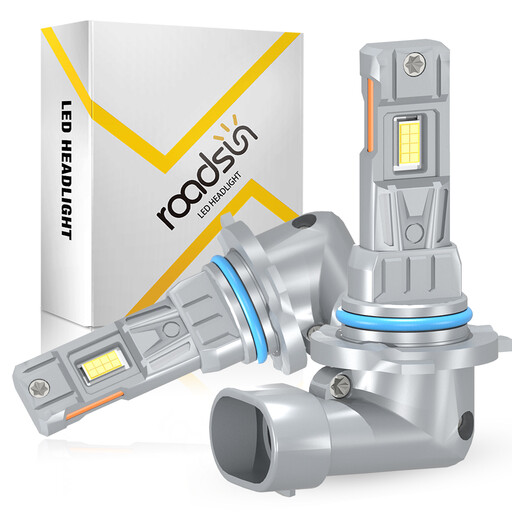
Why we're analysing this product: This model is notable for its 1:1 mini size, which is designed to allow for direct installation without modifications to the headlight housing or dust cover. It is specifically designed for the HB4 9006 LED base.
Advantages:
Who it's for: Vehicle owners looking for a straightforward plug-and-play solution for their HB4 sockets (low beam or fog lights) who value a form factor that matches the original.
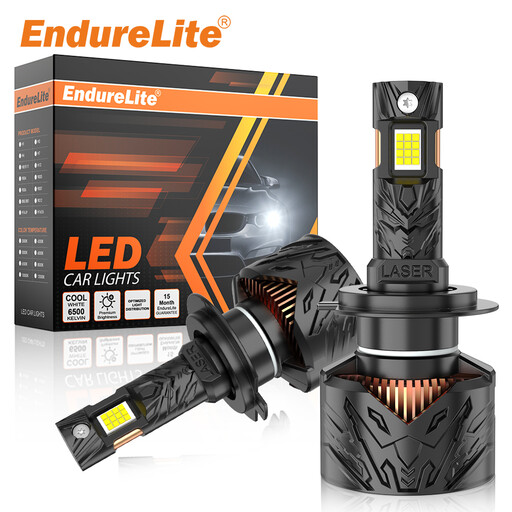
Why we're analysing this product: This HB3 9005 LED model from EndureLite focuses on high light output and an active cooling system. According to the manufacturer, its brightness is 300% greater than that of standard halogen bulbs.
Advantages:
Who it's for: Drivers who want maximum light output for their high beams (HB3/9005 base) and own a vehicle where an active cooling system can be installed without issue.
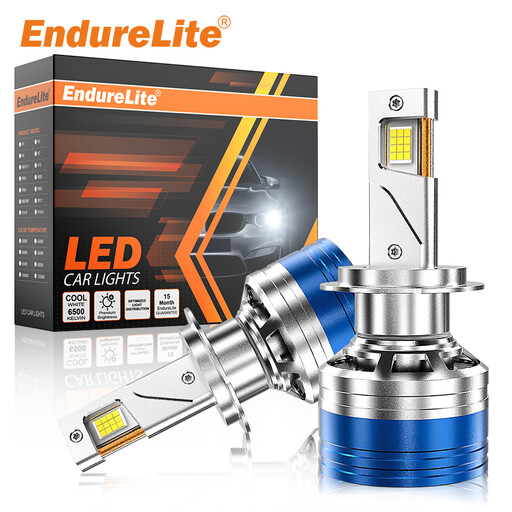
Why we're analysing this product: This H4 model combines low and high beams in one bulb and is designed for an automotive LED retrofit in vehicles with H4 headlights. It also promises high brightness and CAN bus compatibility.
Advantages:
Who it's for: Drivers looking for an all-in-one solution for their H4 headlights to upgrade both low and high beams to LED technology with a single installation.
While this guide focuses on specific LED headlight bulbs, the technical principles apply to a wide range of vehicle lighting. If you are looking for other bulb types or simpler lighting solutions, you can find a selection in our basic lighting category.
1. What does the 6000K rating on LED headlights mean? The 6000K (Kelvin) rating describes the colour temperature of the light. It is a cool, neutral white light that very closely resembles natural daylight. In comparison, conventional halogen bulbs produce a yellowish, warm light of about 3200 K.
2. Do I need a CAN bus adapter for my car? Whether a CAN bus adapter or a "CAN Bus Ready" bulb is required depends on your vehicle's on-board electrical system. European vehicles from around 2005 onwards, in particular, often use CAN bus systems for bulb monitoring. An LED with lower power consumption can trigger an error message. Bulbs with an integrated CAN bus resistor or driver are designed to circumvent this problem.
3. What is the technical difference between H4, HB3, and HB4 LEDs? The main difference lies in the base design and function. H4 is a dual-filament bulb that combines two light circuits for low and high beams in a single housing. HB3 (9005) and HB4 (9006), on the other hand, are single-filament bulbs with different base configurations. HB3 is typically used for the high beam, and HB4 is used for the low beam or fog lights. They are not mechanically interchangeable.
Authored by: Joybuy Product Recommendation Officer