
Lieferung heute & morgen

Qualitätsgarantie

Willkommens-Angebote freischalten: KOSTENLOSE Lieferung | Bis zu 80 % RABATT | Kostenlose 30-Tage-JoyPlus-Testphase
App herunterladen
The decision to modernise a vehicle's lighting is often driven by the desire for improved night-time visibility and a contemporary look. Retrofitting LED headlights can deliver on both fronts, but the market is flooded with products whose promises don't always match reality. Incorrect compatibility claims or a lack of legal approval can quickly lead to unexpected costs, technical problems, and even legal consequences.
This guide is designed to highlight the most common pitfalls and provide you with objective criteria to make an informed decision. We will focus on the three most critical points that are often overlooked:
To avoid these problems, it's crucial to focus on verifiable technical parameters rather than marketing claims. The following three aspects are essential for a successful and legally compliant retrofit.
A headlight intended for legal use on public roads in the EU absolutely requires an E-mark. This symbol, a capital "E" in a circle or rectangle followed by a number, confirms that the component meets the technical requirements of the ECE regulations. The number after the "E" indicates the country that granted the approval (e.g., "E1" for Germany). Without this mark, the headlight is not street-legal. Ensure this mark is physically embossed on the product itself (usually on the lens or housing).
Modern vehicles monitor their electrical systems via a Controller Area Network, or CAN bus. Halogen bulbs and LED units have different electrical resistances. If the system detects a discrepancy, it interprets this as a fault and displays an error message. High-quality plug-and-play retrofit headlights have integrated resistors or electronics that report the correct values to the control unit. Explicitly check the product description to ensure compatibility with your specific vehicle model's CAN bus (e.g., BMW F30 LED headlights or Golf 7 headlights) to prevent issues.
Beyond pure functionality, lighting technology and design also play a significant role. Here are some terms you should know:
LED tail lights are also a popular modification, often equipped with dynamic turn signals and a more distinctive light signature.
Choosing the right headlight depends heavily on the vehicle type and personal priorities. Here are some recommendations tailored to different user profiles.
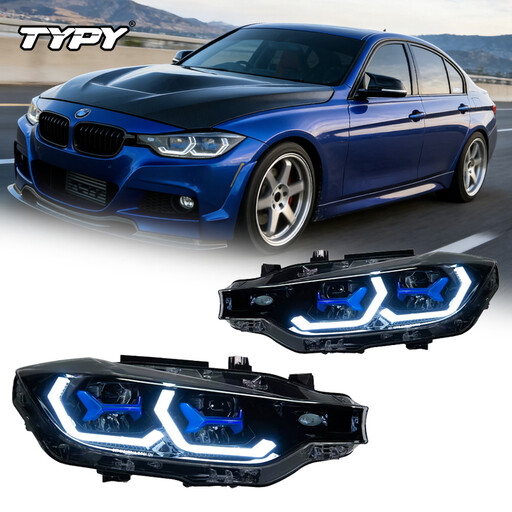
Why This Fits Their Persona: Ideal for BMW F30/F35 owners seeking a visual upgrade. This kit integrates the iconic Angel Eye design as a daytime running light and offers a significant enhancement over the stock halogen headlights.
These headlights are model-specific for the F30/F35, ensuring a precise fit and preventing CAN bus error messages with tailored electronics.
Integrated LED projector lenses for both low and high beams provide precise, bright illumination. The design is engineered for seamless integration into the vehicle's front end.
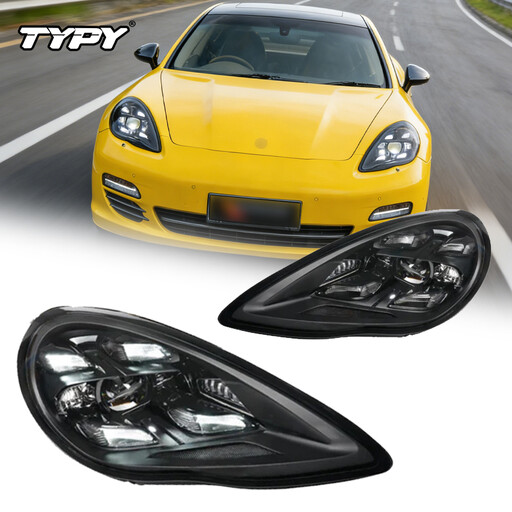
Why This Fits Their Persona: For drivers of a Porsche Panamera (970.1) looking for not just a visual but also a technological upgrade. The matrix design significantly modernises the vehicle's front end and improves light performance.
Designed as a complete replacement headlight for a specific premium model, it ensures compatibility with complex on-board electronics and guarantees high-quality housing and cooling construction.
Offers a plug-and-play installation for the specified model years. The LED matrix look provides superior and precise light distribution compared to the factory equipment of the first-generation Panamera.
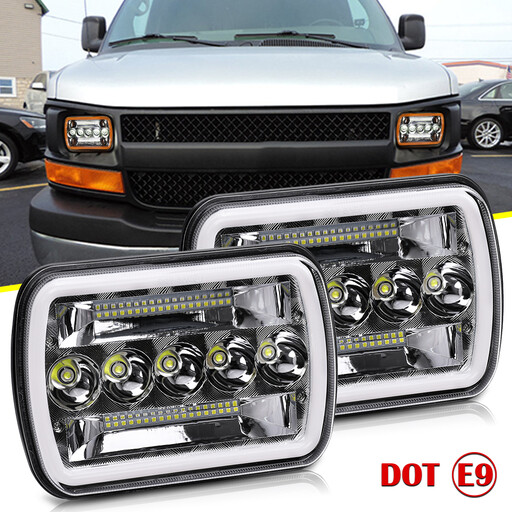
Why This Fits Their Persona: Designed for off-road vehicles (e.g., Jeep XJ/YJ), trucks, or older cars that use the standard 7x6-inch format. The focus is on durability, high light output, and functionality under demanding conditions.
The aluminium housing acts as an effective heat sink, preventing overheating. The IP68 certification guarantees protection against water and dust, a feature often missing in cheap universal headlights.
Integrates low beam, high beam, DRL, and an amber turn signal into a single housing. The wide 12-24V voltage range allows for use in various vehicle types.
We've compiled a complete, real-time updated list of products that fully meet these strict selection criteria and EU safety regulations.
If the headlight has a valid E-mark for its function (e.g., low beam, high beam), it is generally approved for the vehicle type specified in the approval document without needing additional inspections or entries in the vehicle's registration papers. A separate permit or expert report is then not required. Always check the product description and the markings on the headlight itself.
A direct swap of Xenon burners for LED bulbs is often not permissible and technically problematic. The reflectors and lenses of Xenon headlights are specifically designed for a Xenon light source. A proper and legal conversion from Xenon to LED almost always requires replacing the entire headlight unit with an approved LED system for your vehicle model.
Ideally, Plug and Play means the new headlight fits the vehicle's original connectors and mounting points without any modifications. Crucially, this should also include electronic compatibility, especially the prevention of error messages through a CAN bus-ready circuit. It is still recommended to carefully verify compatibility for your exact model and year of manufacture before purchasing.