
Lieferung heute & morgen

Qualitätsgarantie

Willkommens-Angebote freischalten: KOSTENLOSE Lieferung | Bis zu 80 % RABATT | Kostenlose 30-Tage-JoyPlus-Testphase
App herunterladen
The right LED indoor lighting should illuminate your rooms reliably, work with your existing electrical connection and remain practical over the long term. Product pages often make terms such as “ultra-flat”, “splashproof” or “energy-saving” sound more meaningful than they are in practice. If you choose based only on design or wattage, you could end up with a light that has the wrong installation depth, an unsuitable colour temperature or an inadequate IP rating.
This buying guide explains which specifications really matter before you buy an LED ceiling light, LED wall light, LED recessed spotlight or pendant light.
Wattage primarily describes electrical power consumption. Brightness is measured by luminous flux in lumens. Depending on its design and LED technology, a 9 W light can produce different amounts of light. That’s why you should consider lumens, beam direction and room size together.
A broad-beam LED ceiling light is often a good choice for general lighting in a living room or hallway. An LED spotlight or recessed spotlight, on the other hand, produces directional light and can illuminate worktops, furniture or walkways.
An IP44 LED light is protected against solid objects larger than 1 mm and splashing water from different directions. This doesn’t mean it’s suitable for direct water jets, persistently high humidity or outdoor use. In bathrooms, you also need to take installation zones and electrical installation requirements into account.
A warm white LED bulb at around 3000 K often feels more subdued in living rooms and bedrooms than a cool white version at 6500 K. Cool white light can work well in functional spaces, but may feel rather clinical in a cosy room.
“LED” doesn’t automatically mean dimmable, either. If you need dimmable LED lighting, check that it’s explicitly marked as “dimmable” and compatible with the dimmer you plan to use.
For a recessed spotlight, the overall diameter, ceiling cut-out and installation depth all need to be compatible. An especially slim model can be a good choice for low ceilings or limited ceiling voids. Measure the existing cut-out carefully before you buy.
Voltage is equally important. A 230-volt light can be connected directly to a suitable mains supply. A 12–24-volt model, on the other hand, needs a compatible transformer, which isn’t always included.
Work on fixed electrical installations should be carried out with the power switched off and in accordance with current safety requirements. If you’re unsure, consult a qualified electrician.
To choose energy-efficient lighting, consider power consumption and luminous flux together. Energy efficiency class and expected lifespan can also help you assess a light. Actual running costs depend on how long you use it each day and your electricity tariff.
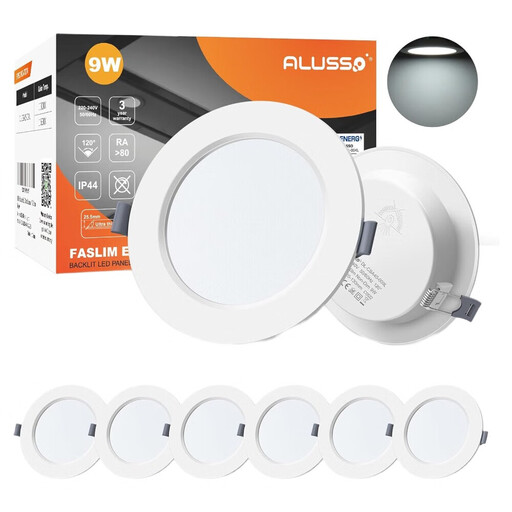
Why it suits this profile: This pack of six is a good option if you’re looking for several slim ceiling spotlights with a direct 220–240-volt connection.
The 25.5 mm installation depth and stated ceiling cut-out of 115–135 mm make it easier to plan the installation. According to the product details, the lights aren’t dimmable.
9 W, 720 lm, 6500 K, IP44 and direct connection without a transformer, according to the product details.
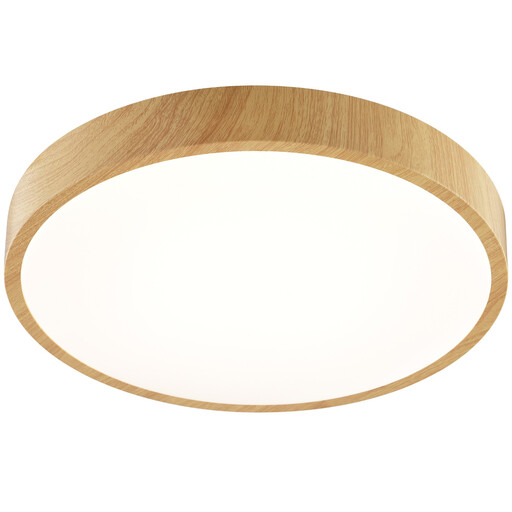
Why it suits this profile: This broad-beam indoor light is designed to provide central room lighting in a living room, bedroom, hallway or dining area.
The product details clearly state the luminous flux, colour temperature, power consumption and dimmability. The light isn’t dimmable, so don’t plan to use it with a dimmer.
24 W, 2300 lm, warm white at 3000 K and a diameter of 38.5 cm, according to the product description.
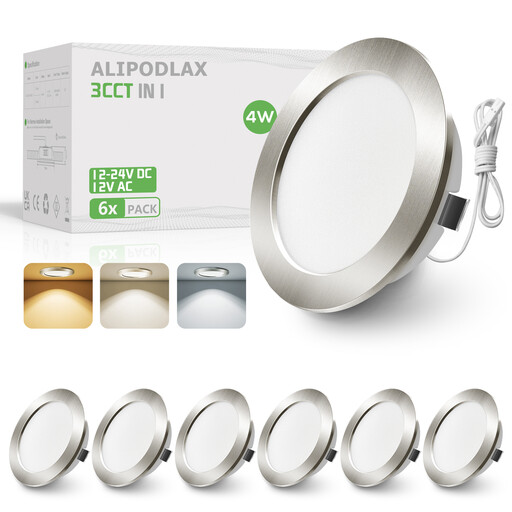
Why it suits this profile: This compact recessed spotlight is suited to furniture, cupboards, kitchen areas or installations where installation space is limited.
The required 12–24-volt supply and the need for a separate transformer are clearly stated. The light isn’t designed for direct connection to the mains.
Three selectable colour temperatures: 3000, 4000 or 6000 K; 270 lm, 4 W and IP44, according to the product details.
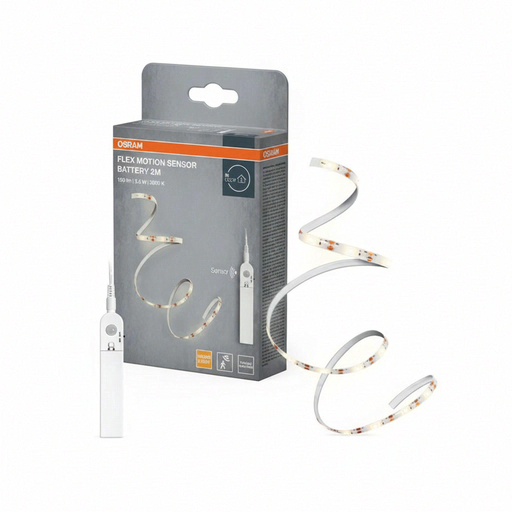
Why it suits this profile: A battery-powered LED strip with a motion sensor can be used where you don’t want to alter the fixed electrical installation.
Battery power means you won’t need to arrange an unplanned electrical installation. Before buying, consider battery consumption, where you’ll mount it and the sensor’s detection range.
2 m LED strip with a motion sensor and battery-powered design, according to the product name.
It depends on the size of the room, how you use it and the type of light. For general lighting, consider the total luminous flux in the room. Several LED spotlights can direct light more precisely, while a ceiling light often provides more even illumination. A desk, kitchen worktop or reading area will also benefit from direct task lighting.
Lifespan is given in hours and indicates the expected operating time under the conditions specified by the manufacturer. Heat, frequent switching, power supply quality and installation conditions can all affect how long a light actually lasts. If the LED modules are built in, check whether they can be replaced.
You can estimate annual electricity costs using this formula: power in kilowatts × operating hours × electricity price. For example, a 9 W light uses 9 kWh over 1,000 hours of operation. For a realistic estimate, take account of the number of lights, how long you use them each day and your current tariff.