
Lieferung heute & morgen

Qualitätsgarantie

Willkommens-Angebote freischalten: KOSTENLOSE Lieferung | Bis zu 80 % RABATT | Kostenlose 30-Tage-JoyPlus-Testphase
App herunterladen
Thoughtful LED kitchen lighting needs to do more than simply look good. Worktops, hobs, sinks, cupboards and kitchen islands all require different lighting solutions. At the same time, unclear information about brightness, colour temperature or installation often leads to unsuitable purchases.
A modern kitchen light can enhance the look of a room, but that does not automatically mean it will illuminate a worktop effectively. With a pendant light, it is therefore not just the shape that matters, but also the number of light sources, the wattage and the light distribution. A decorative fitting with downward-facing light may be suitable for a dining table, while a targeted LED under-cabinet kitchen light is often more practical beneath wall cupboards.
The main factors affecting running costs are wattage, daily usage time and electricity price. An integrated 12-watt LED uses less energy over the same operating period than a considerably more powerful light source. However, actual brightness is specified in lumens, not watts alone. You should therefore compare wattage and luminous flux together.
Warm white LED lighting in the region of around 2,700 to 3,300 kelvin creates a welcoming, homely atmosphere. Neutral white light of around 4,000 kelvin feels more functional and is often well suited to work areas. Cool white light from around 6,000 kelvin can appear very crisp, but not everyone finds it pleasant.
With a dimmable pendant light, the fitting, bulb and dimmer must also be compatible. With permanently integrated LEDs, check whether the fitting is genuinely dimmable and what type of dimmer is required.
Ceiling lights or several kitchen ceiling spotlights are suitable for general lighting. A kitchen island pendant light provides focused illumination above an island. Pay attention to:
For example, a linear fitting with seven G9 LED bulbs rated at 5 watts each needs to be assessed differently from a single integrated 10-watt fitting. The actual room size, installation height and light distribution remain decisive factors.
A 3-way adjustable colour temperature offers more flexibility than a fitting with just one fixed shade of light. Practical settings include 3,000, 4,000 and 6,000 kelvin. Neutral white light can be a good choice for kitchen worktops, while warm white light often creates a more harmonious feel above the dining table.
The CRI value, also known as the Ra value, describes how naturally colours appear under the light. A value above 80 is common for many residential light fittings. Good colour rendering can be useful when assessing food, wood finishes and wall colours.
Before buying, make sure that the cut-out dimensions, installation depth and connection type are compatible with the existing installation. An LED recessed spotlight for 12 to 24 volts requires a suitable transformer. This is not always included in the package. A 230-volt fitting, by contrast, can be connected directly to the designated mains connection, but a fixed connection must be installed by a qualified electrician.
A suitable IP rating can be important in kitchens and other areas where moisture may be present. IP44, for example, protects against solid foreign objects above a certain size and splashing water from all directions. The fitting must still not be exposed to water jets or permanently high humidity.
The following selection categorises specific models by installation type, features and typical area of use. The information is based on the respective product data.

Why this product suits this profile: The two-piece set is ideal for rented homes, cupboards and shelving when you do not want to drill holes or install permanent wiring.
The PIR sensor, USB charging and adhesive installation are clearly specified. This means the light does not rely on an unclear remote-control system or permanent installation.
Two lights, 21 LEDs per unit, an 800-mAh battery and three colour temperatures from 2,800 to 7,000 kelvin.
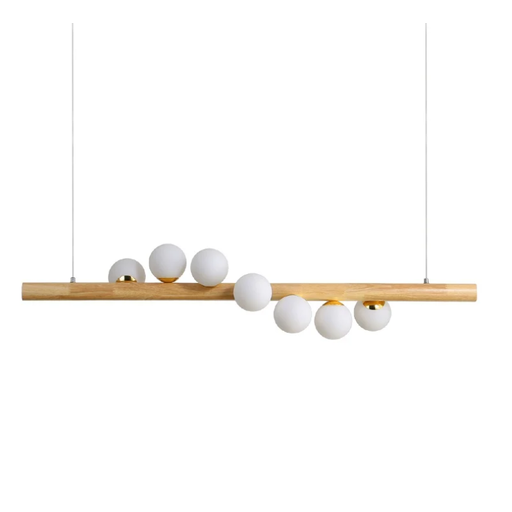
Why this product suits this profile: The linear design with seven white glass shades is intended for larger kitchen islands or dining areas with a permanent power connection.
The specifications state the mix of materials, 220–240 volts, seven G9 LED bulbs and an adjustable cable length. The fitting is explicitly non-dimmable.
120 cm length, seven included G9 LEDs rated at 5 watts each, plus wood, glass and gold-coloured metal.
Why this product suits this profile: The longer version is suitable for wider wall cupboards, wardrobes, shelving and hallways where a larger illuminated area is needed.
The 3–5-metre PIR sensor switches the light on automatically, and installation requires no drilling. The three colour modes mean you are not limited to just one lighting atmosphere.
61 LEDs, a 1,100-mAh battery, USB charging and a flat 40 × 3.8 × 1 cm design.
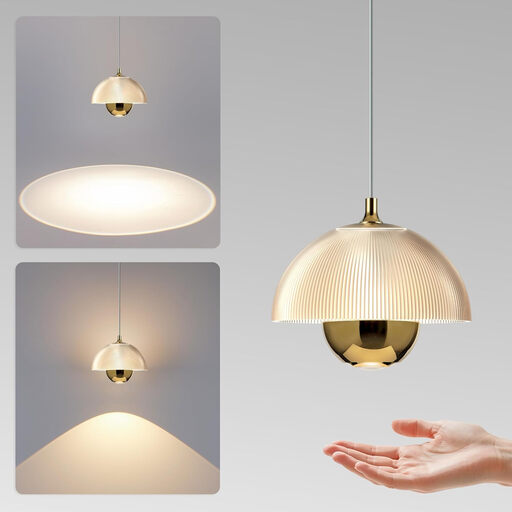
Why this product suits this profile: This pendant light combines kitchen island or dining-area lighting with touch-free control and adjustable light colour.
The product specifications state three colour temperatures, stepless dimming and an infrared sensor. This clearly describes the key convenience features.
Integrated 10-watt LED, 2,700/3,850/5,000 kelvin, up- and downlighting, plus touch-free operation.
We have put together a complete, regularly updated list of products that fully meet these strict selection criteria and the safety regulations applicable in the EU.
Neutral white light of around 4,000 kelvin is often chosen for worktops. Above a dining table or in an open-plan kitchen and living area, warm white light between around 2,700 and 3,300 kelvin can feel more comfortable. Models with three selectable colour temperatures allow you to adjust the lighting later.
The lifespan depends on component quality, heat dissipation, operating time and conditions of use. With integrated LEDs, bear in mind that the LED module may not be replaceable separately in the event of a fault, depending on the design. With fittings using a G9 or E26 socket, the bulb can be replaced separately, provided the particular version allows this.
You can estimate the cost using this formula:
Wattage ÷ 1,000 × operating hours × electricity price per kilowatt-hour
A 10-watt light that runs for three hours a day uses 0.03 kilowatt-hours per day. For a realistic estimate, enter the actual usage time and current electricity tariff.