
Lieferung heute & morgen

Qualitätsgarantie

Willkommens-Angebote freischalten: KOSTENLOSE Lieferung | Bis zu 80 % RABATT | Kostenlose 30-Tage-JoyPlus-Testphase
App herunterladen
Choosing the right LED lamps can quickly become overwhelming. The market is filled with technical jargon, design promises, and smart features. But not every lamp that looks modern also meets the practical demands of daily life. As your Joybuy Product Recommendation Officer, I'll help you understand the key criteria and avoid common purchasing mistakes.
Before you make a decision, you should be aware of the most common issues that often only become apparent after the purchase.
dimmable LED floor lamp might look impressive in a showroom, but in your own living room, it might cast impractical shadows. A delicate office desk lamp can cause glare or provide insufficient illumination for your workspace. The design should always support the function, not hinder it.To make the right choice, focus on three objective criteria. These will help you evaluate a lamp's performance, independent of marketing promises.
The colour of the light, measured in Kelvin (K), significantly determines the atmosphere of a room.
The Colour Rendering Index (CRI) indicates how true-to-life colours appear under the lamp's light. A value of CRI > 80 is the minimum standard for living spaces. For areas where colour accuracy is important (e.g., at a makeup table or workstation), a value of CRI > 90 is recommended.
The ability to adjust brightness is a key comfort feature. Pay attention to the type of dimming function:
For smart lighting, connectivity is crucial. Check whether the lamp is controlled via WLAN or Bluetooth and whether it is explicitly compatible with the voice assistants you use (e.g., Alexa, Google Assistant).
living room ceiling light with an E27 socket is therefore future-proof.Here are some recommendations tailored to specific user profiles that take the above criteria into account.
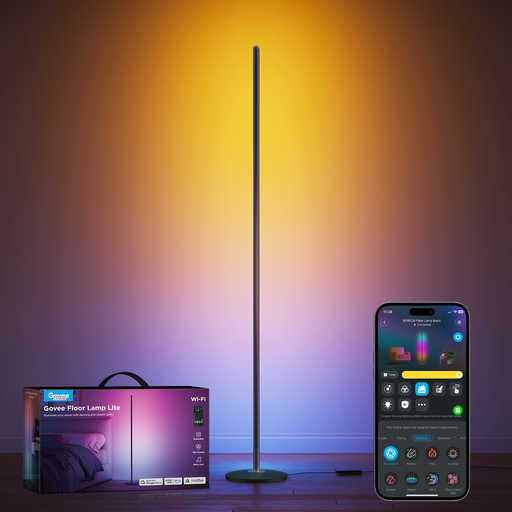
Why This Fits Their Persona: This floor lamp is designed for immersive experiences. With RGBIC technology, music synchronisation, and full compatibility with Alexa and Google Assistant, it seamlessly integrates into a smart gaming setup to dynamically adapt the room's atmosphere to the on-screen action.
Avoids the smart-home trap through certified compatibility with common systems (Alexa, Google) and a well-developed app. Offers more than just brightness through customisable scenes and colours.
RGBIC technology for multi-colour effects, music sync mode, and control via voice, app, or Wi-Fi.
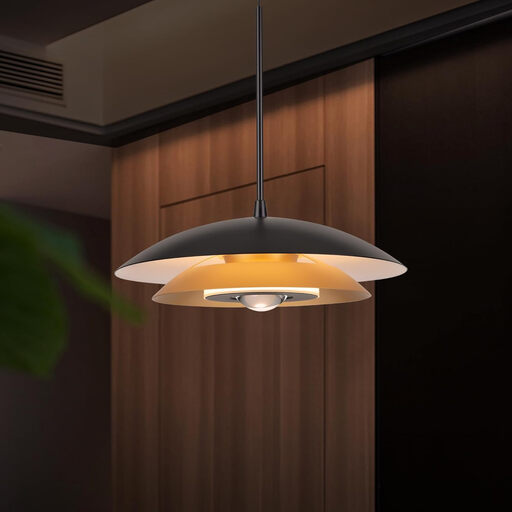
Why This Fits Their Persona: This pendant light combines industrial design with modern elegance. The double-layer construction of black and gold metal makes a bold statement over a dining table or kitchen island, creating warm, glare-free illumination.
Avoids the "design over function" problem. Here, the design serves a purpose: the inner golden shade reflects light warmly and without glare, which is both aesthetically pleasing and functional.
High-quality metal construction, integrated 12W LED with a warm colour temperature (3000K), and compatibility with most dimmers.
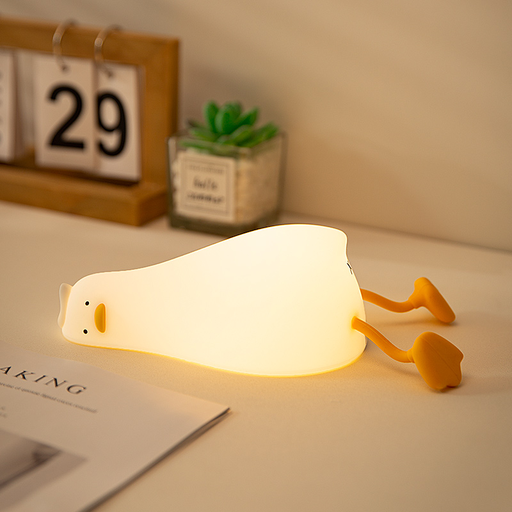
Why This Fits Their Persona: This `children's night light` is ideal for a nursery or kid's room. It's made of soft, child-friendly silicone, has no sharp edges, and is battery-powered, so there are no cables within reach of the bed. The gentle light doesn't disturb sleep.
Focuses on the essentials: safety and simple function. Instead of complex smart features, it offers a robust, safe material and simple, wireless operation suitable for children.
Soft silicone material, rechargeable 1200mAh battery for wireless operation, and an eye-friendly, gentle light.
We have compiled a complete, up-to-date list of products that fully meet these strict selection criteria and German safety regulations.
The lifespan of permanently installed LEDs is typically stated as 20,000 to 50,000 hours. This is the so-called L70 lifespan, which means that after this time, the LED will still have 70% of its original brightness. With three hours of daily use, a lifespan of 25,000 hours equates to over 22 years. So, the lamp doesn't fail suddenly but gradually becomes dimmer over a very long period.
The Colour Rendering Index (CRI) is a scale from 0 to 100 that indicates how accurately a light source renders colours compared to natural sunlight. A low CRI value (e.g., below 80) makes colours appear pale or distorted. For living spaces, a CRI of over 80 is a good standard. For workspaces or places where colour accuracy is important, a value of over 90 should be sought.
No, this is a common source of error. Many older wall dimmers (leading-edge dimmers) are designed for the high load of incandescent bulbs and do not work correctly with the low wattage of LEDs. This can lead to flickering, buzzing, or uneven dimming. For optimal performance, you need a modern LED dimmer (often a trailing-edge dimmer). Always check the compatibility list from the lamp or bulb manufacturer.