
Lieferung heute & morgen

Qualitätsgarantie

Willkommens-Angebote freischalten: KOSTENLOSE Lieferung | Bis zu 80 % RABATT | Kostenlose 30-Tage-JoyPlus-Testphase
App herunterladen
LED lamps differ not only in shape and colour. For everyday use, what really matters is brightness, power supply, operation and the ability to adjust the light beam to suit your needs. A small LED table lamp may be enough on a bedside table, whereas an LED desk lamp for longer working sessions requires different features. However, if you judge product descriptions solely by wattage or design, you can easily overlook important details.
Wattage describes energy consumption, not directly the brightness. For comparison, the luminous flux in lumens (lm) is far more meaningful. A 2 W lamp can give off very different amounts of light depending on the LED technology. For close-up reading, a compact reading lamp may only need a low luminous flux, while a desk or floor lamp must illuminate a larger area.
A dimmable lamp is not automatically right for every situation. Check whether the brightness adjusts in steps or continuously, and whether it is controlled by touch, a switch or a remote. A bedside lamp with four dimming levels can be more practical than a model where it is difficult to reproduce the brightness you want.
With a USB rechargeable lamp, you should consider the battery capacity together with the stated operating time. The runtime usually depends on the brightness level selected. Figures like "up to" typically refer to a specific, often lower, power setting. Also relevant are charging time, connection type and whether the lamp can be used while charging.
A clip lamp saves space on your desk but needs a suitable table edge. Pay attention to the maximum clamp width and a non-slip pad. Flexible lamp necks or joints allow more precise positioning of the light beam.
With a floor lamp with a reading arm, you should consider the base area, height, cable length and the position of the switch. A movable reading arm can provide targeted light next to a sofa or armchair, while the upper shade is used for indirect room lighting.
For indoor use in dry environments, many models are rated IP20. Lamps should not be covered, come into contact with water or be placed near strong heat sources. For lights with a replaceable bulb, check the fitting and maximum wattage.
Also look out for:
The following selection matches different LED lamps to specific usage situations. The information is based on the respective product descriptions.
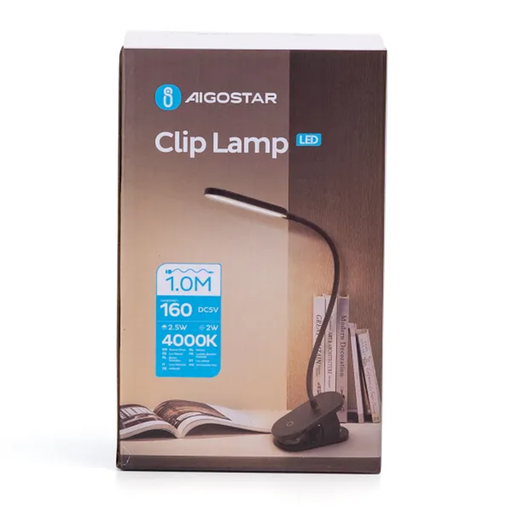
Why this product fits the profile: The compact clip lamp takes up little space and offers three brightness levels. The built-in battery allows operation without permanently occupying a socket.
The product data states 160 lm, 2.5 W and a colour temperature of 4,000 K. This makes it easier to assess performance than with a wattage figure alone.
Three levels, flexible silicone lamp neck, 1200 mAh battery and clamp for versatile placement.
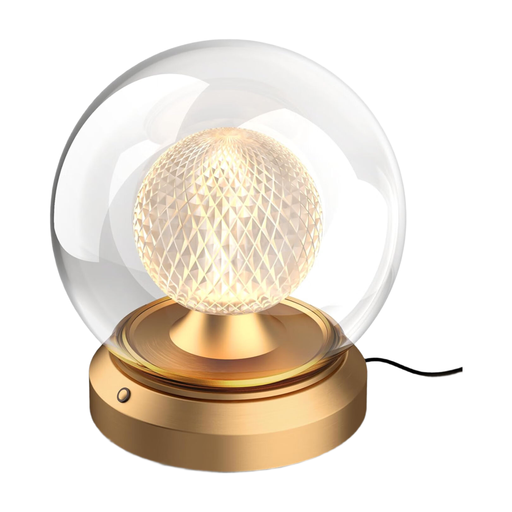
Why this product fits the profile: The compact table lamp combines glass, aluminium and four-step touch control. It fits on bedside tables, shelves or small side tables.
The lamp is powered by a cable, so there is no reliance on an unspecified battery life.
3000 K, four dimming levels, memory function and compact dimensions of approximately 12 × 12 × 16.3 cm.
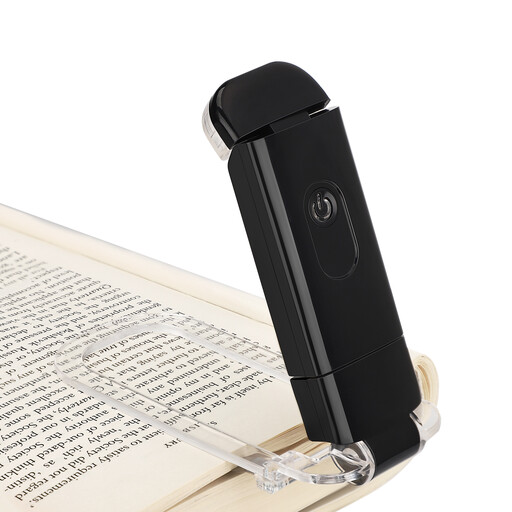
Why this product fits the profile: The very lightweight book light can be used freestanding or as a clip lamp. It is designed for bed, travel and small reading areas.
The description specifically states 16 lm, two brightness levels, 3000 K and a charging time of around 1.5 hours.
37 g weight, USB charging, up to 8 hours runtime according to the product information and 350° rotation.
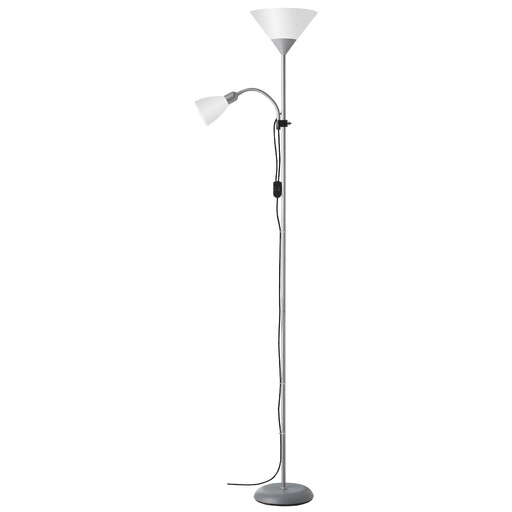
Why this product fits the profile: The 180 cm tall floor lamp is aimed at users who want to combine ambient light with a separate reading zone next to a sofa or armchair.
The lamp uses replaceable bulbs with E27 and E14 fittings. This means the light source is not permanently limited to a specific LED output.
Adjustable reading arm, switch on the cable, 2.64 m cable length and indirect positioning of the upper light.
We have put together a full, regularly updated list of products that fully meet these strict selection criteria and the safety regulations in force in the EU.
For the desk, an adjustable lamp head, a stable base and a suitable colour temperature are particularly important. A neutral white LED lamp around 4,000 K can work well for work areas, provided the light beam falls evenly on the work surface.
In the bedroom, a compact design usually matters most. A battery-powered table lamp can be placed flexibly but needs regular charging. A wired bedside lamp, on the other hand, offers a constant power supply. For reading in bed, a small book or clip lamp makes sense if you only need light in a limited area.
Before you buy, also compare the dimensions with the space you have in mind. A lamp base that takes up too much room can be annoying on a small bedside table. With clamps, the table edge should be neither too thin nor too thick. For larger living areas, a floor lamp offers more reach but needs a safe, level spot.
That depends on the distance and the area being lit. A small book light with 16 lm can be enough for a short distance and a single page. For a desk or a larger reading area, higher values such as 160 lm or 210 lm may be more suitable. The lamp position, beam angle and glare are also crucial factors.
The lifespan is given by the manufacturer in operating hours and depends on usage, heat dissipation and power supply. For the Aigostar clip lamp, for example, 20,000 hours are stated. This figure is a guideline and not a guarantee of identical service life in every household. Adequate ventilation and operation according to the instructions can help support the intended lifespan.
LED lamps generally require less electrical power than many older types of bulb. For a realistic estimate, multiply the wattage by the daily operating time and your electricity rate. With battery models, there is also the charging loss to consider. However, low consumption alone does not tell you whether the brightness, colour temperature and beam direction are right for your particular use.