
Lieferung heute & morgen

Qualitätsgarantie

Willkommens-Angebote freischalten: KOSTENLOSE Lieferung | Bis zu 80 % RABATT | Kostenlose 30-Tage-JoyPlus-Testphase
App herunterladen
Whether you're looking for a battery-powered lamp, a cordless LED light or a fixed under-cabinet light, LED lamps vary significantly in brightness, battery life, sensor technology and ingress protection rating. If you only focus on a high lumen count or an attractive product image, you could end up buying a lamp that simply isn't practical for where you intend to use it.
As a Joybuy Product Recommendation Officer, I've filtered the most important specifications and organised them by typical usage scenarios. This makes it much easier to judge whether a battery-powered table lamp, a night light, an LED desk lamp or an outdoor lantern is right for your needs.
Lumens (lm) describe the total light output. However, a higher number doesn't automatically mean the light will be more useful on your desk, inside a cupboard or along a garden path. What also matters are the beam angle, the position of the LED and whether you can adjust the brightness.
For a night light, a low light level is usually sufficient. An LED desk lamp, on the other hand, should illuminate your work area evenly. With a torch, both the light output and the range and light modes are important.
A cordless LED lamp either needs batteries or has a built-in rechargeable battery. Claims like 'long runtime' should therefore be considered in relation to the brightness level being used. For battery-powered products, the battery capacity, charging port and charging time are also important points of comparison.
A battery-powered lamp with a USB-C port, for example, can be charged from a mains adapter, laptop or power bank. For battery-operated products, you should also consider whether suitable replacement batteries are available and whether the batteries can be removed before long-term storage.
The IP rating consists of two digits. The first describes protection against solid objects and dust, and the second describes protection against water. IP44, for example, means protection against solid objects larger than 1 mm and against splashing water. It does not mean the lamp can be submerged.
For a balcony, garden or camping, the IP rating should match the actual environment. An indoor table lamp shouldn't be left outside permanently, even if it's cordless.
With a battery-powered table lamp, you shouldn't look at the capacity in mAh in isolation. The actual operating time depends on the LED power, the brightness level and the electronics. A charge indicator or a standardised charging port are practical features.
A USB-C LED torch can be especially convenient for everyday use, provided you have a suitable cable or charger. Battery-operated lamps, on the other hand, are ideal for emergency kits, cellars or vehicles, as long as you have spare batteries to hand even without mains power. A dynamo lamp doesn't need batteries, but it does require manual charging via the crank.
Before you buy, compare the mounting surface and dimensions. A 30 cm under-cabinet light needs enough space underneath a wall cabinet. For a motion sensor lamp, you also need to consider the detection range, the switch-on behaviour and the position of the PIR sensor.
Adhesive fixings are practical, but they stick best to clean, dry and smooth surfaces. For children's rooms and bedrooms, you should also consider small parts, heat generation and the intended indoor use.
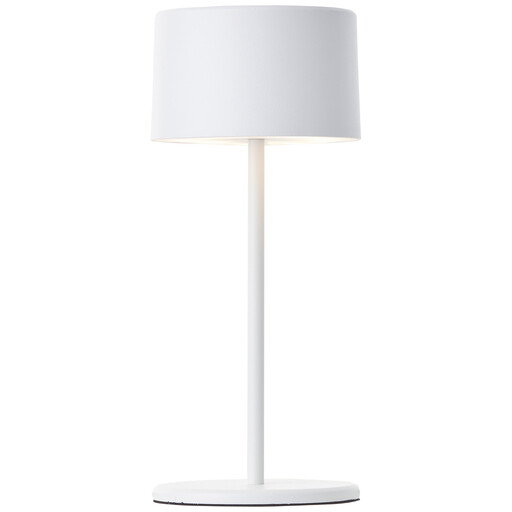
Why this product fits the profile: This compact table lamp is ideal for a bedside table, shelf or sideboard and can be placed without needing a plug socket.
The specifications state 210 lm, 3000 K and three touch dimmer levels, rather than just a vague brightness claim.
USB rechargeable battery, 21 cm height and warm white light at 3000 K.
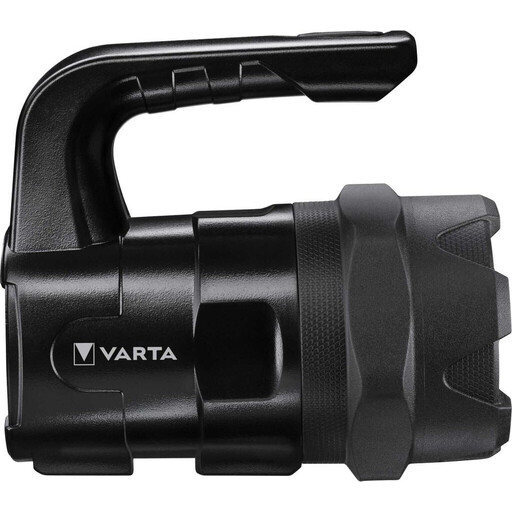
Why this product fits the profile: This robust outdoor lantern is designed for camping, the workshop and emergencies, using replaceable AA batteries.
The IP67 rating and the instructions about the correctly closed battery compartment clearly define the intended use.
400 lm, up to 85 hours runtime according to the product specification, plus protection against dust and temporary submersion to IP67.

Why this product fits the profile: Two slim lamps with a PIR sensor are ideal for the kitchen, wardrobe, hallway or shelving without the need for hardwiring.
The detection range, dimensions, battery capacity and three colour temperatures are all clearly stated, making planning much easier.
41 LEDs, PIR detection from 3 to 5 m, 1100 mAh battery and tool-free installation using adhesive strips.
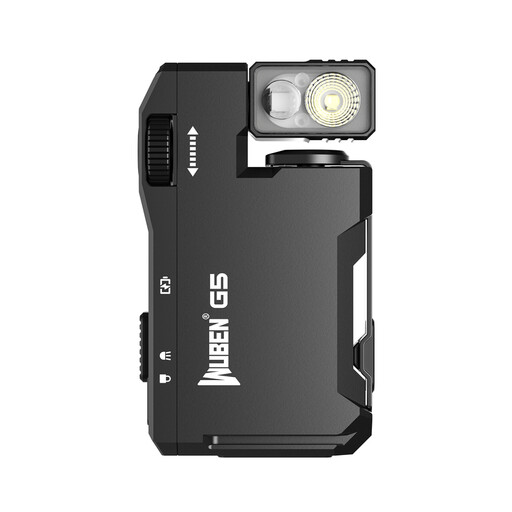
Why this product fits the profile: For camping, hiking, night work and emergency kits, it offers multiple light modes and a USB-C rechargeable battery.
The product details clearly state six modes, a range of up to 93 m and IP68, rather than just making a vague claim about outdoor use.
1200 lm, USB-C charging port, six light modes and an IP68 rating for dust and water protection.
We've put together a complete, regularly updated list of products that fully meet these strict selection criteria and the safety regulations in force in the EU.
The consumption depends on the power in watts and the daily operating time. A 2-watt table lamp running for five hours a day would theoretically use 10 watt-hours. Battery-powered and battery-operated lamps also need energy for charging or from the batteries themselves. For ongoing running costs, you should compare the wattage and the usage time.
The lifespan is often given in operating hours. In everyday use, however, heat, charging cycles, moisture and the quality of the electronics all affect the actual service life. With battery-powered lamps, the battery is a separate consumable part whose capacity can decrease after many charging cycles. The manufacturer's figures should therefore be taken as a guide.
For the garden, balcony and camping, the right IP rating is crucial. IP44 is only suitable for protection against splashing water, while IP67 or IP68 offer more comprehensive protection, provided the product is correctly sealed and used according to the manufacturer's instructions. String lights, decorative lighting and outdoor lanterns should also be protected from prolonged dampness if this is not expressly intended.