
Lieferung heute & morgen

Qualitätsgarantie

Willkommens-Angebote freischalten: KOSTENLOSE Lieferung | Bis zu 80 % RABATT | Kostenlose 30-Tage-JoyPlus-Testphase
App herunterladen
An LED lamp can reduce your electricity consumption compared with older light bulbs and offers a wide range of uses. However, not every bargain price leads to suitable lighting. Technical terms such as "smart comfort", "many colours" or "long lifespan" are often highlighted, while important details are buried in the small print.
Before you buy, it's worth checking which shape, brightness and control system suits your room. The selection below will help you find your way around for the living room, bedroom, office, hallway and gaming room.
Wattage describes energy consumption, not brightness directly. What matters is the luminous flux in lumens. An LED table lamp with 210 lumens, for example, is better suited to a bedside table, a sideboard or accent lighting. For general room lighting, you'll usually need significantly more light.
An RGB LED lamp can add colourful accents, but it isn't automatically suitable for reading, writing or focused work. Check whether a neutral or warm white light mode is also available. A large number of colours doesn't say much about everyday usability if dimming or adjustable colour temperature is missing.
"Smart" can mean app control, Bluetooth, Wi-Fi or a connection via a separate bridge. A Wi-Fi LED lamp may work directly on a 2.4 GHz network, while a Bluetooth Mesh lamp may need a hub for remote access or voice control. Also check whether the lamp is compatible with Alexa, Google Assistant or your existing app.
Start by comparing the luminous flux:
Wattage helps you estimate consumption. The energy efficiency class, for example F or E, should also be considered. However, it is only meaningful when comparing similar product types.
Colour temperature is given in Kelvin:
A dimmable LED lamp is more flexible if it also supports multiple colour temperatures. The CRI or Ra value describes colour rendering. A value of Ra ≥ 80 is stated for the products considered here and provides a useful benchmark for indoor spaces.
An LED ceiling light has different requirements to an LED recessed spotlight. With recessed lights, you need to get the ceiling cut-out and installation depth right. For example, a 9-watt recessed spotlight from Aigostar requires a cut-out of 120 to 130 millimetres, according to the product information.
Also pay attention to the IP rating. IP20 is for dry indoor areas and is not suitable for damp rooms. For bathrooms or outdoor areas, the manufacturer's specifications must state a suitable IP rating. Work on 220 to 240 volt connections should be carried out by a qualified person in accordance with the instructions and applicable safety requirements.
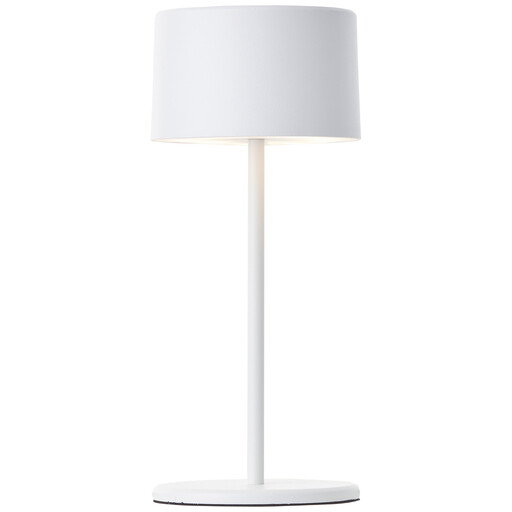
Why this product fits the profile: The compact battery-powered table lamp is designed for bedside tables, sideboards, desks and flexible lighting points indoors.
The product data gives concrete values rather than just vague brightness promises: 210 lumens, 2 watts and three touch dimming levels.
Integrated USB rechargeable battery, 3,000 K colour temperature, metal housing and 21 cm height.
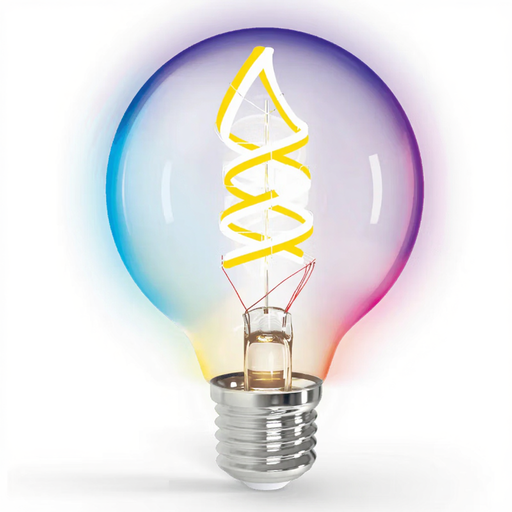
Why this product fits the profile: The E27 globe lamp combines a classic design with app and voice control for compatible lamp holders.
The network requirement is clearly stated: control via 2.4 GHz Wi-Fi; 5 GHz is not supported according to the product description.
420 lumens, 4.9 watts, RGBW colours, 2,700 K warm white option and Alexa and Google Assistant compatibility according to the product information.
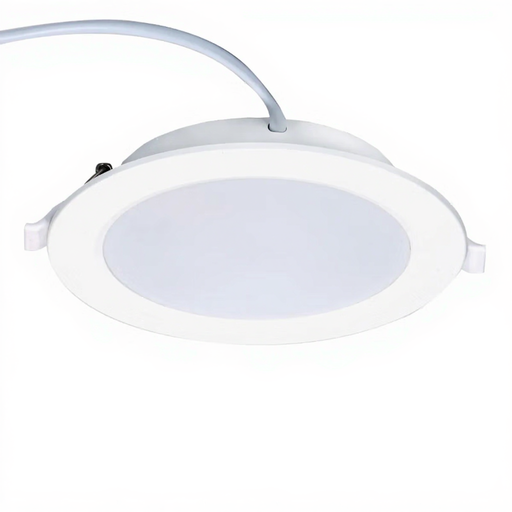
Why this product fits the profile: The recessed spotlight is aimed at users who want to connect several indoor lights via Bluetooth Mesh and adjust the colour temperature.
The cut-out measurement, IP20 rating and installation type are all specified. This lets you check in advance whether the dry indoor area and your existing ceiling are suitable.
780 lumens, 9 watts, 2,700 to 6,500 K, 120° beam angle and stated lifespan of 30,000 hours.
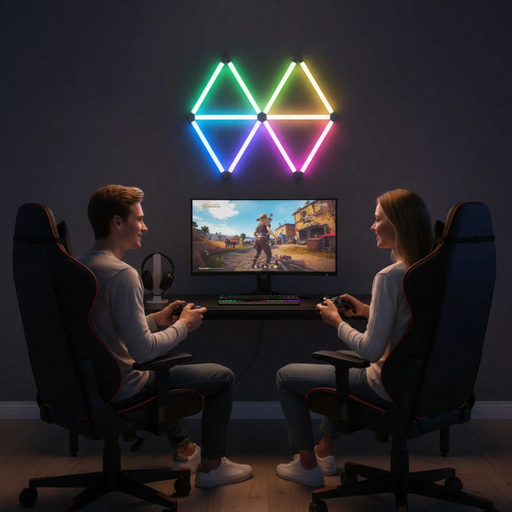
Why this product fits the profile: The set is designed for decorative LED lighting around TV walls, monitors, in gaming rooms or for colourful accents.
The control methods are listed separately: Smart Life app, remote control and voice control via Alexa or Google Assistant.
Six flexible light strips, RGB colour selection, multiple scenes and music sync according to the product description.
Consumption depends on the wattage and how many hours you use it each day. A 4-watt lamp that's on for five hours a day uses roughly 7.3 kilowatt-hours per year. To work out your individual costs, multiply this figure by your electricity price.
The stated lifespan varies by model. Product data may show figures such as 25,000 or 30,000 hours. These are manufacturer estimates and depend on factors including operating time, heat dissipation, ambient temperature and power supply.
No. Look for an explicitly stated Alexa compatibility and check whether a direct Wi-Fi connection, a specific app or an additional hub is required. With Bluetooth Mesh lights, a gateway may be necessary for voice control and remote access.